 The Itinerary
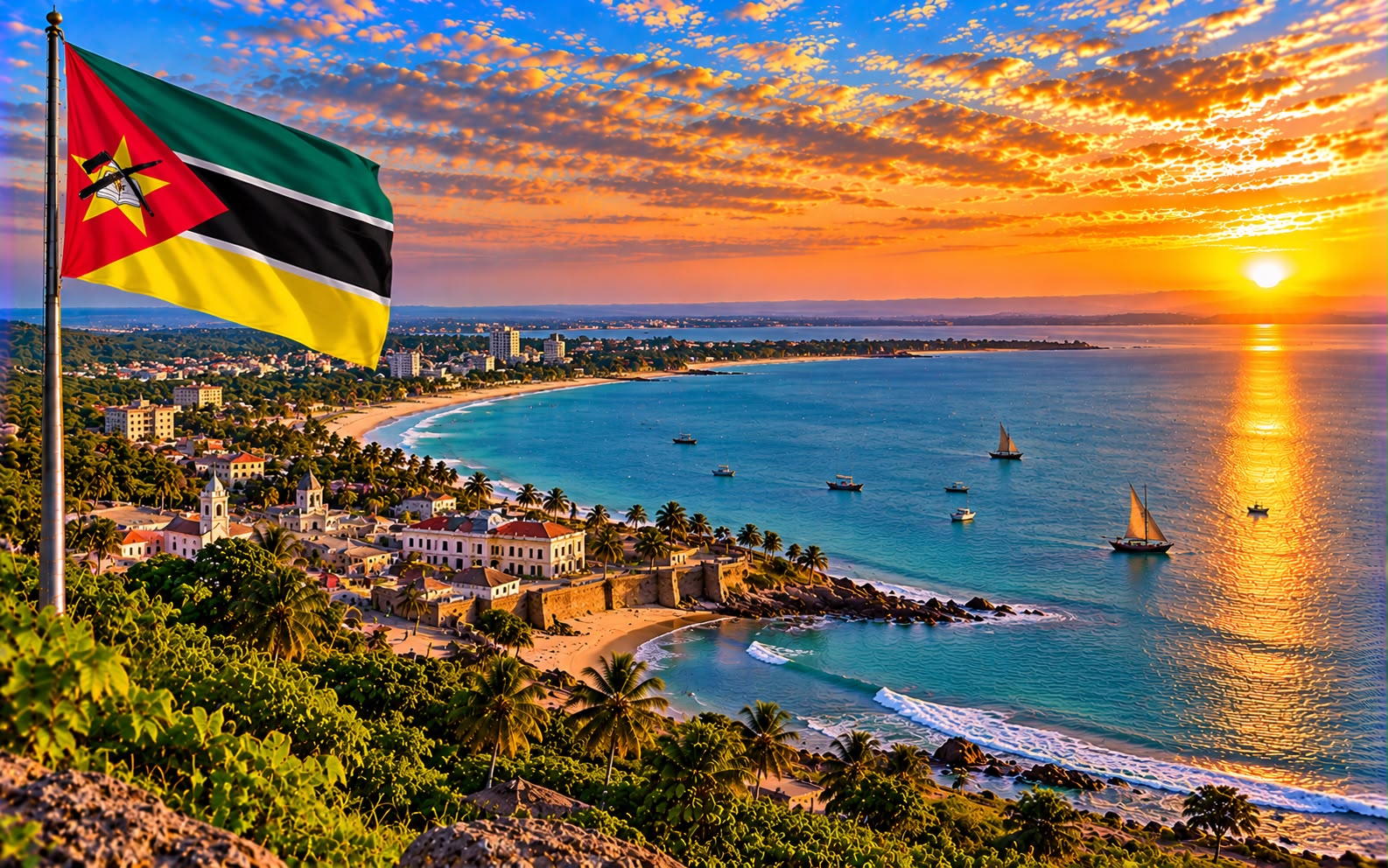
Mozambique in 9 days: Tofo's whale sharks, Bazaruto's dunes and Maputo
One of the few places on earth where whale sharks are seen year-round, an archipelago of dunes and sandbanks holding the region's last viable dugong population, and a Portuguese capital with the best seafood on the continent — routed deliberately clear of the north.
- Southern Africa
- 9 days
- ≈ AED 5,150 / person
- Whale sharks and manta rays off a beach you can walk to
Before you go
Mozambique has 2,500 kilometres of Indian Ocean coast, and the southern half of it is one of the best value beach and diving destinations in Africa.
Tofo is the centre of it. A long sand beach on a peninsula near Inhambane, with deep water close inshore, where whale sharks are present for much of the year — one of very few places with a near year-round aggregation rather than a season — and where reef mantas come to cleaning stations on Manta Reef in numbers that brought the researchers who are still there.
Bazaruto is the other. An archipelago of islands that are really enormous vegetated sand dunes, with sandbanks and turquoise channels between them, protected as a national park. It holds the last viable dugong population in the western Indian Ocean, and whether or not you see one, the water is the clearest on this coast.
Maputo is a genuinely good city — wide jacaranda avenues, Portuguese architecture, a market, an iron house by Eiffel’s company, and prawns that justify the flight on their own.
This itinerary stays in the south, and the first section explains why: the far north has an insurgency and is widely advised against.
Nine days. Figure USD 1,400 (≈ AED 5,142) per person excluding flights. Go May–November, the dry season — manta numbers peak around May to September.
Before you go: the 15-minute admin
The north, and why this route avoids it
- Cabo Delgado province, in the far north, has had an armed insurgency since 2017. Most governments advise against all travel there, and have done for years.
- That rules out the Quirimbas Archipelago and Pemba — which are genuinely beautiful and are not on this route for that reason, rather than by oversight.
- Ilha de Moçambique, the UNESCO former capital, is in Nampula province rather than Cabo Delgado. Advice on Nampula has varied and parts of it have at times been included. If Ilha is why you want to come, check current advice specifically for Nampula province and plan it as a separate trip with a flight into Nampula.
- The south — Maputo, Inhambane, Vilankulo, Bazaruto — is not normally subject to that advice and is where the country’s tourism runs.
- Read your own government’s current position before booking, and check your insurance covers the provinces you will actually be in.
Visas
- Mozambique removed visa requirements for a long list of nationalities, and operates visas on arrival and an e-visa for others. This changed recently enough that older advice is wrong.
- Check your own case on the official portal before booking.
- Yellow fever certificate if arriving from an endemic country.
Health
- Malaria risk is high along the whole coast, year-round. Prophylaxis is essential.
- The sun here is severe and the sea breeze hides it.
- Medical facilities outside Maputo are limited; diving insurance with chamber cover is worth having, and the nearest chamber is not close.
Money
- The metical (MZN). Bring US dollars or South African rand in cash to change. Cards work in Maputo and at the larger lodges; ATMs are reliable in the cities and scarce on the coast.
- Rand is widely accepted in the south, given how much of the traffic comes overland from South Africa.
- Costs are moderate: lodges and diving are the budget, food and transport are cheap.
Getting around
- Flying is what makes nine days work. Maputo–Inhambane and Maputo–Vilankulo are short hops; the drive to Vilankulo is around ten hours.
- The EN1 highway runs the length of the country and is variable. Self-driving is realistic in the south with a high-clearance vehicle.
- Many people arrive overland from South Africa — Maputo is four hours from Nelspruit and a day from Johannesburg.
- Do not drive at night.
- Police checkpoints are frequent and have a reputation for improvised fines. Carry your documents, be polite, and ask for a written receipt for anything you are asked to pay.
Travelling with kids?
- Tofo and Vilankulo are straightforward beach bases with warm, calm water inside the reef.
- Snorkelling with whale sharks has no minimum age at most operators but is open-water from a boat in swell — confident swimmers only.
- Malaria precautions matter a great deal here.
Day by day
Day 1 — Maputo
- Afternoon — Arrive. The airport is 15 minutes from the centre.
- 16:00 — The Casa de Ferro, a prefabricated iron house shipped out by Eiffel’s company in the 1890s and proven immediately uninhabitable in the heat, and the Jardim Tunduru botanical gardens beside it.
- 17:30 — The CFM railway station, one of the more beautiful station buildings anywhere — green dome, wrought iron, a jazz bar on the concourse.
- 19:30 — Dinner. Peri-peri prawns and matapa, and Laurentina beer. Maputo’s seafood is the best on the coast and costs very little.
Where to stay in Maputo (two nights across the trip)
- Mid-range: the Polana and Sommerschield districts, above the bay.
Day 2 — Maputo, properly
- 09:00 — The Mercado Central, then the Núcleo de Arte, the artists’ collective that produced the Tree of Life sculpture made from decommissioned weapons.
- 12:00 — The Fortaleza and the Museu Nacional de Arte.
- 15:00 — The FEIMA craft market at Praça 25 de Junho, which is where to buy.
- 17:00 — The Marginal and the Costa do Sol beach road for sundowners.
Day 3 — To Tofo
- Morning — Fly to Inhambane, about an hour, and drive the half hour to Tofo.
- Afternoon — The beach, which runs for kilometres with a reef break at one end and the dive camps along the dunes.
- Evening — Tofo is small, sandy and unpretentious, and the restaurants are on the beach.
Where to stay at Tofo (three nights)
- Mid-range: the lodges strung along the dune above the bay.
- Value: the backpacker places, which in Tofo are good.
Day 4 — Whale sharks and mantas
- 07:00 — Ocean safari. Boats launch through the surf — which is itself the morning’s first event — and run the bay looking for whale sharks, which feed in these waters for much of the year. You snorkel with them; diving with them is not the form.
- 11:00 — Manta Reef for divers: a cleaning station where reef mantas queue to be worked over by wrasse, and sit still while they do. One of the great dives in Africa.
- Afternoon — The beach, or a second dive.
- A note on the operators: Tofo has a long-standing marine research presence and the good operators follow strict codes — no touching, no chasing, limited numbers in the water. Choose one that says so and means it.
Day 5 — Tofo and Inhambane
- Morning — A second ocean safari, or Praia da Barra and the lighthouse up the peninsula.
- 14:00 — Inhambane town, across the bay by dhow — a 500-year-old port with a whitewashed cathedral, a mosque, and streets of faded Portuguese houses under cashew trees. One of the most pleasant towns on the coast.
- 17:00 — Back to Tofo by dhow at sunset.
Day 6 — To Vilankulo
- Morning — Fly or drive north to Vilankulo, the gateway to Bazaruto. The flight is 45 minutes; the drive is five or six hours.
- Afternoon — The beach at Vilankulo, where the tide goes out a very long way and the dhows sit on the sand.
- Evening — The market and the grilled fish stalls.
Where to stay at Vilankulo or on the islands (three nights)
- Mid-range: the lodges along the Vilankulo beachfront.
- Splurge: an island lodge inside the park, which is a different budget entirely and buys you the archipelago on your doorstep.
Day 7 — Bazaruto
- Full day by dhow or speedboat into the Bazaruto Archipelago National Park.
- The islands are dunes — Bazaruto and Benguerra rise over a hundred metres in bare sand, with freshwater lakes behind them and a two-coloured sea in front.
- Two Mile Reef is the snorkelling and diving: hard coral in good condition, and a great deal of fish.
- Dugong are here — the last viable population in the western Indian Ocean — and are rarely seen. Treat any sighting as extraordinary luck.
- Climb a dune on Bazaruto for the view down the chain.
Day 8 — The archipelago, slowly
- A second island day, by dhow this time if you went by speedboat — sailing between the sandbanks at low tide is the thing people remember.
- Or a horse ride on Benguerra, or the freshwater lakes and the crocodiles on Bazaruto’s interior.
- Humpback whales pass between roughly July and October and are regularly seen from the boats.
Day 9 — Back to Maputo, and out
- Morning — Fly south, about an hour and a half.
- Afternoon — A last plate of prawns on the Costa do Sol, and the airport.
Costs and practicalities
Best time to visit
May–November is the dry season and the best half of the year for both the islands and the mainland.
- May–October — dry, cooler, and the best visibility for diving the Quirimbas and Bazaruto. The most reliable months for road travel.
- August–October — humpback whales along the whole coast, and the best manta and whale shark season at Tofo, which peaks roughly October to March for whale sharks.
- November–April — hot, humid, and the rains, with cyclone risk from January to March — Idai and Kenneth in 2019 showed how serious that is.
- Dhow sailing between the Quirimbas depends on the monsoon winds and is best in the dry season.
Ilha de Moçambique is comfortable in the dry months and very hot and humid in the wet.
Travel tips
- Check advice for Cabo Delgado. The northern province has had a serious insurgency since 2017 and parts of it, including access to the northern Quirimbas, carry severe warnings. The southern coast and Bazaruto are a different matter.
- Portuguese is essential. English works at the lodges and nowhere else.
- Bring US dollars or rand to change. The metical is the currency; cards work in Maputo and at lodges, and ATMs have low limits.
- Police roadblocks are frequent and some solicit bribes. Keep your passport, licence, vehicle papers and the reflective triangles the law requires — the missing triangle is the classic pretext.
- Driving is on the left, and the EN1 has long stretches with no fuel. Fill up when you can.
- Malaria prophylaxis is essential and the risk is high year-round.
- Seafood is the reason to eat here — prawns, matapa and peri-peri. Buy it at the beach markets and have a restaurant cook it.
What this trip actually costs
Two people, 8 nights, mid-range comfort, international flights excluded:
| Item | Cost |
|---|---|
| Lodges, 8 nights | USD 1,200 (≈ AED 4,407) |
| Domestic flights and transfers | USD 700 (≈ AED 2,571) |
| Diving, ocean safaris, park and dhow fees | USD 500 (≈ AED 1,836) |
| Food and drink, 9 days | USD 400 (≈ AED 1,469) |
| Total for two | USD 2,800 (≈ AED 10,283) |
- Roughly USD 1,400 (≈ AED 5,142) per person. Flying is what costs; driving instead saves most of that line and costs two days.
- Island lodges inside Bazaruto are a different bracket again — several times the Vilankulo mainland rate.
- Diving is good value here by international standards, and Tofo is one of the cheaper places to qualify.
- Overland from South Africa removes the international flight entirely and is how a large share of visitors arrive.
- Hotel picks here are chosen on location, not on commission — always check prices and recent reviews before booking.
What to pack
- Malaria prophylaxis and strong repellent — the risk here is high and year-round.
- Reef-safe sun cream, a rash vest and a hat. The sun on the water is brutal.
- Your own mask if you have one.
- Dry bags — every boat here is open and wet.
- Cash in dollars or rand to change.
- Something warm for the boat at dawn, which surprises people.
FAQ
Can I see whale sharks all year? Tofo is one of very few places with a near year-round presence rather than a short season, though numbers vary. Manta sightings peak roughly May to September.
Is Mozambique safe? The south, where this itinerary goes, is calm and is where the tourism industry operates. Cabo Delgado in the far north has an active insurgency and is widely advised against. Check your government’s current advice, province by province.
Can I visit Ilha de Moçambique? Possibly, but check advice for Nampula province specifically and plan it as a separate trip — it is a long way north of this route.
Do I need to dive? No. The whale shark safaris are snorkelling, and Bazaruto’s reefs are shallow enough to snorkel well.
What language do they speak? Portuguese is official, with Makhuwa, Changana and others widely spoken. English is common in the tourism areas and rare outside them.
Prices and entry rules change, and what you need depends on your passport; last checked 8 October 2026, so confirm with the embassy or your airline before booking.


