 The Itinerary
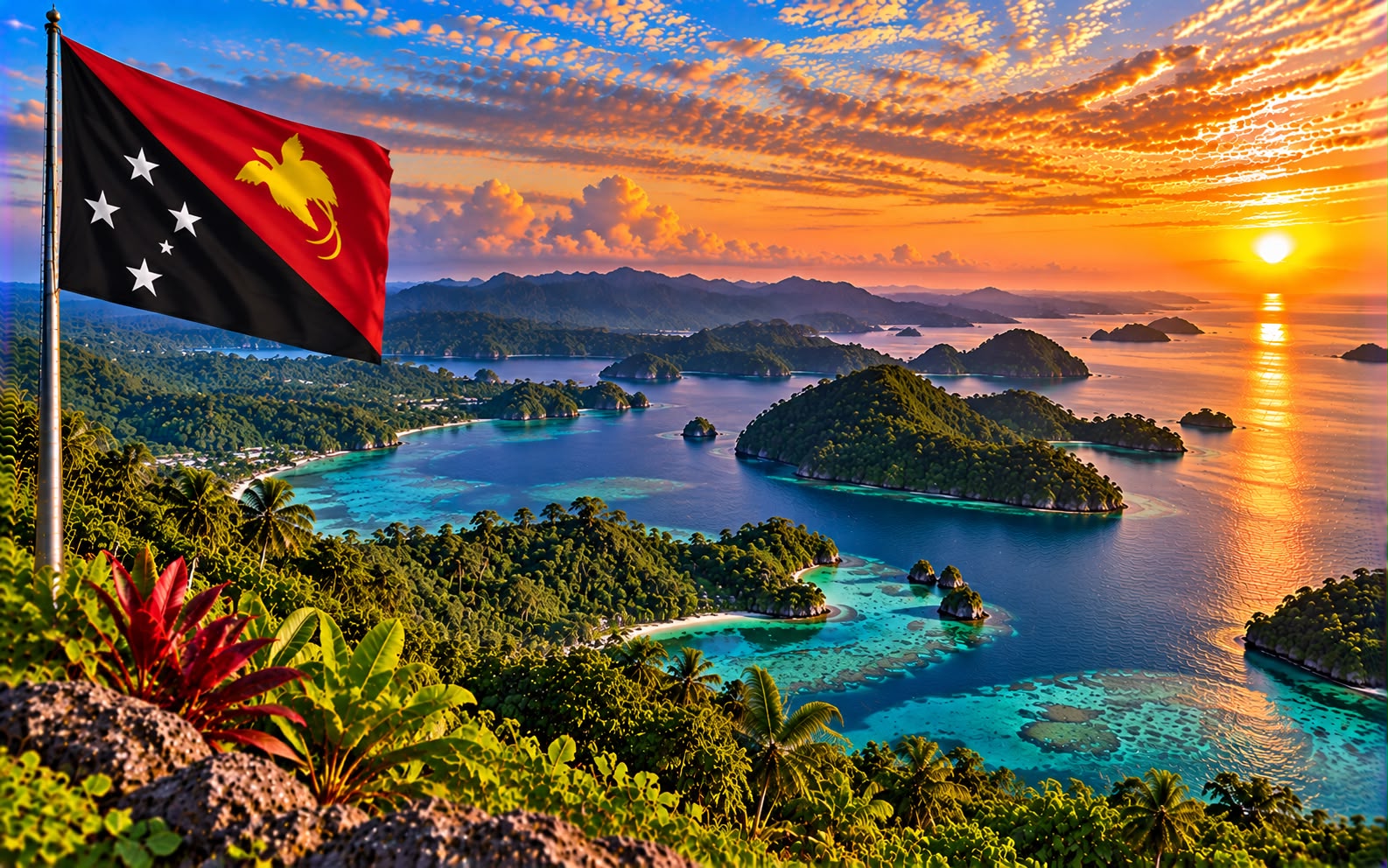
Papua New Guinea in 10 days: Huli wigmen, the Sepik and the birds of paradise
Highland valleys unknown to the outside world until the 1930s, spirit houses on a river where carving is a religion, and most of the planet's birds of paradise — reached entirely by light aircraft, at a price and with a security picture the guide states plainly.
- Pacific Islands
- 10 days
- ≈ AED 12,100 / person
- Thirty-eight species of bird of paradise, and highland cultures that met the outside world a lifetime ago
Before you go
Papua New Guinea has around 840 living languages — more than any other country, roughly a tenth of all the languages on earth — and highland valleys holding hundreds of thousands of people that the outside world did not know existed until Australian gold prospectors walked into them in the 1930s.
It is also expensive, logistically difficult and carries real security warnings, and this guide deals with all three before anything else.
What you come for:
The birds of paradise. PNG has 38 of the roughly 42 species, and the displays — the Raggiana shaking its orange plumes, the blue bird of paradise hanging upside down — are among the most extraordinary things in the natural world. Tari is the classic base.
The Huli. In the Tari basin, Huli men still grow and cut their own hair into ceremonial wigs, decorated with everlasting daisies and bird of paradise feathers, faces painted yellow with ochre.
The Sepik. A vast slow river in the north-west, where villages keep haus tambaran — spirit houses, two storeys of carved posts and painted gables — and where the carving tradition is the finest in the Pacific. Some communities still practise crocodile scarification, cutting initiates’ backs and shoulders into raised patterns that resemble crocodile skin.
Ten days. Figure USD 3,300 (≈ AED 12,119) per person excluding international flights. Go May–October, the drier season. August and September bring the Mount Hagen and Goroka shows.
Before you go: the security picture
- Read your own government’s current travel advice before booking. PNG’s is among the more serious in this part of the world and it is specific by place.
- Port Moresby and Lae carry warnings about violent crime. The practical answer is the one every visitor uses: be met at the airport by your lodge or operator, move by arranged vehicle, and do not walk around the city, particularly after dark.
- Tribal fighting in parts of the Highlands flares and closes roads. It is local, it is not aimed at visitors, and it can strand you. Your operator will reroute; this is one reason to use one.
- Bougainville and some border areas have their own advice.
- This itinerary moves between lodges by air and spends almost no time unaccompanied in cities, which is how essentially all leisure travel here works.
- Check your insurance covers PNG and includes evacuation — medical facilities outside Port Moresby are minimal and this is not a country to be improvising in.
Before you go: the 15-minute admin
Cost and logistics, which are linked
- PNG is one of the most expensive destinations in the Pacific. Lodges run several hundred dollars per person per night, usually full board including activities, because they are remote and supplied by air.
- Almost everything moves by light aircraft. There is no road network joining the places on this itinerary. Air Niugini and PNG Air fly the trunk routes; lodges arrange charters beyond them.
- Domestic flights are frequently delayed or cancelled, and a missed connection can cost a day. Build buffer, and do not plan to arrive in Port Moresby the same day you fly home.
- Book through an operator or direct with the lodges. Independent travel here is possible and is genuinely hard.
Visas and health
- An e-visa is available for many nationalities and a visa on arrival has existed for some. Check the official portal; this has changed more than once.
- Malaria risk is high in the lowlands, including the Sepik; the Highlands above about 1,500 metres are lower risk. Prophylaxis is essential.
- Yellow fever certificate if arriving from an endemic country.
- Japanese encephalitis and other vaccinations may be advised. Take medical advice early.
Money
- The kina (PGK). Bring US or Australian dollars in cash to change.
- Cards work in Port Moresby hotels and essentially nowhere else. Lodges are prepaid through your operator.
- Carry small kina for village fees, carvings and tips.
Culture
- Ask before photographing people, always, and expect to pay for portraits at a sing-sing — it is the norm and it is fair.
- Wantok — the obligation to one’s own language group — structures a great deal here, and your guide navigating it is why some doors open.
- Payment for visits to villages and spirit houses is normal and should be agreed through your guide beforehand.
- Dress modestly outside lodges.
Travelling with kids?
- The flights are small, frequent and sometimes rough.
- Malaria risk and remote medical cover are the real constraints.
- This is a trip for committed travellers rather than a family holiday.
Day by day
Day 1 — Port Moresby
- Afternoon — Arrive. Be met. Your lodge or operator will have a vehicle.
- 16:00 — The Port Moresby Nature Park, which has birds of paradise, tree kangaroos and cassowaries in good enclosures and is the best possible primer for what you are about to look for in the wild.
- Alternatively the National Museum and Art Gallery for the Sepik carving and the masks.
Where to stay in Port Moresby (two nights across the trip)
- Mid-range: the hotels in Waigani or at Ela Beach, all of which arrange airport transfers as standard.
Day 2 — To Tari
- Morning — Fly west to Tari, in the Southern Highlands, around 1,700 metres.
- Afternoon — Settle into the lodge, and a first walk in the garden forest — which at Ambua means birds of paradise in the trees around you within the first hour.
- Evening — The lodge’s own trails for the superb bird of paradise and the brown sicklebill, whose call sounds like a machine gun.
Where to stay at Tari (three nights)
- The classic: the mountain lodge above the Tari basin, with its own forest, guides and hides.
Day 3 — Birds, and the Huli
- 05:30 — Out to a display tree before light. The Raggiana and the blue bird of paradise display at dawn, and the waiting is the activity. Guides here have known these trees for decades.
- 10:00 — A Huli wigman village, arranged through the lodge. The wigs are grown over eighteen months in a bachelor school, cut, and shaped into crescents decorated with daisies and feathers. The men paint their faces yellow and red. This is a living practice, not a reconstruction, and the fee goes to the community.
- 15:00 — The Tari basin itself — a patchwork of ditched gardens, intensively farmed for thousands of years, which is the thing that most surprises people about the Highlands.
Day 4 — The Tari forest
- Full day on the Ambua trails and up towards the Tari Gap at around 2,800 metres — moss forest, tree ferns, and the high-altitude birds: King of Saxony, ribbon-tailed astrapia with its two-foot white tail streamers, Princess Stephanie’s astrapia.
- Afternoon — Waterfalls, orchids, and the spirit-house sites in the forest if your guide offers them.
Day 5 — Mount Hagen
- Morning — Fly east to Mount Hagen, the Western Highlands capital.
- Afternoon — The market, which is one of the great markets of the Pacific, and a mudmen performance at Asaro if your routing allows — the grey clay masks that have become the country’s visual shorthand.
- In August or September, the Mount Hagen Show brings together a hundred-odd groups in full dress for two days of sing-sing. If you can time the trip to it, do — book a year out.
Where to stay at Mount Hagen (one night)
- Mid-range: the lodges outside town, with transfers arranged.
Day 6 — To the Sepik
- Morning — Fly north to the Karawari, a tributary of the Sepik, landing on a grass strip and continuing by boat.
- Afternoon — The river. The lowland forest closes in, the air changes, and the Highlands feel a long way off.
- Evening — A village visit, and the first haus tambaran.
Where to stay on the Sepik (three nights)
- The classic: the lodge above the Karawari, built in the style of a spirit house, reached only by air and water.
Day 7 — Spirit houses and carving
- Morning — Upriver by boat to the villages. The haus tambaran are two-storey, with painted gables, carved posts and ridge poles, and hold the clan’s sacred objects — in some villages men only, and your guide will say.
- The carving here — masks, hook figures, crocodile prows, garamut drums — is the finest in the Pacific and is still being made. Buy from the carver in the village.
- Afternoon — Crocodile scarification is practised in some Sepik communities: initiates’ backs and shoulders cut into raised patterns resembling crocodile skin, marking the crocodile spirit taking the boy and returning a man. Men who have been through it will show the scars if asked respectfully; the ceremony itself is not a spectacle for visitors.
Day 8 — The river
- Dawn — Out on the water. The birdlife is enormous — hornbills, eagles, parrots — and the river’s mood changes by the hour.
- Midday — The Blackwater lakes or the oxbows, by canoe, with the lotus and the fish traps.
- Afternoon — A village where the women make sago, which is the staple here and a long process worth watching.
Day 9 — Back to Port Moresby
- Morning — Fly south, usually via Mount Hagen or Wewak.
- Afternoon — Bomana War Cemetery outside Port Moresby, where almost four thousand Commonwealth dead of the New Guinea campaign are buried, and the start of the Kokoda Track at Owers’ Corner if time allows.
- The Kokoda Track itself is 96 kilometres and takes eight to ten days with a trekking company. It is a separate trip and a serious one.
Day 10 — Fly out
- Morning — Be driven to the airport. Leave plenty of margin.
Costs and practicalities
Best time to visit
May–October is the dry season across most of the country and the only sensible window for the Kokoda Track and the highlands.
- May–October — dry, and the best for trekking, the Sepik and diving in Milne Bay and Kimbe.
- August–September — the Mount Hagen and Goroka shows, the great highland sing-sings, where hundreds of clans gather in full dress. These are the single best reason to time a trip and they fill the limited accommodation a year ahead.
- November–April — the wet season, with the highlands and the Sepik much harder to travel and the Kokoda Track genuinely dangerous.
- Diving is year-round with best visibility from April to November; Kimbe Bay is sheltered and good most of the year.
The highlands are cool — Mount Hagen is at 1,700m and nights are cold whatever the month.
Travel tips
- Check advice carefully. Port Moresby and Lae carry significant crime warnings; tribal conflict affects parts of the highlands. Most visitors move between airports and lodges with arranged transport.
- Nothing here is improvised. Lodges, guides and transfers are booked in advance, and arriving without a plan is not a realistic approach.
- Domestic flights are the transport and Air Niugini’s schedule is both the framework and the main risk. Build spare days.
- The wantok system means land and access are owned by clans. Permission and a fee are required for many sites and walks; your guide arranges it and it is not a scam.
- Bring kina in cash. Cards work at Port Moresby hotels and almost nowhere else.
- Malaria prophylaxis is essential and the risk is high outside the highlands.
- Ask before photographing, always, and expect a fee at the shows. Betel nut chewing is ubiquitous and the red stains are not blood.
What this trip actually costs
Two people, 9 nights, lodge standard, international flights excluded:
| Item | Cost |
|---|---|
| Lodges, 9 nights, mostly full board | USD 3,600 (≈ AED 13,221) |
| Domestic flights, two | USD 1,600 (≈ AED 5,876) |
| Guides, village fees, sing-sing fees, activities | USD 900 (≈ AED 3,305) |
| Port Moresby hotels, meals and transfers | USD 500 (≈ AED 1,836) |
| Total for two | USD 6,600 (≈ AED 24,239) |
- Roughly USD 3,300 (≈ AED 12,119) per person, which puts PNG among the most expensive trips on this site. Lodges and flights are nearly eighty per cent of it and neither has a cheaper tier.
- A show year costs more. Mount Hagen and Goroka push accommodation prices up sharply and book out a year ahead.
- Dropping the Sepik and doing Highlands only brings this down substantially and loses the better half of the cultural trip.
- Carry cash in kina for carvings, which are the thing to buy and are sold by the people who made them.
- Hotel picks here are chosen on location, not on commission — always check prices and recent reviews before booking.
What to pack
- Malaria prophylaxis and strong repellent — the Sepik is lowland and wet.
- Warm layers for the Highlands, which are cold at night at 1,700 metres and colder at the Tari Gap.
- Binoculars, which are not optional for the birds.
- Boots that drain, and a dry bag for everything.
- Cash in kina and US dollars.
- A soft bag — light aircraft have strict weight limits, often around 15kg.
FAQ
Is Papua New Guinea safe to visit? It carries serious advisories, particularly for Port Moresby and Lae and for parts of the Highlands. The way leisure travel works here — met at the airport, moved by arranged vehicle, flown between lodges — exists because of that. Read your government’s current advice and travel with an operator.
Can I see birds of paradise reliably? At Tari, yes — the lodges’ guides have known individual display trees for decades and success rates are high. It still means a pre-dawn start and sitting still.
Should I plan around the Mount Hagen Show? If you can. It is one of the great cultural gatherings anywhere. Book a year ahead and expect to pay more for everything.
Is the Kokoda Track part of this? No. It is 96 kilometres over eight to ten days with a trekking company and deserves its own trip.
What language do they speak? Tok Pisin is the lingua franca and is learnable in days; English and Hiri Motu are also official. With 840 languages in the country, Tok Pisin is what holds it together.
Prices and entry rules change, and what you need depends on your passport; last checked 8 October 2026, so confirm with the embassy or your airline before booking.


