 The Itinerary
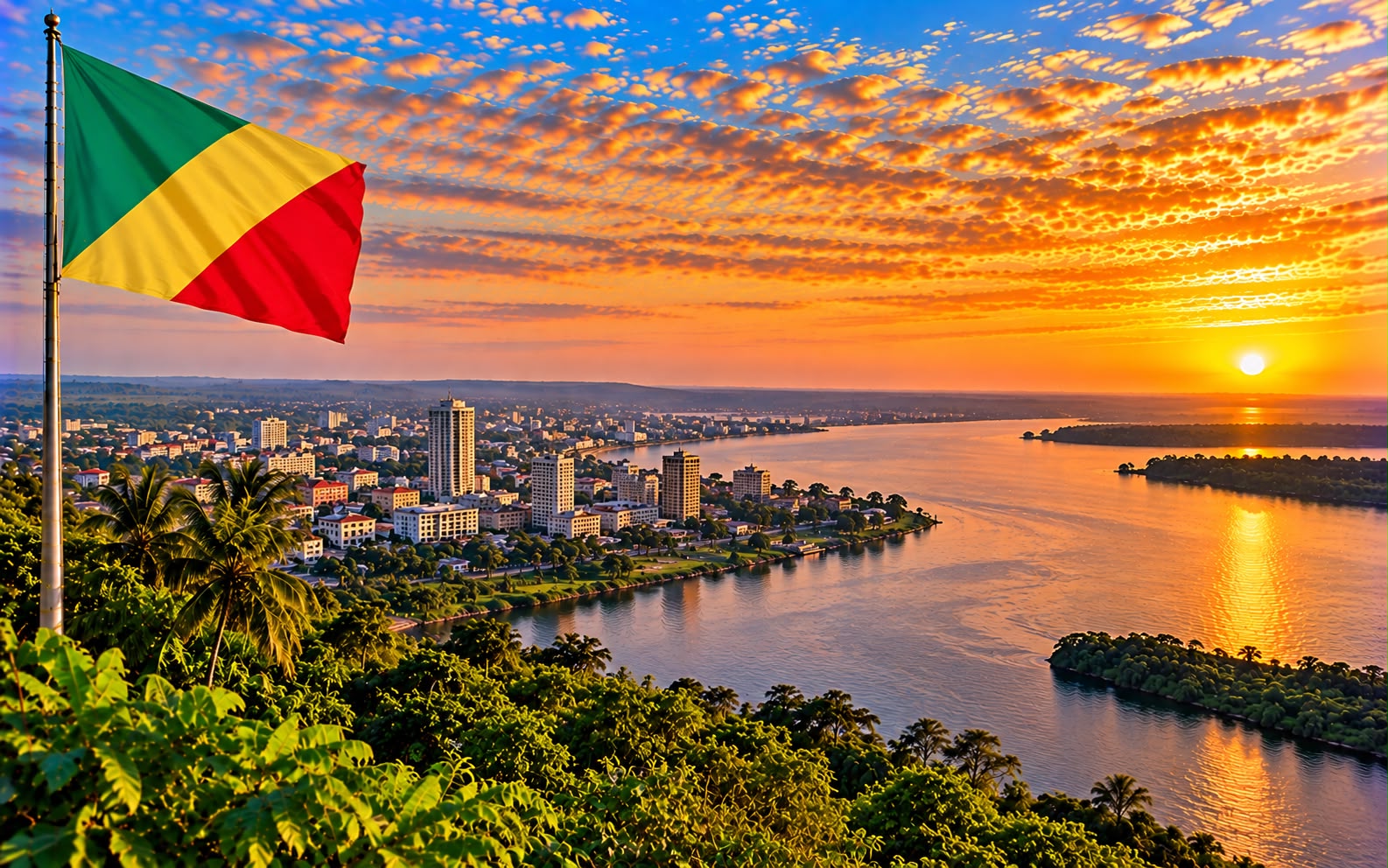
Republic of the Congo in 7 days: Odzala's gorillas, forest baïs and Brazzaville
Habituated western lowland gorillas, forest clearings where elephants come out of the trees in daylight, and one of the least disturbed rainforests left — at a price that puts this among the most expensive weeks in Africa, which the guide states plainly rather than burying.
- Central Africa
- 7 days
- ≈ AED 22,750 / person
- Tracking western lowland gorillas in Congo Basin rainforest
Before you go
Congo-Brazzaville — the smaller Congo, on the north bank of the river from Kinshasa — holds one of the great remaining blocks of Congo Basin rainforest, and in Odzala-Kokoua it has made some of it reachable.
This is an expensive trip and there is no budget version of it. The lodges are remote, supplied by charter aircraft, and priced accordingly. The cost section below is honest about that, and it is the first thing to decide.
Odzala is one of very few places where western lowland gorillas are habituated to people. They are a different proposition from the mountain gorillas of Rwanda and Uganda — smaller, more scattered, in dense forest rather than on open slopes, and genuinely harder to see. When you do, it is at close quarters in a wall of green.
The other reason to come is the baïs: natural clearings in the forest, fed by mineral springs, where animals that are otherwise invisible come out in daylight. Forest elephants, bongo, sitatunga, forest buffalo and often gorillas use them, and you watch from a platform or a mirador for hours at a time. Lango Baï at Odzala is waded into, which is an experience of its own.
Brazzaville, at the start and end, is a calm, low-rise capital on the river, facing Kinshasa across the water — the two closest capital cities in the world that are not the same city.
Seven days. Figure USD 6,200 (≈ AED 22,770) per person excluding international flights. Go June–September or December–February, the dry seasons.
Before you go: the 15-minute admin
What this costs, and why
- Odzala runs around a thousand US dollars per person per night, all-inclusive, and the charter flight from Brazzaville adds roughly a thousand more per person return. That is the trip.
- There is no cheaper tier. The camps are small, the park is 13,500 square kilometres of forest, and everything arrives by air.
- It is not a rip-off. Those rates fund the park’s protection — Odzala is managed in partnership with a conservation organisation and the tourism income is part of what keeps rangers in the forest.
- The cheap version of this country is Brazzaville plus Lésio-Louna, a gorilla reintroduction reserve three hours from the capital, for a fraction of the price. It is a different and much smaller experience, and the last section says what it gives you.
- Book six to twelve months ahead. The camps take very few people.
Visas, which need lead time
- Most nationalities need a visa in advance. An e-visa system exists; many still apply through an embassy with a hotel booking or an invitation.
- Your lodge or operator will supply the invitation letter, and this is the normal route.
- Yellow fever vaccination is compulsory and the certificate is checked on arrival.
- Allow two to three months. Embassies are few.
Health, seriously
- Malaria risk is high year-round. Prophylaxis is not optional; take advice well before you fly.
- Gorilla tracking has a minimum age, usually 15, and anyone with a cold or flu will not be allowed out — gorillas catch human respiratory infections and die of them. This is enforced and you should want it to be.
- Masks are worn at close quarters with the gorillas.
- Medical facilities outside Brazzaville are minimal. Evacuation cover is essential, and your operator will likely require proof of it.
Money
- The Central African CFA franc (XAF), pegged to the euro.
- Bring euros in cash for Brazzaville. The lodges are prepaid; tips and anything in the capital are cash.
- Card acceptance is limited to a few Brazzaville hotels.
Getting around
- Charter aircraft to Odzala, roughly an hour and a half, arranged as part of the lodge booking.
- Road to Odzala is possible and takes two long days each way through logging country. Almost nobody does it.
- In Brazzaville, taxis are plentiful and a driver for the day is cheap.
- Expect police checkpoints in the city. Carry your passport.
Photography and officials
- Do not photograph government buildings, the river frontage, bridges, the port, police or military. The Congo River frontage faces Kinshasa and is treated as sensitive.
- Ask before photographing people.
Language
- French, and Lingala and Kituba. English is rare outside the lodges, where the guides generally have it.
Day by day
Day 1 — Brazzaville
- Afternoon — Arrive at Maya-Maya, 15 minutes from the centre.
- 16:00 — The Basilique Sainte-Anne, a 1949 church with a green-tiled parabolic roof that is the best piece of architecture in the country.
- 17:00 — The Case de Gaulle from the outside, and the corniche along the river, with Kinshasa visible across the water — the two capitals face each other at a few kilometres’ distance.
- 18:30 — Poto-Poto, and the École de Peinture founded there in 1951, which produced a whole school of Congolese painting and still teaches.
Where to stay in Brazzaville (two nights across the trip)
- Mid-range: the centre-ville near the corniche.
Day 2 — Lésio-Louna, or straight north
Either, if you want a gentle first day:
- 07:00 — Lésio-Louna Gorilla Reserve, about three hours north on the Lefini river. Orphaned western lowland gorillas have been rehabilitated and released here since the 1990s. Viewing is from a boat and from hides, at a distance, and the drive crosses the Batéké plateau — sand, grass and gallery forest rather than the rainforest you are about to see.
- 18:00 — Back to Brazzaville.
Or fly straight to Odzala and gain a day in the forest, which is what most people should do.
Day 3 — Into Odzala
- Morning — Charter flight north, about ninety minutes over unbroken forest. The view out of the window is the first thing that explains the scale of this place.
- Midday — Transfer to camp. Odzala-Kokoua covers around 13,500 square kilometres of Congo Basin forest, savanna and swamp.
- Afternoon — A first forest walk, to get used to moving in it: the humidity, the mud, the fact that you can see twenty metres at best.
- Evening — Briefing on tracking protocol, which is strict and is worth listening to.
Where to stay at Odzala (four nights)
- The camps: a small number of lodges inside the park, all-inclusive, each taking a handful of guests. Your operator pairs them — typically a forest camp and a savanna or baï camp.
Day 4 — Gorilla tracking
- 06:00 — Out with trackers who have been following a habituated group since before dawn.
- The walk can be short or can be four hours, through dense undergrowth, often wet, sometimes cutting a path. This is harder going than mountain gorilla tracking and the sightings are less open.
- One hour with the group when they are found, masked, at seven metres, in thick vegetation. Western lowland gorillas are smaller than the mountain subspecies and move more; a silverback at close range in that light is not something a photograph conveys.
- It is not guaranteed. Groups move, and some mornings end without a sighting.
- Afternoon — Rest, and a river trip on the Lekoli for forest buffalo and birds.
Day 5 — Lango Baï
- Morning — To Lango Baï. You wade into it — waist-deep in places, which the camp equips you for — and walk out among the grass to the mirador.
- Forest elephants, forest buffalo, sitatunga and occasionally gorillas come out into the clearing. Elephants in the Congo Basin are almost never seen in the forest itself; the baïs are the one place they are visible.
- Hours of sitting still is the activity. Take binoculars and patience.
- Night drive on the savanna edge for genets, civets and occasionally leopard.
Day 6 — Forest and river
- Morning — A second gorilla track if your permit allows, or the Mboko savanna sector, which is open grassland running into forest and holds a different animal list.
- Afternoon — Kayak or boat the Lekoli river, which is the easiest way to see the forest edge and its monkeys — putty-nosed, moustached, grey-cheeked mangabey, and black-and-white colobus.
- Evening — Last night in the forest.
Day 7 — Out
- Morning — Charter back to Brazzaville.
- Afternoon — The Marché Total for masks and malachite, and the airport. Leave a generous connection — charters move with the weather.
Costs and practicalities
Best time to visit
June–September and December–February are the two dry windows, and Odzala’s gorilla tracking is far easier in them.
- June–September — the long dry season. The best for the forest tracks, the baïs, and gorilla and forest elephant viewing at Odzala.
- December–February — the shorter dry season, also good, and generally quieter.
- March–May and October–November — the two rainy peaks. Tracks become very difficult, river levels rise, and the camps are harder to reach.
The baïs — forest clearings — are used year-round by forest elephants, bongo and sitatunga, but the viewing platforms are far more usable in the dry. Western lowland gorilla tracking runs all year and is simply wetter and harder outside the dry windows.
Travel tips
- Odzala is reached by charter from Brazzaville and the lodges operate on fixed arrival days. The itinerary is built around the flight schedule, not the other way round.
- Gorilla permits are limited and dated. Book first; everything else follows.
- You will need a negative test or vaccination record for gorilla tracking, and masks are worn. The distance rule protects them from human respiratory disease.
- Bring euros in cash. The CFA franc is pegged to the euro; cards are useful only in Brazzaville.
- French is essential; Lingala is widely spoken.
- A yellow fever certificate is mandatory and malaria prophylaxis is essential — this is one of the highest-transmission regions anywhere.
- Do not photograph military, the airport, the port or government buildings in Brazzaville. The river frontage facing Kinshasa is particularly sensitive.
What this trip actually costs
Two people, 6 nights, international flights excluded:
| Item | Cost |
|---|---|
| Odzala camps, 4 nights, all-inclusive, two | USD 8,800 (≈ AED 32,318) |
| Charter flights Brazzaville–Odzala, two return | USD 2,400 (≈ AED 8,814) |
| Brazzaville hotels, 2 nights | USD 300 (≈ AED 1,102) |
| Lésio-Louna, city guide and transfers | USD 400 (≈ AED 1,469) |
| Food and drink in Brazzaville | USD 150 (≈ AED 551) |
| Visas, permits and documentation | USD 350 (≈ AED 1,285) |
| Total for two | USD 12,400 (≈ AED 45,539) |
- Roughly USD 6,200 (≈ AED 22,770) per person, which makes this the most expensive itinerary on this site by a wide margin. Odzala and the charter are ninety per cent of it.
- The honest cheaper trip is Brazzaville plus Lésio-Louna over three or four days, for perhaps USD 900 (≈ AED 3,305) per person. You get the city, the Batéké plateau and rehabilitated gorillas at a distance. You do not get habituated wild gorillas or a baï, which are the reasons this country is on anyone’s list.
- Compare it with Rwanda and Uganda before booking. Mountain gorilla permits are cheaper, the tracking is easier and the sightings are more open. Odzala’s case is the forest itself, the baïs, and seeing almost nobody.
- Hotel picks here are chosen on location, not on commission — always check prices and recent reviews before booking.
What to pack
- Yellow fever certificate and malaria prophylaxis.
- Long sleeves and trousers in muted colours, for insects rather than cold, plus gaiters if you have them.
- Boots that drain, and a second pair. Everything is wet.
- Binoculars — essential at the baï.
- Dry bags for cameras.
- Euros in cash for Brazzaville and for tips.
FAQ
Is it better than Rwanda or Uganda for gorillas? Different, and harder. Western lowland gorillas in dense forest are a tougher sighting than mountain gorillas on open slopes, and permits are not cheaper. What Odzala has that they do not is the baïs, the forest elephants and near-total solitude.
Can I do it without the expensive camps? Not inside Odzala. Lésio-Louna near Brazzaville is the affordable alternative and is a much smaller experience.
Which Congo is this? The Republic of the Congo, capital Brazzaville. The Democratic Republic of the Congo, capital Kinshasa, is the much larger country across the river and is a separate trip with separate advice.
Is it safe? Brazzaville and the park are calm and ordinary tourism is straightforward. Check your government’s current advice for the Pool region south of the capital, which has at times been treated differently.
When should I go? June to September is the main dry season; December to February is the shorter one. Tracking is harder in the wet months and some camps close.
Prices and entry rules change, and what you need depends on your passport; last checked 8 October 2026, so confirm with the embassy or your airline before booking.


