 The Itinerary
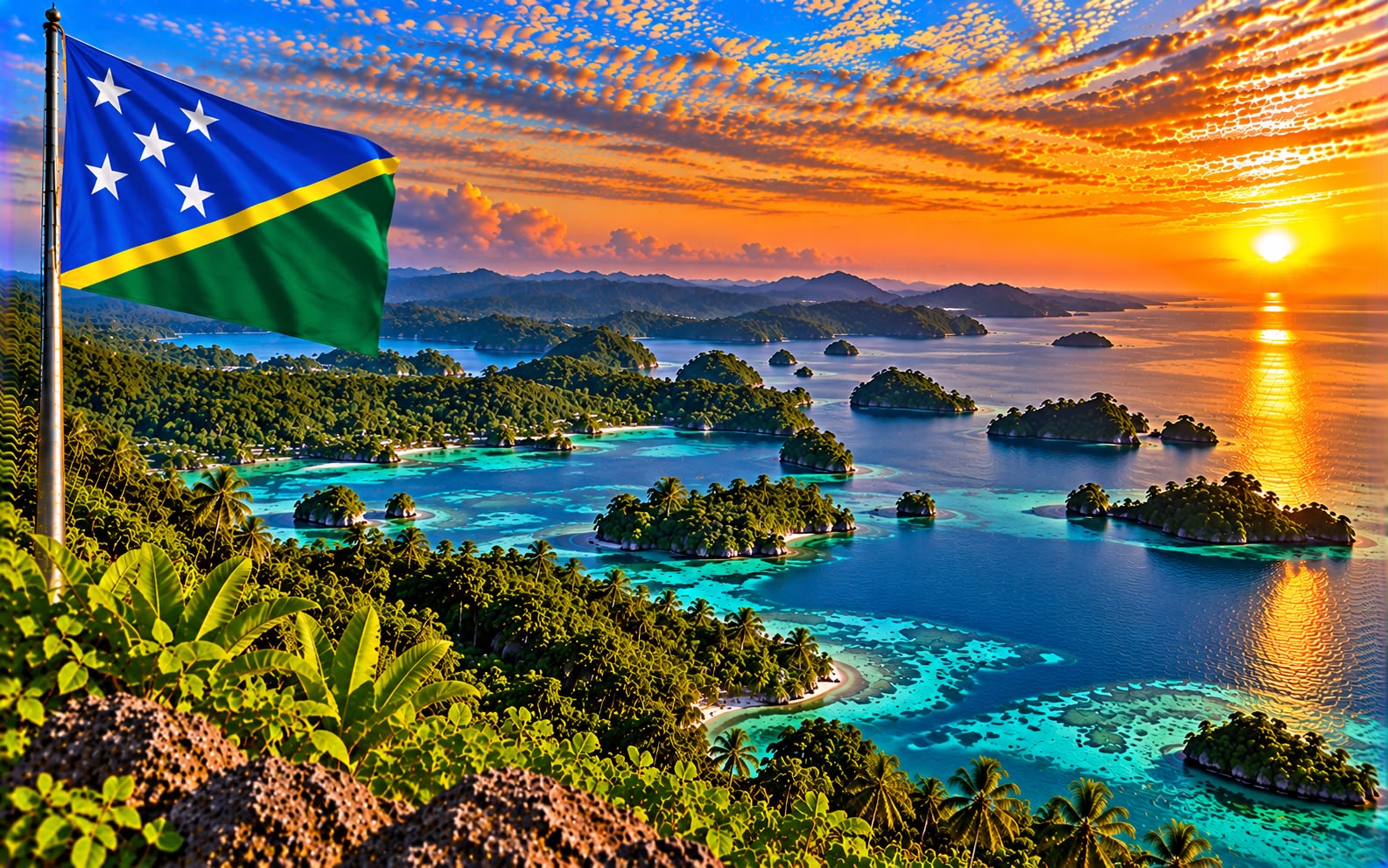
Solomon Islands in 9 days: Iron Bottom Sound, Marovo Lagoon and Tetepare
A stretch of sea holding dozens of warships sunk in a few months of 1942, the world's largest saltwater lagoon, and the biggest uninhabited island in the South Pacific — in a country where almost all the land is still owned under custom.
- Pacific Islands
- 9 days
- ≈ AED 6,250 / person
- Wreck diving over a 1942 battlefield, and the largest saltwater lagoon on earth
Before you go
The Solomon Islands are about a thousand islands spread across 1,500 kilometres of the western Pacific, with roughly 700,000 people and very few visitors.
Iron Bottom Sound is the name sailors gave the water between Guadalcanal, Savo and Florida after the naval battles of 1942 and 1943 put dozens of warships and aircraft on the bottom of it in a few months. The Guadalcanal campaign — six months of fighting from August 1942 — was the first American offensive of the Pacific war and the point where Japanese expansion stopped. The wrecks are still down there, some within recreational depth, and the battlefields above water are still littered.
Marovo Lagoon is the other reason: the largest saltwater lagoon in the world, a double barrier reef enclosing hundreds of islands in the Western Province, with villages along it carving kerosene wood and ebony into some of the best work in the Pacific.
Tetepare is the third: the largest uninhabited island in the South Pacific, abandoned in the 1860s and now managed by the descendants of the people who left, as a community conservation area with leatherback turtles, dugongs and a research camp you can stay at.
Nine days. Figure USD 1,700 (≈ AED 6,243) per person excluding flights. Go May–October, the drier season.
Before you go: the 15-minute admin
Custom land, which governs everything
- Around 85 per cent of land in the Solomons is held under customary ownership, by clans rather than individuals or the state. That extends to reefs, beaches and dive sites.
- You cannot simply walk onto a beach, swim a reef or dive a wreck. Permission comes from the landowning clan, and a custom fee is normal.
- This is not a scam and should not be haggled over. It is how property works here.
- Your lodge or dive operator arranges it, which is the main practical reason to use them rather than improvising.
- If someone tells you a site is closed or tabu, it is. Accept it.
Visas and health
- Many nationalities get a visitor’s permit on arrival for up to three months. Check your own case officially.
- Malaria risk is significant — the Solomons are among the higher-risk countries in the Pacific. Prophylaxis is essential, and repellent matters as much.
- Medical facilities are very limited outside Honiara, and there is no recompression chamber in the country — the nearest is in Australia. Dive conservatively, and carry diving insurance with evacuation cover.
Money
- The Solomon Islands dollar (SBD). Bring Australian or US dollars in cash to change.
- Cards work at a few Honiara hotels and almost nowhere else; ATMs exist in Honiara and Gizo.
- Carry a lot of small notes for custom fees, carvings and village purchases.
- Costs are moderate — lodges and internal flights are the budget.
Getting around
- Solomon Airlines flies the domestic network from Honiara. It is the only practical way to move between provinces, and flights are frequently delayed or rescheduled.
- Build buffer before your international flight.
- Boats cover everything else — banana boats with outboards, which are open, fast and wet.
- Honiara has one main road and a reputation for opportunistic crime after dark. Take the usual precautions and do not walk alone at night.
Travelling with kids?
- The lagoon, the villages and the snorkelling are excellent.
- Malaria risk and the lack of a chamber are the real constraints, as are the open boat journeys.
- Solomon Islanders are warm with children and English is official.
Day by day
Day 1 — Honiara
- Afternoon — Arrive. Honiara is small, hot and strung along the coast road.
- 16:00 — The Central Market, which is the best thing in the city — produce, fish, shell money and the carvings.
- 17:30 — The National Museum and the cultural village behind it, with houses in the styles of different provinces.
Where to stay in Honiara (two nights across the trip)
- Mid-range: the hotels along the seafront road east and west of the centre.
Day 2 — Guadalcanal
- 08:00 — The battlefields, with a guide who knows them.
- Bloody Ridge (Edson’s Ridge), where a few hundred Marines held the approach to the airfield over two nights in September 1942 — the ground is still ridged and the memorials are there.
- Henderson Field, now the international airport, which the entire campaign was fought over.
- The US and Japanese memorials on the hills above town, both quiet and both worth standing in.
- 14:00 — Vilu War Museum, an open-air field west of the city where a landowner has collected aircraft wrecks, guns and propellers out of the bush and set them among the palms.
- 16:00 — Bonegi, where the Japanese transports Hirokawa Maru and Kinugawa Maru lie in the shallows from the beach — you can snorkel one and dive the other without a boat.
Day 3 — Diving Iron Bottom Sound
- Full day on the wrecks.
- The shallower ones are recreational: the Bonegi transports, the B-17 and the Hellcat off the coast, and a number of landing craft.
- Most of the famous warships are deep — well beyond recreational limits — and are technical dives or nothing. A good operator will be honest about which is which.
- These are war graves. Nothing is taken, nothing is moved, and some sites are closed by the landowners or the authorities.
Day 4 — To Munda
- Morning — Fly west to Munda, New Georgia, about an hour.
- Afternoon — Munda was a Japanese airfield taken in 1943 and the bush around it is still full of the war. The Peter Joseph WWII Museum is a private collection in a shed that is better than it sounds.
- 16:00 — Skull Island, a short boat ride: a shrine island where the skulls of chiefs and of headhunting victims are kept in a coral shrine. Permission and a custom fee are required, and photography may be restricted.
Where to stay at Munda (two nights)
- Mid-range: the lodge by the airstrip, which runs the diving.
Day 5 — Diving Munda, and the lagoon edge
- Morning — The diving here is coral rather than wreck and is excellent: walls, passages, and the Shark Point cleaning stations.
- Afternoon — Kayak or boat into the Roviana Lagoon, past the mangroves, to the old headhunting sites.
- Or climb Baeroko and the ridges for the view down the sound.
Day 6 — Marovo Lagoon
- Morning — By boat east into Marovo, the largest saltwater lagoon in the world, enclosed by a double barrier reef and scattered with hundreds of islands.
- Afternoon — The carvers. Marovo villages produce the best carving in the country — bowls, nguzunguzu canoe prow figures, dolphins and sharks in kerosene wood inlaid with nautilus shell. Buy from the carver.
- Snorkelling straight off the lodge.
Where to stay on Marovo (two nights)
- Simple: the village-run eco-lodges on the lagoon islands, most of them owned and staffed by the landowning clan.
Day 7 — The lagoon
- A day without a plan. The reef passages, the sandbanks, the villages, and the water, which is startlingly clear.
- Diving on the barrier reef, which is unfished and shows it.
- Evening — The lagoon at dusk, which is the memory people come home with.
Day 8 — Tetepare
- Morning — By boat to Tetepare, the largest uninhabited island in the South Pacific. Its people left in the 1860s, for reasons still debated, and their descendants — scattered across the Western Province — formed an association that now protects it.
- The eco-lodge is the association’s, and the fees fund the rangers.
- Leatherback and hawksbill turtles nest here, dugongs are in the seagrass, and the forest holds birds found on very few other islands. Night patrols with the rangers in nesting season are the thing to do.
- Snorkelling over untouched reef, and the crocodile rule: ask the rangers where it is safe, every time.
Day 9 — Back to Honiara, and out
- Morning — Boat and flight back to Honiara.
- Afternoon — The handicraft market by the yacht club, and the airport. Leave margin — domestic schedules move.
Costs and practicalities
Best time to visit
May–October is the dry season and the better half of the year for diving and for the lagoon crossings.
- May–October — dry, with the southeast trades, lower humidity and the best visibility. The most reliable for boat transfers to Marovo and Munda.
- November–April — the wet season, with the heaviest rain from January to March and a cyclone risk in those months. Rates fall and the islands are intensely green.
- Diving on the Guadalcanal and Western Province wrecks is year-round, with visibility best from April to November.
- Marovo Lagoon — the largest saltwater lagoon in the world — is calmest in the dry season.
Rainfall is high in every month; the dry season is relative rather than actually dry.
Travel tips
- Nothing here runs to a published timetable. Domestic flights change, boats depend on weather and fuel, and a week’s itinerary needs spare days built into it.
- Most land and reef is customary-owned. Diving a reef, walking a trail or visiting a village usually involves a fee to the landowner, arranged by your lodge. It is legitimate.
- Bring Solomon Islands dollars in cash. ATMs are in Honiara and Gizo only, and cards are accepted at very few places.
- The WWII wrecks and battlefields on Guadalcanal still contain unexploded ordnance. Do not dig or remove anything, and go with a guide.
- Malaria risk is among the highest in the Pacific. Prophylaxis is essential and nets are standard.
- Honiara has had periods of unrest — check current advice, and avoid demonstrations.
- Cover shoulders and thighs in villages, and ask before photographing anyone.
What this trip actually costs
Two people, 8 nights, simple comfort, international flights excluded:
| Item | Cost |
|---|---|
| Lodges and eco-lodges, 8 nights | USD 1,300 (≈ AED 4,774) |
| Domestic flights, two | USD 700 (≈ AED 2,571) |
| Diving, boats, custom and conservation fees | USD 900 (≈ AED 3,305) |
| Food and drink, 9 days | USD 500 (≈ AED 1,836) |
| Total for two | USD 3,400 (≈ AED 12,487) |
- Roughly USD 1,700 (≈ AED 6,243) per person, which makes the Solomons one of the better-value Pacific countries.
- Custom and conservation fees are a real line and they go to the clans and the Tetepare association. They are the mechanism that protects these places. Pay them.
- Village eco-lodges are inexpensive and are where the money reaches people directly.
- Diving is cheaper here than almost anywhere comparable — and remember there is no chamber in the country.
- Hotel picks here are chosen on location, not on commission — always check prices and recent reviews before booking.
What to pack
- Malaria prophylaxis and serious repellent.
- Australian or US dollars in cash, and plenty of small notes for fees.
- Reef shoes — the reef flats are sharp and the landings are often over coral.
- Your own mask and snorkel; rental is thin outside Munda.
- Dry bags for the boat journeys, which are open and wet.
- A torch — island power is generator-only and goes off.
FAQ
What are the custom fees? Payments to the clan that owns the land or reef you want to visit. Around 85 per cent of the country is held this way. Your lodge arranges them, they are small, and they are not negotiable in the way a market price is.
Can I dive the famous warships? Some. The shallow transports at Bonegi are shore dives; most of the cruisers and destroyers in Iron Bottom Sound are far beyond recreational depth. They are also war graves and are treated as such.
Is it safe? Ordinary travel is straightforward. Honiara has a reputation for opportunistic crime after dark; the provinces are calm. Check your government’s current advice, and note the health constraints — malaria, and no recompression chamber in the country.
How does this compare with Vanuatu or Fiji? Far less developed, far fewer visitors, and better reef for it. Expect simple lodges rather than resorts.
What language do they speak? English is official and Solomon Islands Pijin is the lingua franca across some seventy languages. Pijin is easy to pick up and goes a long way.
Prices and entry rules change, and what you need depends on your passport; last checked 8 October 2026, so confirm with the embassy or your airline before booking.


