 The Itinerary
Somalia in 7 days: Laas Geel, Hargeisa and the Berbera coast
Rock shelters holding some of the best-preserved prehistoric art in Africa, a port the Ottomans and the British both wanted, and a self-declared republic that no country recognises and that functions anyway — in a country most governments tell you not to enter at all.
- East Africa
- 7 days
- ≈ AED 4,950 / person
- Five-thousand-year-old paintings so well preserved the pigment still looks wet
Before you go
Read this first
Most governments advise against all travel to Somalia. A number distinguish Somaliland — the self-declared republic in the north-west — with advice that is still restrictive but less absolute. Read your own government’s wording carefully, because the distinction is the whole question here.
- Al-Shabaab is active across south and central Somalia and has carried out large attacks in Mogadishu, including on hotels used by foreigners. It has also conducted attacks inside Somaliland.
- Kidnapping of foreign nationals is a specific and long-standing risk across the country.
- Somaliland declared independence in 1991 and has held multi-party elections with peaceful transfers of power. No state recognises it. That has practical consequences for visas, insurance, consular help and money.
- The Somaliland–Puntland border areas (Sool, Sanaag) are disputed and have seen fighting. Las Anod saw major conflict from 2023. Do not go east of Burao.
- An armed police escort (SPU) is mandatory for foreigners travelling outside Hargeisa in Somaliland. This is not optional and you pay for it.
- Consular assistance is effectively unavailable. Almost no country has a mission in Hargeisa, and those that exist are liaison offices, not embassies.
- Travel insurance will not cover you.
This guide covers Somaliland. Mogadishu and south-central Somalia are described below for context and are not routed, because routing them would be irresponsible. Check your own government’s advice, which reflects this week rather than this year.
Laas Geel is why people come. Ten rock shelters under a granite overhang an hour from Hargeisa, holding polychrome paintings dated to somewhere between 5,000 and 11,000 years old — cattle with lyre-shaped horns and decorated necks, humans with arms raised, dogs, giraffe. The pigment is red, orange, white and black, and it is so well preserved that first-time visitors assume it has been retouched. It has not. The overhang and the dry climate did it.
It was only described scientifically in 2002, by a French team, and has never been excavated properly. It is not a UNESCO World Heritage site — Somaliland cannot nominate it, because UNESCO works through recognised states, and this is the clearest single illustration of what non-recognition costs.
Hargeisa is a city rebuilt from the ground after Siad Barre’s air force levelled it in 1988. A MiG fighter stands on a plinth in the centre of town as a memorial to that. The livestock market, the gold souk and the money-changers with open-air stacks of shilling bricks on trestle tables are the city’s three best hours.
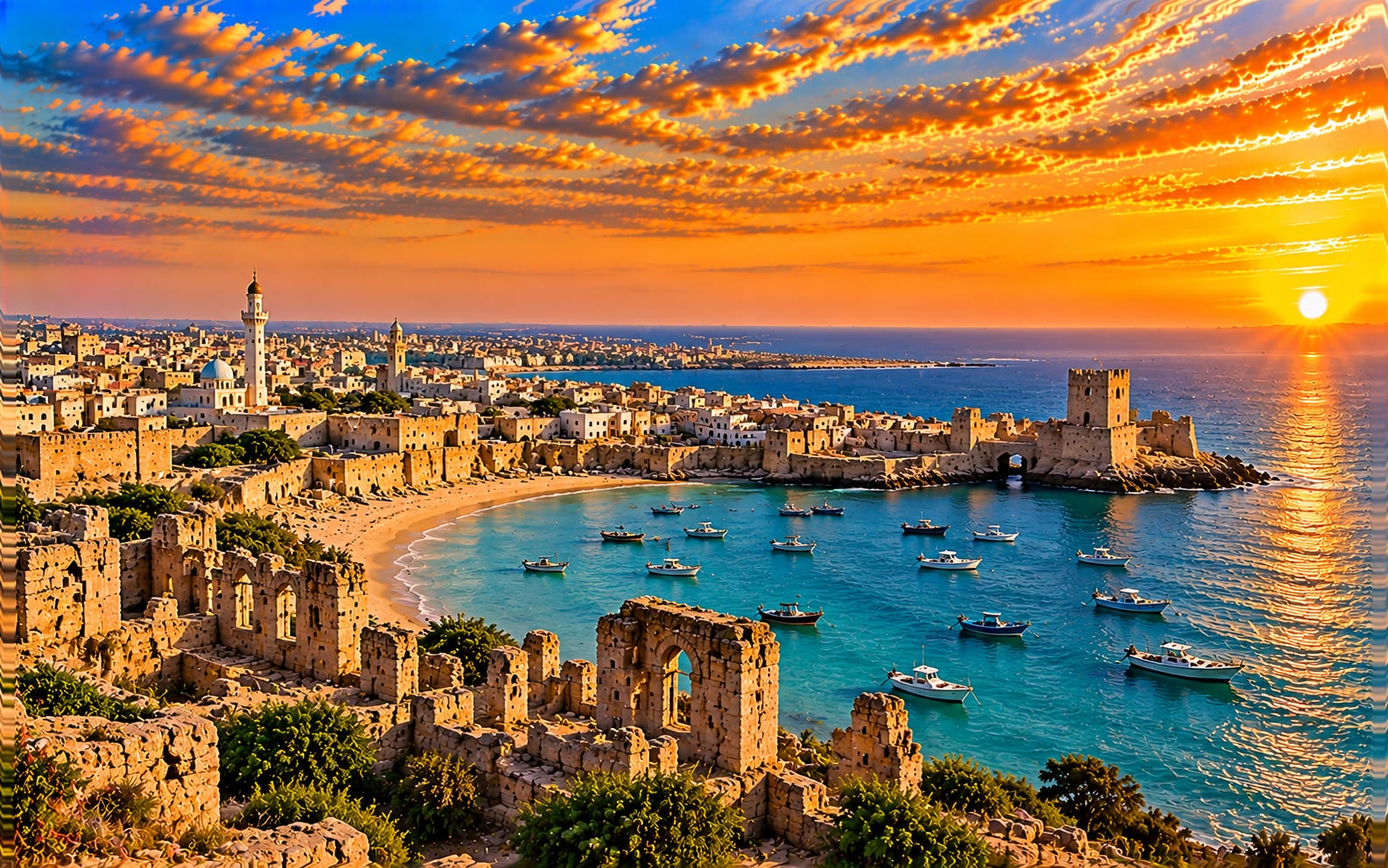
Berbera is the port: Ottoman, Egyptian, then British Somaliland’s capital in the hot months, with a decaying old town of coral-stone buildings and carved doors, and a runway so long it was a designated Space Shuttle emergency landing site. The Gulf of Aden beyond it has reefs almost nobody dives.
Sheikh, on the escarpment between them, is where the road climbs 2,000 metres through switchbacks with a view back down to the sea.
Seven days. Figure USD 1,350 (≈ AED 4,958) per person. November to February — Berbera is close to unbearable from May to September.
Before you go: the 15-minute admin
Entry
- A Somaliland visa is required and is separate from a Somali one. Obtain it from a Somaliland liaison office — Addis Ababa, Nairobi, Dubai and London all have one — or on arrival at Hargeisa with a letter of invitation arranged by your fixer.
- A Somali federal visa does not admit you to Somaliland, and a Somaliland visa does not admit you to Mogadishu. They are separate systems in practice.
- Fly into Hargeisa (HGA), usually via Addis Ababa, Djibouti or Dubai.
- Do not enter overland from Ethiopia without checking — the Wajaale crossing works but conditions change.
Money
- The Somaliland shilling is a currency of a state nobody recognises, and it trades around 8,500 to the dollar. The Somali shilling is a different currency and is what the federal south uses.
- In practice, dollars run everything above about ten dollars and shillings run everything below it.
- Mobile money (ZAAD) is universal and is how Somalilanders actually pay for things — but it needs a local SIM and a local account.
- No international card works. No international ATM works. Bring every dollar, in clean notes.
- The money-changers’ stalls are safe — stacks of cash sit unguarded in the street, which tells you something about Hargeisa that statistics do not.
On the ground
- Use a Somaliland fixer. They arrange the SPU escort, the permits and the vehicle, and the trip does not work without them.
- The SPU escort is one or two armed police who ride with you outside Hargeisa. Budget for their daily rate and their food.
- Permits for Laas Geel are issued by the Ministry of Tourism in Hargeisa and must be collected before you drive out.
- Do not go east of Burao. Sool and Sanaag are disputed.
- Do not photograph military, police, the airport or government buildings.
- Khat is legal and widely chewed from early afternoon. Drivers chew. Discuss this with your fixer before you hire one.
- This is a conservative Muslim society. Women should cover arms, legs and hair; men wear long trousers. Alcohol is illegal.
Day by day
Day 1 — Hargeisa
- This itinerary is Somaliland only. You will travel with an SPU — an armed Special Protection Unit officer — outside Hargeisa, which is mandatory and arranged by your operator.
- Somaliland issues its own visa and a Somalia visa is not valid for it.
- 07:00 — The livestock market, best early, which is the economic engine of the country — Somaliland exports millions of sheep and goats to the Gulf each year.
- 10:00 — The MiG memorial in the central square, and what it commemorates — which a local guide should tell you about rather than a page.
- 13:00 — The gold souk and the money-changers on Independence Avenue, where shillings are stacked in bricks on the pavement and nobody steals them.
- 16:00 — The Hargeisa Cultural Centre, which runs the book fair and has the best library and archive in the country.
- Collect the Laas Geel permit today, not tomorrow.
Day 2 — Laas Geel
- 06:30 — Permit collected the day before, SPU aboard, an hour east on the Berbera road and then a track.
- Go early. The light is better and the heat is not yet an issue.
- 08:00 — The climb is short and the shelters are spread around the granite dome — you will be there two or three hours and there will probably be nobody else.
- The paintings are around 5,000 years old and the pigment is unfaded — cattle with lyre-shaped horns, and people with their arms raised.
- Do not touch the paintings, and keep flash off. There is no barrier and no supervision beyond your guide, which is both the pleasure and the problem.
- 13:00 — Back to Hargeisa for the afternoon.
Day 3 — Down to Berbera
- 08:00 — The road down through the Golis range and the escarpment, which drops 1,500m to the coast.
- 12:00 — Into Berbera, and it is markedly hotter than Hargeisa — Berbera is one of the hottest inhabited places on the planet in summer.
- 16:00 — The old town — coral-block Ottoman houses, carved doors, and the Ottoman-era mosque, much of it collapsing and some of it being restored.
- The port has been rebuilt with Emirati investment and is the reason Somaliland’s economy has a future argument attached to it. Do not photograph it.
- 19:00 — Seafood at the harbour, which is the best eating in the country.
Day 4 — The coast
- 07:00 — The beaches east of town are empty, and the reefs off them are essentially undived. Bring your own gear.
- 11:00 — Out of the sun, which here is not advice but a requirement.
- 16:00 — The old town again in the late light, and the Ottoman quarter is best then.
- 18:00 — The fish market as the boats come in.
- Dress conservatively throughout. Somaliland is conservative and alcohol is illegal; women should cover hair outside the hotel.
Day 5 — Sheikh and the escarpment
- 08:00 — The Sheikh Pass, 2,000 metres of switchbacks with the Gulf of Aden behind you — an old British road, and one of the better drives in the Horn.
- 10:30 — Sheikh town, cool, green and completely unlike the coast, with the colonial-era school that educated much of Somaliland’s leadership.
- 13:00 — Lunch in Sheikh, and the temperature difference from Berbera is 15°C.
- 15:00 — Birdwatching on the escarpment, which is excellent and almost entirely unrecorded — several Somali endemics are here and nobody is counting them.
- 18:00 — Overnight at Sheikh or back toward Berbera.
Day 6 — Back to Hargeisa
- 08:00 — The long way, via Berbera and the main road, or the Sheikh road back.
- 13:00 — Into Hargeisa, and the afternoon for the market and the money-changers.
- 17:00 — The Naasa Hablood hills outside Hargeisa in the late afternoon.
- 19:30 — Dinner somewhere with camel meat on the menu, which is the national dish and better than it sounds.
Day 7 — Out
- 09:00 — Spend your remaining shillings — you cannot change them anywhere else on earth.
- 11:00 — Hargeisa airport is straightforward by regional standards. Leave two hours.
- The SPU officer travels with you to the airport and that is where the arrangement ends.
Costs and practicalities
Mogadishu and the south, which this guide does not route
- Al-Shabaab remains capable of large attacks in Mogadishu, including on hotels and government compounds used by foreigners.
- A small number of visitors go with heavily armed private security, staying inside the airport perimeter or at fortified hotels. The security arrangement costs more than the rest of this itinerary combined and does not eliminate the risk.
- Lido beach, the Arba’a Rukun mosque and the Italian cathedral ruins are what is usually described. They are real. So is the threat.
- Puntland has its own administration, its own advisories, and the piracy history on its coast.
- This page does not route any of it, and operators who sell it casually should be treated with suspicion.
Best time to visit
November–February is the cool dry season and the only comfortable window, particularly on the coast where Berbera’s summer is extreme.
- November–February — the jilaal approaching: dry, 25–30°C in Hargeisa, and tolerable in Berbera. The best for Laas Geel and the Sheikh Pass.
- March–May — the gu rains, the main wet season, which greens the interior and makes some tracks difficult.
- June–September — the xagaa, hot and dry, with Berbera regularly exceeding 45°C. Hargeisa sits at 1,300m and stays more bearable.
- October–November — the deyr, the shorter rains.
Hargeisa’s altitude makes it several degrees cooler than the coast year-round, which is why the British moved the summer capital there.
Travel tips
- An armed police escort (SPU) is mandatory for foreigners outside Hargeisa. It is a legal requirement, not a security upsell, and you pay the daily rate and their food.
- Permits for Laas Geel are issued in Hargeisa at the Ministry of Tourism and must be collected before you drive out.
- A Somaliland visa is separate from a Somali one and neither admits you to the other’s territory in practice.
- No international card or ATM works. Bring every dollar in clean cash; the money-changers’ street stalls are safe and are a sight in themselves.
- Mobile money (ZAAD) runs everyday payments for locals but needs a local account.
- Do not go east of Burao. Sool and Sanaag are disputed and have seen fighting.
- This is a conservative Muslim society. Alcohol is illegal, women should cover hair and body, and khat is chewed from early afternoon — including, sometimes, by drivers.
What this trip would cost
Two people, 6 nights, mid-range comfort, international flights excluded:
| Item | Cost |
|---|---|
| Hotels, 6 nights | USD 720 (≈ AED 2,644) |
| Fixer, 4x4 and driver, 7 days | USD 910 (≈ AED 3,342) |
| SPU armed escort, 6 days | USD 420 (≈ AED 1,542) |
| Food and drink, 7 days | USD 280 (≈ AED 1,028) |
| Permits, Laas Geel entry and local guides | USD 370 (≈ AED 1,359) |
| Total for two | USD 2,700 (≈ AED 9,916) |
- Roughly USD 1,350 (≈ AED 4,958) per person. The escort is a line item you cannot remove — it is a legal requirement for foreigners outside Hargeisa, not a security upsell.
- All of it in cash, in clean US dollars.
- Figures are indicative and the SPU rate varies by region.
- Insurance does not appear because no standard policy covers travel against government advice, and Somaliland’s non-recognition complicates even specialist cover.
- Hotel picks here are chosen on location, not on commission — always check prices and recent reviews before booking.
What to pack
- Clean US dollars in a range of denominations.
- Modest clothing — long sleeves and trousers for everyone, a headscarf for women.
- Serious sun protection and more water than you plan for.
- Your own snorkel gear if Berbera’s reefs interest you.
- A power bank; the grid is privately run and generally works, but not everywhere.
- Hand sanitiser and your own medication.
FAQ
Is Somaliland the same as Somalia? Legally yes, practically no. Somaliland declared independence in 1991, runs its own government, currency, army and elections, and is recognised by no state. Visas, money and advisories all work differently there.
How old is the art at Laas Geel? Estimates run from about 5,000 to 11,000 years. It was only described scientifically in 2002 and has never been fully excavated.
Why isn’t Laas Geel a World Heritage site? Because UNESCO works through recognised states and Somaliland is not one. It is the clearest cost of non-recognition you will see on the ground.
Do I really need an armed escort? Outside Hargeisa, yes — it is mandatory for foreigners and arranged through your fixer.
Can I visit Mogadishu? Most governments advise against all travel. A few visitors go with heavy private security at very high cost. This guide does not route it.
What language do they speak? Somali, universally. Arabic is widely understood and English is common in Hargeisa among younger people and in business.
Prices and entry rules change, and what you need depends on your passport; last checked 29 October 2026, so confirm with the embassy or your airline before booking.


