 The Itinerary
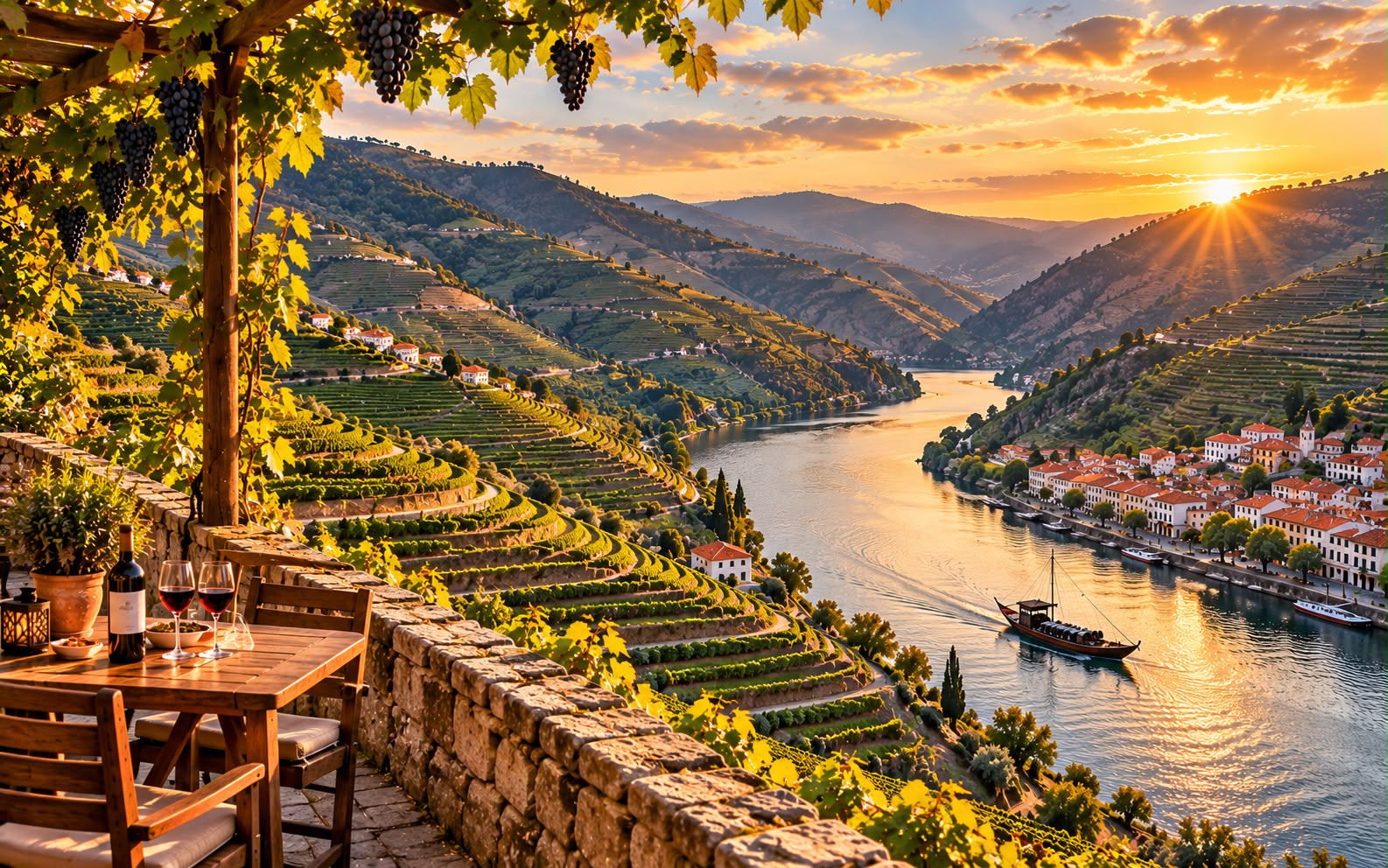
Spain and Portugal in 12 days: Barcelona, Madrid, Seville, Lisbon and Porto
The Iberian peninsula end to end: Gaudí's unfinished basilica, the Prado's Velázquezes, a Moorish palace Christian kings kept building, a city of tiles and fado, and the port lodges across the Douro — joined by trains fast enough to make it one trip rather than two.
- Southern Europe
- 12 days
- ≈ AED 7,350 / person
- Five cities, four high-speed trains and one short flight
Before you go
Before you go: the admin
One visa, two countries, no border
- Both are in the EU, Schengen and the eurozone, so one visa, one currency and no border check between them.
- The Seville to Lisbon leg is the only awkward one. There is no high-speed rail across that border — the options are a one-hour flight, a six-hour bus, or a long drive via Évora. Fly it; the alternative costs a day.
- Passports need three months’ validity beyond departure and the EES biometric system is now in operation — allow extra time at your first Schengen entry.
Trains, which do most of the work
- Spain’s AVE network is excellent. Barcelona–Madrid is 2h30, Madrid–Seville 2h30. Book on Renfe as far ahead as possible — fares are released months out and triple close to departure. Ouigo and Iryo are the cheaper competitors on the same lines.
- Portugal’s Alfa Pendular does Lisbon–Porto in under three hours. Book on CP.
- An open-jaw ticket — Barcelona in, Porto out — costs much the same as a return and saves a day.
Money
- Euros throughout, and cards work almost everywhere.
- Carry some cash for small bars, markets and Porto’s tascas.
- Decline dynamic currency conversion at every terminal.
One gentle brief
- The two countries keep different hours. Spanish lunch is 2–4pm and dinner from 9.30; Portuguese dinner starts earlier, around 8.
- Portugal is noticeably cheaper than Spain, and Porto is cheaper than Lisbon.
- Pace it. Five cities in twelve days is two nights each with travel days inside them. It works because the trains are fast, but it is not a slow trip.
Day by day
Day 1 — Land in Barcelona
- 14:00 — Arrive and walk the Eixample, which is the Gaudí neighbourhood — Casa Batlló and La Pedrera are on the same boulevard.
- 16:30 — The Sagrada Família needs a booked timed slot and sells out days ahead. Pay for the tower lift; the stair down is the memorable part — a tight stone spiral with the city appearing through slots in the wall.
- Late afternoon is when the western windows are lit, which is the half of the nave people photograph.
- 20:00 — El Born in the evening rather than Las Ramblas, which is a pickpocket’s office and a tourist menu.
Day 2 — Barcelona: Park Güell, the Gothic Quarter, the sea
- 08:30 — Park Güell at opening with a timed ticket — the monumental zone is capped and the mosaic terrace is the photograph.
- 11:00 — La Boqueria off Las Ramblas before noon, or the Mercat de Santa Caterina, which is where locals shop.
- 13:00 — The Gothic Quarter and the cathedral, and the geese in the cloister, which have been kept there for centuries.
- 16:00 — The Picasso Museum in El Born, which holds the early work and the Las Meninas series — it is the young Picasso, which is the surprise.
- 18:30 — Barceloneta for a late swim and a bomba.
Day 3 — AVE to Madrid
- 09:00 — Two and a half hours across the meseta at 300km/h.
- 13:00 — Plaza Mayor and La Latina, and the Mercado de San Miguel for a stand-up lunch.
- 16:00 — The Prado in the afternoon — Velázquez’s Las Meninas, Goya’s black paintings, and Bosch’s Garden of Earthly Delights. It is free for the last two hours and correspondingly busy then — pay, and go at four.
- 20:30 — La Latina in the evening, and Madrid eats at ten.
- Churros at San Ginés at some point, which is open absurdly late — two in the morning is normal.
Day 4 — Madrid: the Reina Sofía, the palace, and Toledo
- 09:00 — The Reina Sofía for Guernica, which is worth the trip on its own and is best seen first thing. It hangs alone and the room fills by eleven.
- 11:30 — The Royal Palace, the largest in western Europe by floor area, with the Royal Armoury.
- Or Toledo as a day trip — 33 minutes by AVE, a walled city on a granite outcrop, with the cathedral, El Greco’s Burial of the Count of Orgaz and the synagogues. Go early and stay for the evening, when the day-trippers have gone.
- 17:00 — Retiro park if you stay in Madrid, and the Crystal Palace in it.
- 21:00 — A rooftop on the Gran Vía.
Day 5 — AVE to Seville
- 09:00 — Two and a half hours south.
- 13:00 — The Real Alcázar, which is the one to book ahead — Mudéjar palaces built by Muslim craftsmen for Christian kings, and the Patio de las Doncellas is the finest room in Spain.
- 16:30 — The cathedral and the Giralda, the largest Gothic church in the world, with a minaret for a bell tower that you climb by ramps rather than steps — built so the muezzin could ride up.
- 19:00 — Barrio Santa Cruz in the cool of the evening.
- 21:30 — Triana across the river in the evening for tapas and flamenco that is not staged for coaches.
Day 6 — Seville: Plaza de España, and a flamenco that is real
- 08:30 — Plaza de España early, before the sun gets on the tiles, and before the coaches.
- 11:00 — Metropol Parasol (Las Setas) for the walkway, and the Roman remains underneath it.
- 13:00 — Córdoba is 45 minutes by AVE if you would rather swap a Seville day for the Mezquita, which is arguably the single most extraordinary building in Spain — 856 columns with a cathedral dropped into the middle.
- 17:00 — The riverside and the Torre del Oro.
- 21:00 — Casa de la Memoria or La Carbonería for flamenco — small rooms, no dinner show, and the difference is obvious within a minute.
Day 7 — Fly to Lisbon
- An hour in the air. The bus is six hours and the train does not exist.
- 14:00 — Arrive and take tram 28 — or better, the 12, which covers much of the same route with a third of the pickpockets.
- 17:00 — A miradouro for sunset — Santa Luzia or Senhora do Monte.
- 20:00 — Alfama in the evening, and a fado house. The small ones without a dinner menu are the real thing — you sit in silence while they sing, and that is the etiquette.
Day 8 — Belém, and the tiles
- 09:30 — Belém in the morning — the Jerónimos Monastery and the Torre de Belém, both UNESCO-listed and both Manueline, which is Portugal’s own answer to Gothic.
- 12:00 — Pastéis de Belém, where they have been made to the monastery recipe since 1837 — eat them warm with cinnamon, standing up. The queue inside moves faster than the one at the window.
- 15:00 — The Museu Nacional do Azulejo in the afternoon, which is the best small museum in the city and explains the tiles you have been walking past.
- 19:30 — The LX Factory for dinner, in a converted industrial block, under the bridge.
Day 9 — Sintra
- 08:00 — Go early. Sintra is 40 minutes by train and by eleven the Pena Palace queue is an hour.
- 09:30 — Pena Palace needs a timed ticket bought online, and the walk up through the park is better than the shuttle bus.
- 12:30 — The Moorish Castle walls between them if the legs hold.
- 14:30 — Quinta da Regaleira for the initiation well — a nine-turn inverted tower you descend through, which is the strangest thing in Portugal.
- 17:30 — Cabo da Roca, the westernmost point of mainland Europe, on the way back if you have a car.
Day 10 — Train to Porto
- 09:00 — Under three hours on the Alfa Pendular.
- 13:00 — Ribeira in the afternoon, the UNESCO-listed riverfront, and lunch on the quay.
- 15:30 — Over the Dom Luís I bridge — Eiffel’s partner built it — on the upper deck, on foot, which is the best view in the city and free.
- 16:30 — The port lodges at Vila Nova de Gaia are on the far bank: Taylor’s, Graham’s, Sandeman. A tawny and vintage tasting flight is the point.
- 19:00 — Livraria Lello needs a timed ticket and the fee is redeemable against a book — go at the last slot, when it is emptiest.
Day 11 — The Douro valley
- 08:30 — The Douro line is one of the great railway journeys — from São Bento out to Pinhão, the last stretch running right along the water through the terraced vineyards. Sit on the right going out.
- 12:30 — A quinta visit and lunch at Pinhão or Peso da Régua, with a tasting among the vines that made the port you drank yesterday.
- Or a river cruise up from Porto, which is slower and covers less — the train there and the boat back is the best combination if the timetable allows.
- 18:00 — São Bento station’s tiles on the way back — 20,000 azulejos in the entrance hall.
Day 12 — Fly out of Porto
- 09:00 — The Bolhão market, and a francesinha if you are brave — Porto’s sandwich of several meats under melted cheese and beer sauce. It is a lunch, not a breakfast.
- 11:30 — The Clérigos tower for a last view, 225 steps.
- The metro runs to the airport in 30 minutes from Trindade, which makes this an easy departure.
Costs and practicalities
Best time to visit
April–June and September–October. Iberian summers are severe inland — Seville and Córdoba pass 45°C — and August is when Spain and Portugal both go on holiday.
- April–June — the best of the year. Semana Santa in Seville in March or April and the Feria de Abril two weeks later are extraordinary and fill the city entirely. Córdoba’s patio festival is early May.
- July–August — the interior is dangerously hot and the coast is full. Many city restaurants close for August, and Seville is best avoided altogether.
- September–October — the vendimia and the Douro harvest, warm, quieter, and the best month for eating. The grape harvest in the Douro is late September.
- November–March — mild in Seville and Lisbon, cold in Madrid, and the museums are empty. Porto and Lisbon are wet; the Nazaré big-wave season runs October to March.
Lisbon’s Santo António on 12–13 June fills Alfama with sardine grills and is the best night of the city’s year.
Travel tips
- Book the Sagrada Família, Park Güell, the Alcázar, Pena Palace and Livraria Lello online with timed entry. All five sell out, and the Alhambra — if you add Granada — sells out months ahead.
- Take tram 12 rather than 28 in Lisbon, or ride 28 at seven in the morning. It is the single worst pickpocket route in Europe.
- The couvert is not free in Portugal. Bread, olives and cheese brought unasked are charged; send them back if you do not want them.
- In Granada and Jaén a free tapa comes with each drink. In most of Spain, including Seville and Madrid, you pay for them.
- Lisbon and Porto’s pavements are polished limestone and lethal when wet. Shoes with grip matter more than style.
- A cappuccino after 11am marks you out in Spain, and coffee standing at the bar costs a third of the seated price — both prices are posted by law.
- Do not drive into any of these city centres. Madrid, Barcelona and Lisbon all have camera-enforced restricted zones and the fines arrive months later.
What this trip actually costs
Two people, 11 nights, mid-range comfort, international flights excluded:
| Item | Cost |
|---|---|
| Hotels, 11 nights | EUR 1,320 (≈ AED 5,405) |
| Food and drink, 12 days | EUR 900 (≈ AED 3,685) |
| AVE and Alfa Pendular trains, two people | EUR 520 (≈ AED 2,129) |
| Museums, palaces, port tasting and guides | EUR 440 (≈ AED 1,802) |
| Seville–Lisbon flight, two people | EUR 220 (≈ AED 901) |
| City transport and airport transfers | EUR 200 (≈ AED 819) |
| Total for two | EUR 3,600 (≈ AED 14,740) |
- Roughly EUR 1,800 (≈ AED 7,370) per person, and Portugal is noticeably cheaper than Spain — Porto is the best value of the five cities.
- Booking the AVE late can double the train line on its own. Renfe releases fares months ahead.
- Timed entry tickets are a real cost here — five major sites at €15–30 each per person adds up.
- Hotel picks here are chosen on location, not on commission — always check prices and recent reviews before booking.
What to pack
- Shoes with grip for the Portuguese calçada and a lot of walking on stone.
- Something with sleeves for the cathedrals — shoulders and knees covered, men included, at St Peter’s-standard enforcement in Seville and Jerónimos.
- A light layer for Madrid evenings, which are cool even in summer at 650m.
- A sun hat for Seville and Córdoba in any month from May.
- A day bag that closes properly and nothing in a back pocket.
FAQ
Is five cities in twelve days too much? It is brisk but it works, because four of the five legs are fast trains. If you want it slower, drop Barcelona or Porto rather than shortening everything.
Why fly Seville to Lisbon? Because there is no high-speed rail across that border. The alternatives are a six-hour bus or a long drive via Évora, and either costs a day.
Should I add Granada? Only by swapping something out. The Alhambra deserves a full day and books out months ahead, and Granada is three hours from Seville.
Which is better, Lisbon or Porto? Porto is smaller, cheaper and more concentrated; Lisbon has more to see and better day trips. Most people who visit both say Porto and mean it.
Do I need Spanish or Portuguese? No. English is widely spoken in all five cities. Spanish is not much use in Portugal and using it is a small discourtesy — English first.
Prices and entry rules change, and what you need depends on your passport; last checked 29 October 2026, so confirm with the embassy or your airline before booking.


