 The Itinerary
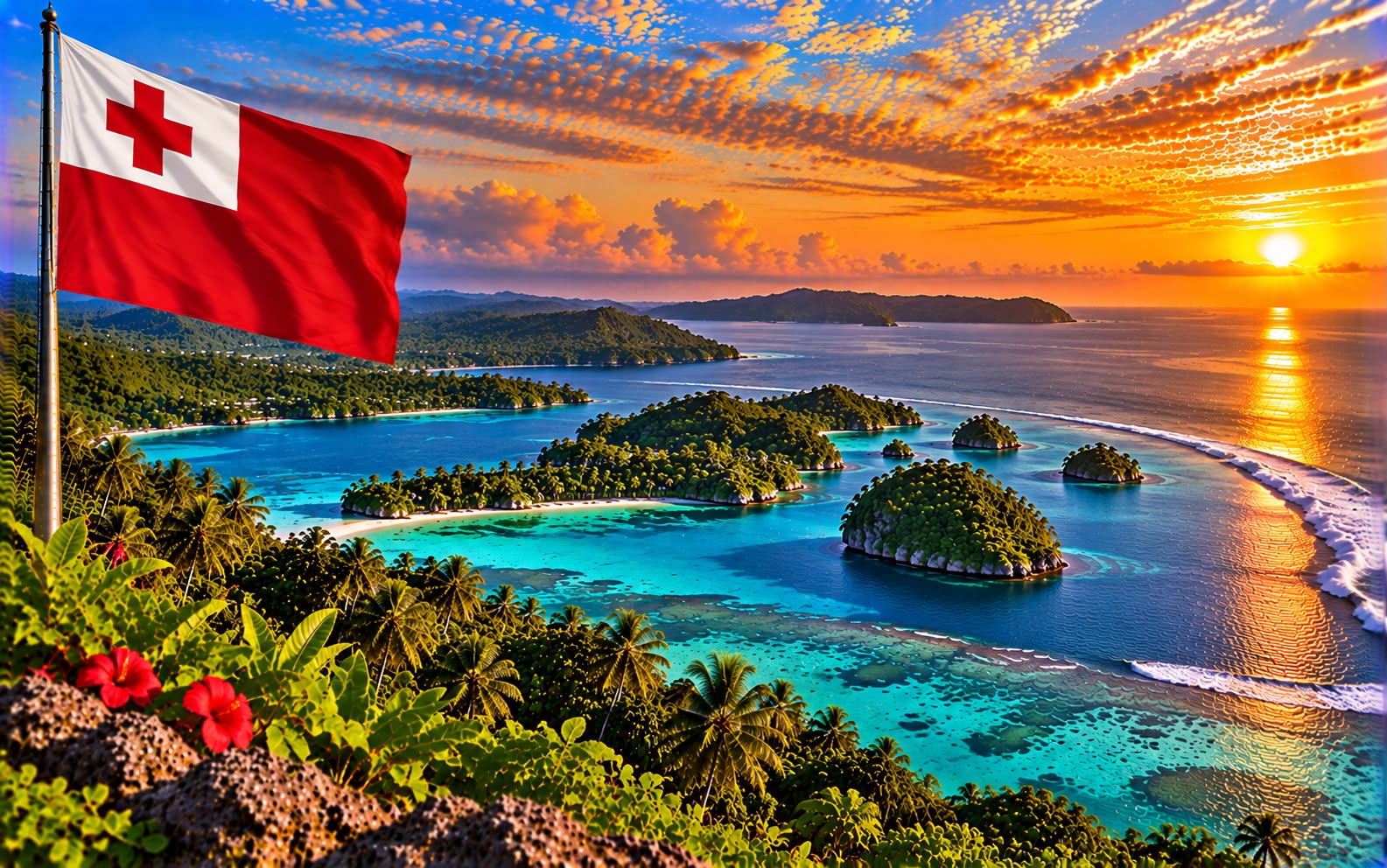
Tonga in 8 days: swimming with humpbacks in Vava'u, 'Eua and Tongatapu
Humpback mothers and calves in sheltered water where swimming with them is licensed and regulated, a trilithon raised eight hundred years ago, blowholes firing along five kilometres of coast — and a Sunday on which the entire country stops.
- Pacific Islands
- 8 days
- ≈ AED 5,500 / person
- One of the few countries where you may legally swim with humpback whales
Before you go
Tonga is 170-odd islands in the central South Pacific, 36 of them inhabited, and the only Pacific nation never colonised — it kept its monarchy through the European century and still has one.
The whales are why most people come. Humpbacks migrate from Antarctica to breed and calve in Tongan water between roughly July and October, and Tonga is one of a very small number of countries that licenses swimming with them. In Vava’u, in sheltered water, you slip off the back of a boat in a group of four with a guide and a mother and calf hang in the blue a few metres away. It is the single most extraordinary wildlife encounter available anywhere, and it is regulated tightly enough to still be there in twenty years.
Tongatapu, the main island, has the Haʻamonga ʻa Maui — a coral trilithon raised around 1200 AD, two uprights and a lintel weighing many tonnes, which nobody is entirely sure how they built — and the Mapuʻa ʻa Vaea blowholes, where the swell fires through five kilometres of lava shelf in spouts twenty metres high.
‘Eua, forty kilometres south, is the oldest island in the country and the least visited: rainforest, sea cliffs, sinkholes and almost nobody.
Eight days. Figure USD 1,500 (≈ AED 5,509) per person excluding flights. Go July–October for the whales, which is also the dry season.
Before you go: the 15-minute admin
Sunday, which is not a normal day
- Tonga is devoutly Christian and the Sabbath is written into the constitution. On Sunday, almost everything closes — shops, restaurants, most transport, and commercial activity generally.
- Tour operators do not run. No whale swims, no diving, no domestic flights in most cases.
- Your hotel will feed you and some resorts operate for guests, but you should plan Sunday as a day of rest, church and the beach.
- Going to a church service is the thing to do — the singing in a Tongan church is extraordinary and visitors are welcomed. Dress properly: covered shoulders and knees, and smart.
- Build it into the itinerary deliberately, which is what this one does. Arriving without knowing is how people lose a day of a short trip.
Dress and custom
- Tonga is conservative. Swimwear is for the beach and the resort only — cover up in villages and in town, men included. Nobody will be rude about it; they will simply notice.
- Topless and nude bathing are illegal.
- The taʻovala, a woven mat worn around the waist, is formal dress and you will see it everywhere.
The whales, practically
- Season runs roughly July to October, peaking around August and September.
- Operators are licensed and numbers are capped. Four swimmers plus a guide in the water at a time; set distances; no diving, no touching, no chasing.
- Book well ahead — the good operators in Vava’u fill months in advance for peak weeks.
- It is not guaranteed. Whales move, weather closes days, and some encounters are a distant look rather than a close one. Book three or four days of swimming, not one.
- You need to be a confident swimmer in open water.
After the 2022 eruption
- The Hunga Tonga–Hunga Haʻapai volcano erupted in January 2022 in one of the largest explosions recorded, with a tsunami that struck the western coasts and ash that covered much of the country.
- Tonga has recovered and is open, with infrastructure largely restored. Some specific sites and resorts changed or did not reopen.
- Check current conditions for Haʻapai in particular, which took the worst of it.
Visas, money and getting around
- Many nationalities get a visitor’s visa on arrival for 31 days. Check your own case officially.
- The paʻanga (TOP). Bring New Zealand or Australian dollars to change; cards work at larger hotels and little else, and ATMs are in Nukuʻalofa and Neiafu only.
- Domestic flights link Tongatapu with Vavaʻu, Haʻapai and ʻEua — the ʻEua hop is famously about eight minutes, one of the shortest scheduled flights anywhere. Schedules shift; leave buffer.
- A ferry runs to Vavaʻu, takes about 20 hours and is cheap.
- Hire a car on Tongatapu; a local permit is issued at the police station on presentation of your licence.
Travelling with kids?
- Whale swimming usually has a minimum age — commonly around 12 — and requires confident open-water swimming. Boat-based whale watching has no such limit.
- The beaches, the blowholes and the caves are excellent for all ages.
- Tonga is safe and easy, and English is widely spoken.
Day by day
Day 1 — Nukuʻalofa
- Afternoon — Arrive on Tongatapu. The airport is 35 minutes from town.
- 16:00 — Nukuʻalofa: the Royal Palace — white, wooden, 1867, viewed from outside — the Royal Tombs, and the waterfront.
- 17:30 — Talamahu Market for woven mats, tapa cloth and the vanilla.
Where to stay on Tongatapu (three nights across the trip)
- Mid-range: Nukuʻalofa, or the resorts on the north and west coasts.
Day 2 — Tongatapu
- 09:00 — Haʻamonga ʻa Maui, on the east of the island: a coral-limestone trilithon raised around 1200 AD by Tuʻitātui, two uprights capped by a lintel, each stone weighing many tonnes. Legend says Maui carried them; the archaeology is less certain and more interesting.
- 11:00 — The Langi terraced royal tombs at Lapaha, stepped platforms of cut coral slabs, the oldest from the eleventh century.
- 13:00 — Anahulu Cave for the stalactites and the freshwater pool you can swim in.
- 15:00 — Mapuʻa ʻa Vaea — the “chief’s whistles” — blowholes firing along five kilometres of lava terrace on the south coast. On a big swell they go twenty metres up and the noise carries.
- 17:30 — The flying foxes at Kolovai, a colony of fruit bats roosting in the trees, traditionally sacred and protected by royal decree.
Day 3 — ʻEua
- Morning — The eight-minute flight to ʻEua, or the two-and-a-half-hour ferry.
- ʻEua is the oldest island in Tonga — around 40 million years — and the least visited. ʻEua National Park has rainforest with the Koki parrot, sinkholes dropping through the limestone, and sea cliffs on the east coast with a 120-metre drop.
- Afternoon — The Hafu Pool, the ʻAnokula cliff-top lookout, and the Rats Cave and Lokupo overlook.
- In season, whales are visible from the cliffs — which is a very strange way to see them.
Where to stay on ʻEua (one night)
- Very simple: a handful of guesthouses. Bring what you need.
Day 4 — Back, and north to Vavaʻu
- Morning — Fly back to Tongatapu and on to Vavaʻu, about an hour north.
- Afternoon — Neiafu, the town on the Port of Refuge — a deep, sheltered harbour that is one of the best natural anchorages in the Pacific and full of yachts in season.
- Evening — Brief with your whale operator for the morning.
Where to stay at Vavaʻu (four nights)
- Mid-range: the lodges around Neiafu and on the surrounding islands.
Day 5 — Whales
- 08:00 — Out into the Vavaʻu group. The boat looks for a mother and calf resting in sheltered water — which is what makes Tonga work, because the calves need calm and the islands provide it.
- Four in the water at a time, with the guide, finning slowly into position and then simply hanging there. A calf may come to look at you. The mother will be below, entirely aware, entirely calm.
- Also seen: heat runs, where males compete; singers, males hanging head-down producing song you feel through your chest.
- Afternoon — Back into Neiafu, or a second trip.
Day 6 — Whales again, or the islands
- A second whale day, because the first may not have delivered and the second often does.
- Or, if you have had your encounter: Swallows Cave on Kapa island, where the light comes through the underwater entrance and the sprats shoal in it; and Mariner’s Cave, entered by free-diving down and through a submerged tunnel, which is thrilling and is not for everyone.
- Sailing — Vavaʻu is a charter yacht centre and a day on a boat among the islands is cheap and very good.
Day 7 — Sunday
- Nothing is open. This is deliberate in the itinerary rather than bad luck.
- Morning — Go to a church service. The harmony singing, unaccompanied and enormous, is one of the things people remember longest about Tonga. Dress smartly and modestly; sit at the back; you will be welcomed.
- Afternoon — The beach, a long lunch at your lodge, and nothing else. The country rests and so should you.
Day 8 — Fly out
- Morning — Fly Vavaʻu to Tongatapu and connect.
- Leave margin; domestic schedules shift and the international departures are few.
Costs and practicalities
Best time to visit
July–October, and the reason is unusually specific: this is the humpback whale season, and Tonga is one of very few places on earth where you can legally swim with them.
- July–October — the humpback season in Vava’u, when the whales come to calve and the licensed swim operators run. It is also the dry, cooler season, 22–27°C.
- May–June and November — dry and quiet, before and after the whales.
- December–April — hot, humid, wettest, and the cyclone season, at its most active from January to March.
- Diving and snorkelling visibility is best in the dry months; the Vava’u group’s anchorages make it a sailing destination from May to October.
Hunga Tonga’s 2022 eruption reshaped parts of the seabed and some dive sites; check with operators what has changed.
Travel tips
- Whale swims are strictly licensed — a limited number of operators, four swimmers plus a guide in the water, and no touching or chasing. Book with a licensed operator and accept that sightings are not guaranteed.
- Sunday is constitutionally protected. Almost everything closes, commerce is prohibited, and flights do not operate. Plan around it rather than being caught by it.
- Dress modestly — shoulders and knees covered away from the beach, and swimwear is for the water only. Many Tongans swim in clothes.
- Cover up more for church, which visitors are warmly welcomed to attend; the singing is extraordinary.
- Bring pa’anga in cash. ATMs are in Nuku’alofa and Neiafu; cards work at some resorts and operators.
- Inter-island flights and ferries are limited and change. Build buffer days around the Vava’u connection.
- Do not touch or stand on coral, and reef shoes are worth having.
What this trip actually costs
Two people, 7 nights, mid-range comfort, international flights excluded:
| Item | Cost |
|---|---|
| Lodges and guesthouses, 7 nights | USD 900 (≈ AED 3,305) |
| Domestic flights, two | USD 500 (≈ AED 1,836) |
| Whale swim days, two people, two days | USD 800 (≈ AED 2,938) |
| Car hire, boats, caves, entries | USD 300 (≈ AED 1,102) |
| Food and drink, 8 days | USD 500 (≈ AED 1,836) |
| Total for two | USD 3,000 (≈ AED 11,018) |
- Roughly USD 1,500 (≈ AED 5,509) per person. The whale swims are the cost and the reason — budget for at least two days, ideally three.
- Outside whale season this is a much cheaper and much quieter trip, and a perfectly good one.
- Peak weeks in August and September push accommodation in Vavaʻu up sharply and book out months ahead.
- ʻEua is very cheap and is the best value on the itinerary.
- Hotel picks here are chosen on location, not on commission — always check prices and recent reviews before booking.
What to pack
- A 3mm wetsuit or shorty if you have one — the water is around 24°C and you will be in it for hours.
- Your own mask and snorkel, which matters more than usual when a whale is three metres away.
- Modest clothing for town, villages and church, and something smart for Sunday.
- Reef-safe sun cream and a rash vest.
- Cash in paʻanga for anything outside the two main towns.
- Seasickness tablets. The whale boats sit still in swell for long periods, which is the worst case.
FAQ
Can I really swim with humpback whales? Yes — Tonga is one of very few countries that licenses it. Operators are permitted, numbers in the water are capped at four plus a guide, and there are rules on distance and behaviour. Book several days; it is wildlife, not a booking.
When is the season? Roughly July to October, peaking in August and September. Outside it the whales are in Antarctica.
Is everything really closed on Sunday? Effectively yes — it is constitutionally protected. Hotels feed their guests and some resorts operate, but tours, shops and most transport stop. Plan for it.
Did the 2022 eruption change things? It was enormous and caused real damage, particularly on the western coasts and in Haʻapai. The country has recovered and is open; check current conditions for Haʻapai specifically.
What language do they speak? Tongan and English, both official. English is widely spoken and you will have no difficulty.
Prices and entry rules change, and what you need depends on your passport; last checked 8 October 2026, so confirm with the embassy or your airline before booking.


