 The Itinerary
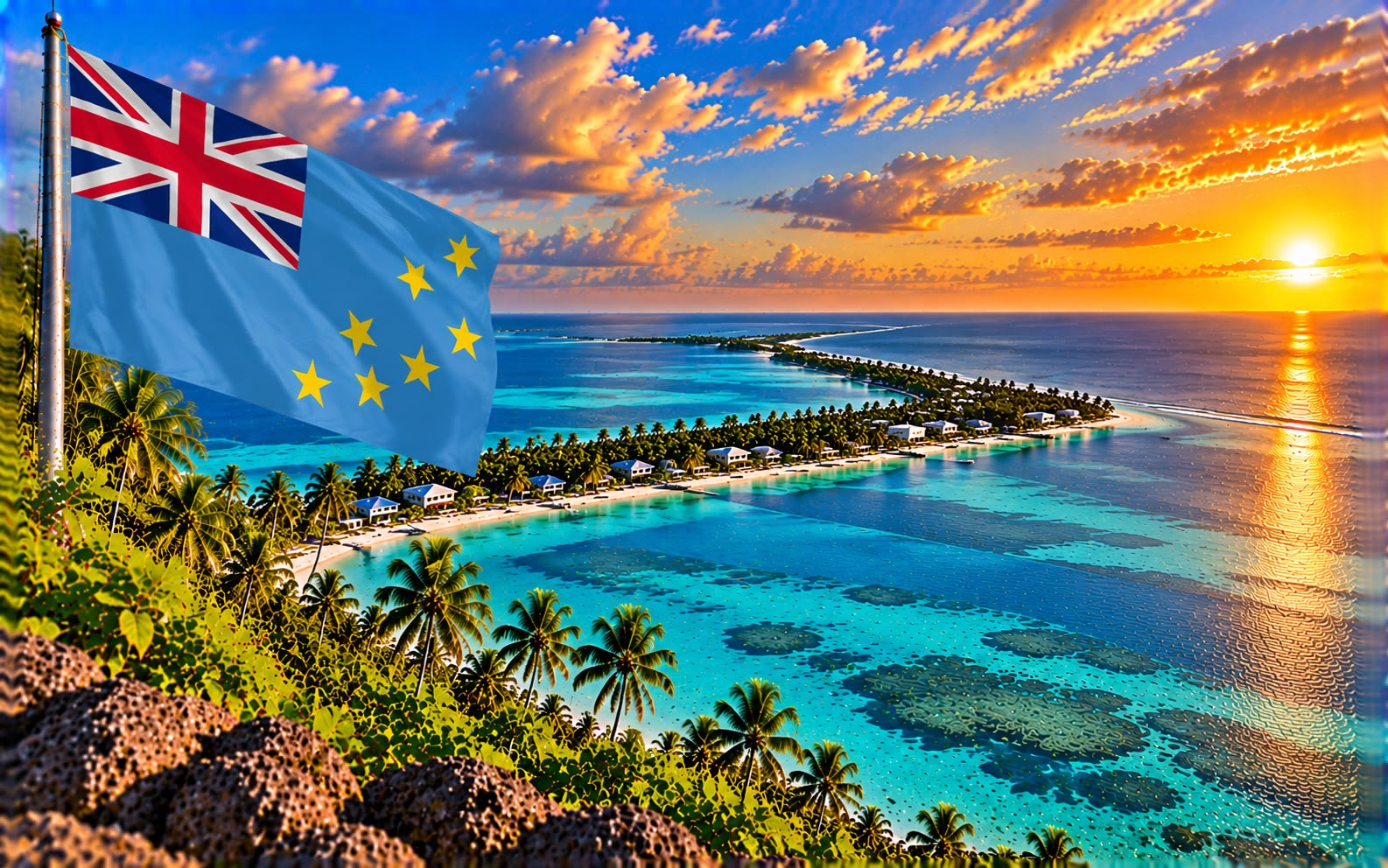
Tuvalu in 4 days: Funafuti, the runway and the conservation area
Nine atolls with a highest point under five metres, where the international runway doubles as the village green until a siren clears it twice a week — and where there is almost nothing to do, which is the point.
- Pacific Islands
- 4 days
- ≈ AED 1,500 / person
- An airport runway that is the town's park, and one of the least visited countries on earth
Before you go
Tuvalu is nine atolls and reef islands with a total land area of about 26 square kilometres, around 11,000 people, and a highest natural point of roughly 4.6 metres. It is among the three least-visited countries in the world — a few hundred tourists a year, most of them on their way to or from somewhere else.
The runway is the thing everyone remembers. Funafuti International Airport occupies a wide strip down the middle of Fongafale, the main islet, and because it is the largest flat open space in the country, it is where Funafuti lives. People play football and volleyball on it, dry copra on it, ride motorbikes along it, and sit on it in the evening because the sea breeze crosses there. Two or three times a week a siren sounds, everyone clears off, a Fiji Airways ATR lands, and twenty minutes later the pitch resumes.
Fongafale is extraordinarily narrow — in places a few dozen metres between the lagoon and the ocean, with the road down the middle. You can stand in one spot and see both horizons.
The Funafuti Conservation Area covers 33 square kilometres of the western lagoon — six uninhabited islets, reef, and the clear water that Fongafale’s own lagoon shore no longer has.
And Tuvalu has become, more than anywhere, the face of sea-level rise. Its foreign minister addressed a climate conference standing knee-deep in the sea in 2021; the government has begun a “digital nation” project to preserve its statehood; and the 2023 Falepili Union treaty with Australia gives Tuvaluans a migration pathway. People here are weary of being photographed as a disappearing country, and worth listening to on it.
Four days — which is what the flight schedule gives you anyway. Figure AUD 600 (≈ AED 1,514) per person excluding flights. Go May–October, the drier half.
Before you go: the 15-minute admin
The flight schedule is the itinerary
- Fiji Airways flies Suva to Funafuti, two or three times a week, on an ATR. That is essentially the only way in.
- The schedule dictates your stay. You arrive on one flight and leave on the next, which usually means three or four nights — there is no choosing a different length.
- Book well ahead. The aircraft is small, and government and medical travel take priority.
- Cancellations happen and there is no alternative route out. Do not book a tight onward connection from Suva.
- Flights occasionally run from Kiribati or the Marshalls, but not reliably.
Visas and money
- Many nationalities get a visitor’s permit on arrival for a month. Check your own case officially.
- The currency is the Australian dollar, alongside Tuvaluan coins that circulate locally and are not legal tender elsewhere — they make a good souvenir.
- Bring cash. There is one bank, the National Bank of Tuvalu, and cards are not usefully accepted anywhere. There is no reliable ATM for foreign cards.
- Bring more than you think. There is no way to get more.
Accommodation and supplies
- There are very few places to stay — one hotel of any size and a handful of guesthouses. Book before you fly; arriving without a booking is a bad idea.
- Shops are small and stock is whatever the last ship brought. Fresh produce is limited; imported tinned goods dominate.
- Bring anything you need, including medication, reef shoes and sun cream.
Water, and what not to do
- Drinking water is rainwater, collected from roofs. It is precious. Do not waste it, and take short showers without being asked.
- The lagoon side of Fongafale is not clean — the borrow pits dug by the Americans in 1943 to build the runway were never filled and have become waste ground and standing water. Swim on the ocean side or out in the conservation area.
- Modest dress. Tuvalu is devoutly Christian and conservative; shoulders and thighs covered away from the beach, and Sunday is observed strictly — almost nothing is open and church is the day.
Travelling with kids?
- Very limited medical facilities; evacuation would mean Fiji.
- The lagoon trips and the islets are excellent.
- There is nothing structured to do at all, which suits some children and not others.
Day by day
Day 1 — Funafuti
- Arrive, probably in the early afternoon, to a terminal the size of a bus shelter.
- Afternoon — Walk Fongafale. The whole inhabited strip is a few kilometres long and you can cover the centre in an hour. The road runs the length of it with the lagoon on one side and the ocean on the other, often both visible.
- Late afternoon — The runway, once the day’s flight has gone. Children play football, families sit out, motorbikes run up and down it. It is the single most memorable thing in the country and it costs nothing.
- Evening — The Vaiaku Lagi or one of the small kitchens. Eating out is limited and closes early.
Where to stay (three nights)
- The main option: the hotel at Vaiaku by the lagoon, or one of the guesthouses. Book ahead.
Day 2 — The Conservation Area
- A boat out to the Funafuti Conservation Area, on the western side of the lagoon — about 30 to 45 minutes.
- Six uninhabited islets — Tepuka, Fualopa, Fuafatu and others — with reef, nesting seabirds, and green turtles.
- This is where the water is clear. Snorkelling here is genuinely good and bears no resemblance to the Fongafale lagoon shore.
- Arrange it through the Kaupule (the island council) or your guesthouse; there is a park fee and a boatman.
- Take everything — water, food, shade. The islets have nothing.
Day 3 — Funafala, and the war
- Morning — By boat south down the atoll to Funafala, a small islet at the southern end where a handful of families live. It is what Fongafale was before the airstrip and the capital.
- Afternoon — Back on Fongafale, the American wartime remains: the US built the airstrip in 1943 as a base for the Gilberts campaign, and the borrow pits dug for fill are still there — a visible, unresolved environmental problem the country did not create.
- The Philatelic Bureau and the .tv domain are two of the country’s odder revenue streams, both worth asking about.
- Evening — A fatele if one is happening — the communal dance, sung and drummed on a wooden box, which is how Tuvalu marks everything.
Day 4 — Out
- The flight leaves when it leaves. The siren goes, the runway clears, and you go.
- If it is cancelled, you are here until the next one. Plan your Suva connection with that in mind.
Costs and practicalities
Best time to visit
May–October is the drier, calmer half of the year, and the better window for the lagoon and for the inter-island boats.
- May–October — the dry season with the southeast trades. Lower rainfall, calmer seas, and the most reliable for the Funafuti Conservation Area boat trips.
- November–April — the wet season and the cyclone season, with the heaviest rain from December to February. King tides flood parts of Funafuti several times a year, most dramatically in February and March.
- The runway is the social centre in the evenings in any month — football, volleyball and motorbikes, cleared only when the three-times-weekly flight comes in.
Tuvalu is one of the lowest-lying countries on earth, averaging around two metres above sea level, and the king tides are a visible part of the climate story rather than a curiosity.
Travel tips
- The flight schedule is the itinerary. Fiji Airways flies from Suva a few times a week; the length of your stay is decided by it, not by you. A cancelled flight means days.
- Accommodation is extremely limited — a handful of guesthouses and the government hotel. Book before booking the flight.
- The Australian dollar is the currency. Bring cash; there is one bank, ATMs are unreliable and cards are essentially unusable.
- Bring everything you need, including any medication. The shops carry basics and resupply is by ship.
- Fresh water is rainwater. Use it sparingly; there is no groundwater worth the name.
- Cover shoulders and knees away from the beach, and Sunday is strictly observed with church attendance near-universal.
- The Funafuti Conservation Area needs a boat and a permit, arranged locally — it is the best thing here and takes most of a day.
What this trip actually costs
Two people, 3 nights, flights excluded:
| Item | Cost |
|---|---|
| Hotel or guesthouse, 3 nights | AUD 450 (≈ AED 1,135) |
| Conservation area and Funafala boats | AUD 300 (≈ AED 757) |
| Food and drink, 4 days | AUD 350 (≈ AED 883) |
| Motorbike hire, park fees, extras | AUD 100 (≈ AED 252) |
| Total for two | AUD 1,200 (≈ AED 3,027) |
- Roughly AUD 600 (≈ AED 1,514) per person on the ground — the Suva flight is the real cost and there is no competition on the route.
- The boat trips are the only significant spend and are the reason to come.
- Bring all of it in cash. There is no way to draw more.
- Accommodation is limited rather than expensive; the constraint is availability.
- Hotel picks here are chosen on location, not on commission — always check prices and recent reviews before booking.
What to pack
- Australian dollars in cash, more than you expect to need.
- Everything you cannot buy — medication, sun cream, reef shoes, insect repellent, your own mask and snorkel.
- Modest clothing, and something for church if you are there on a Sunday.
- A refillable water bottle, and the discipline to use rainwater sparingly.
- A book. There is no entertainment and that is the point.
FAQ
Is there anything to do? Very little in the organised sense — a boat trip to the conservation area, a walk down the atoll, and the runway in the evening. People come because it is one of the least visited countries on earth and because the place is genuinely unlike anywhere else, not for a list of sights.
Is the runway really used as a park? Yes. It is the largest flat open space in the country, and between flights it is where Funafuti plays football, dries copra and sits out. A siren clears it when an aircraft is due.
How long should I stay? As long as the schedule gives you — usually three or four nights, between one Fiji Airways flight and the next. You do not really choose.
Is Tuvalu sinking? Sea-level rise is a real and immediate problem: the highest point is under five metres, king tides flood parts of Fongafale, and salt has damaged groundwater. Tuvaluans are also tired of being treated solely as a symbol of it, and have strong views worth hearing.
What language do they speak? Tuvaluan and English, both official. English is widely understood.
Prices and entry rules change, and what you need depends on your passport; last checked 8 October 2026, so confirm with the embassy or your airline before booking.


