 The Itinerary
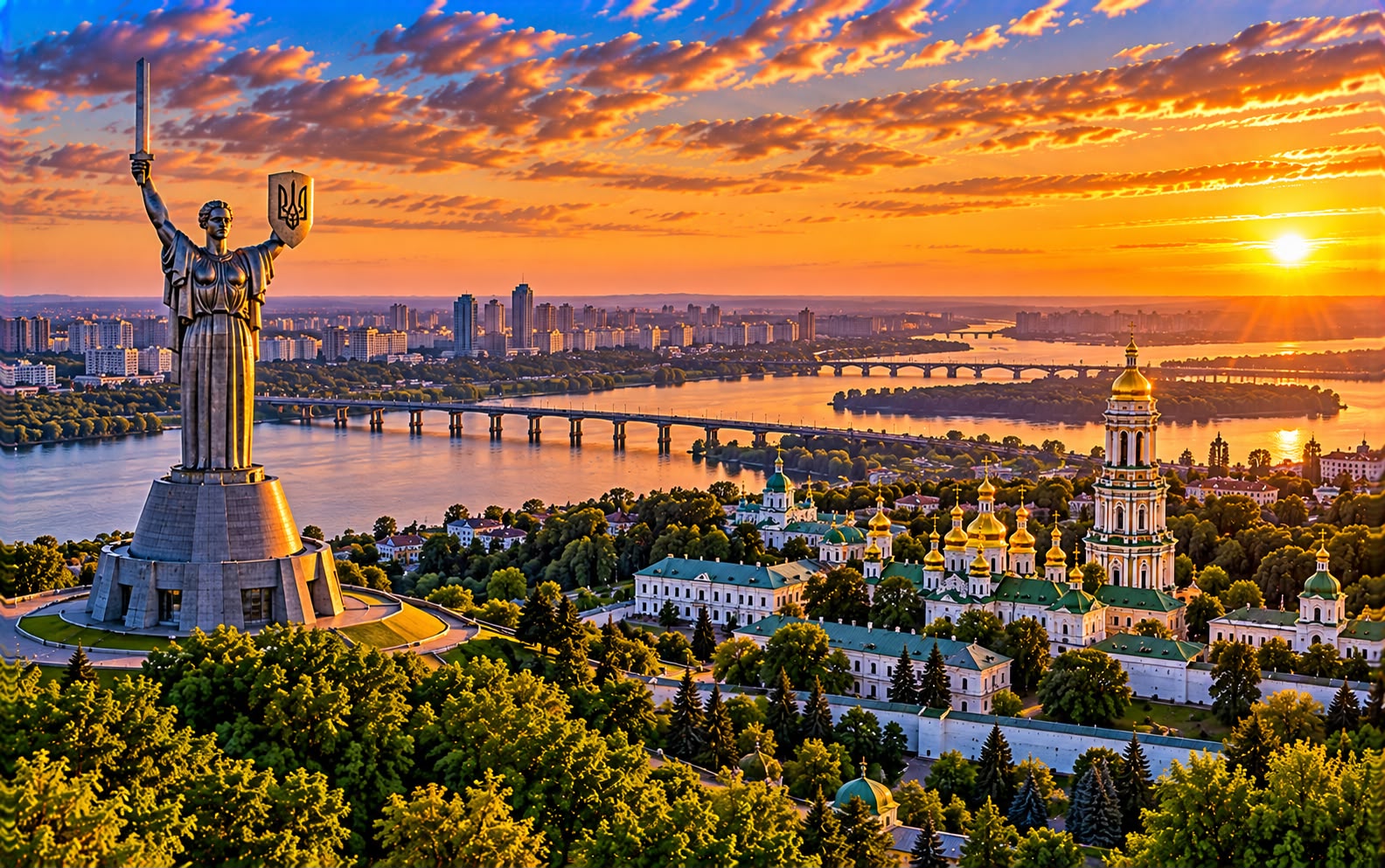
Ukraine in 7 days: Kyiv, Lviv and the Carpathians — and why not yet
A country at war. This is not an invitation to go: most governments advise against all travel, the airspace is closed and there is no safe region. It is a record of what Ukraine holds, written for whenever travel becomes advisable again.
- Eastern Europe
- 7 days
- ≈ AED 2,250 / person
- Understanding what is at stake — and planning the trip for when it is possible
Before you go
Read this first
Ukraine is at war. Russia’s full-scale invasion began in February 2022 and the fighting has not stopped. Most governments advise against all travel to Ukraine, and several advise their nationals already there to leave by any available means.
This guide is not telling you to go. It exists because Ukraine is a country of 38 million people with a thousand years of history and three UNESCO World Heritage sites, and because people research places before they can visit them. Treat it as a record and a plan for later, not an itinerary for this year.
What the warnings actually mean in practice:
- The airspace is closed. There are no commercial flights into or out of Ukraine. Every arrival is overland from Poland, Slovakia, Hungary, Romania or Moldova, and border queues run to many hours.
- Missile and drone attacks reach the entire country, including Lviv and the far west. There is no region that is safe in the sense that word normally carries.
- Air raid alerts sound daily in most cities. Shelters are signposted and used, and ignoring an alert is not a minor thing.
- Martial law is in force, with a nightly curfew that varies by region, checkpoints, and restrictions on photography.
- Travel insurance will almost certainly not cover you, and most policies are void for travel against government advice. Medical evacuation would be your own problem.
- Consular assistance is limited. Several embassies operate at reduced capacity.
- Do not go near the front, the occupied territories or Crimea. Landmines and unexploded ordnance contaminate a vast area — Ukraine is now among the most heavily mined countries in the world.
Who does travel now: journalists, aid workers, contractors and diaspora Ukrainians visiting family, generally with organisations that provide security briefings, insurance and local staff. If you are not in one of those categories, the honest answer is that this is not a holiday destination at present.
Check your own government’s current advice before anything else. Positions change, and this page is not a substitute for them.
What follows describes the country as it is when travel is possible — and as it was before February 2022, when Kyiv and Lviv were among the best-value city breaks in Europe.
Kyiv is one of the oldest cities in eastern Europe, the seat of the Rus’ from which both Ukraine and Russia trace descent. Saint Sophia’s Cathedral holds eleventh-century mosaics and frescoes; the Kyiv-Pechersk Lavra, the Monastery of the Caves, is a complex of gold-domed churches above a labyrinth of catacombs where mummified monks are still venerated. Both are UNESCO World Heritage sites, and both have been listed as in danger since the invasion.
Lviv is Habsburg rather than Soviet — a Central European city of cobbled squares, coffee houses and an Ensemble of the Historic Centre that has been UNESCO-listed since 1998. It was Lemberg, and Lwów, and Lviv, and the layers show.
Odesa was added to the UNESCO list in 2023, directly as a site in danger, and has been struck repeatedly since.
The Carpathians in the west are forest, wooden churches — sixteen of them UNESCO-listed across Ukraine and Poland — and the Hutsul culture that produced the music and the embroidery.
Seven days, when it is possible. Figure UAH 28,000 (≈ AED 2,267) per person. Historically May–September; the Carpathians are best in autumn.
Before you go: the 15-minute admin
Entry, under current conditions
- No flights. Everything is overland. Przemyśl in Poland is the main rail gateway to Lviv; there are also crossings from Slovakia, Hungary, Romania and Moldova.
- Border waits of many hours are normal, in both directions.
- Ukrainian men aged 18 to 60 are generally prohibited from leaving under martial law. Dual nationals should understand exactly how this applies to them before entering — this has stranded people.
- Register your presence with your embassy if it offers that.
Money
- The hryvnia (UAH). Cards work extremely well — Ukraine’s banking apps and contactless infrastructure are among the best in Europe and kept functioning through the invasion.
- Carry cash as well, because power cuts stop terminals.
- Power is intermittent. Attacks on the grid have caused rolling blackouts through successive winters. Hotels and cafés run generators; a power bank is essential.
Air raid alerts
- An app tells you. Everyone uses one. When the alert sounds you go to a shelter — a metro station, a basement, a designated room.
- Alerts can last minutes or hours. Museums, shops and restaurants close during them and reopen afterwards.
- The rule of two walls is the local shorthand for where to stand if you cannot reach a shelter.
Photography
- Do not photograph military installations, checkpoints, air defence, damaged infrastructure or the aftermath of a strike. This is enforced, it is taken extremely seriously, and people have been detained for it.
- Ask before photographing anyone in uniform.
Day by day
Day 1 — Lviv
- There are no civilian flights into Ukraine. You arrive overland, and from Poland via Przemyśl is the usual way — the train or the bus, and the border takes hours.
- Download an air-raid alert app before you arrive and learn what the sirens mean. When one sounds, you go to a shelter — the metro stations and marked basements — and so does everyone around you.
- There is a nationwide curfew, usually around midnight, and it is enforced.
- 14:00 — The Rynok Square and the old town, which survived the war physically intact and is Austro-Hungarian in bone structure.
- 16:30 — The coffee houses. Lviv’s coffee culture is a genuine institution, and the city was roasting before most of Europe.
- 19:00 — The Lviv Opera, which has continued performing through the war, with its own shelter protocol. The announcement before curtain explains it.
Day 2 — Lviv’s churches, and the cemetery
- 09:00 — The Armenian Cathedral, which is the oldest and the best of them.
- 11:00 — The Boim Chapel and the Dominican church.
- 14:00 — The Lychakiv Cemetery — a wooded necropolis of nineteenth-century sculpture. The newest section holds the war dead, with flags, and it is the part that stays with you.
- 17:00 — The High Castle hill for the city at dusk.
- Blackouts are routine. Carry a power bank and a torch; hotels run generators but lifts stop.
Day 3 — To Kyiv
- 07:00 — The train east, five to seven hours, and Ukrainian Railways has run reliably throughout the war — it is the one thing that has.
- 14:00 — Saint Sophia’s Cathedral, begun in the 1010s, with the Orans mosaic in the apse and frescoes that survived every attempt to remove them.
- 17:00 — Andriyivskyy Descent, the cobbled street down from the St Andrew’s Church, with Bulgakov’s house on it.
- 19:30 — Podil for dinner, which is the quarter at the bottom of the descent.
Day 4 — The Lavra, and Maidan
- 09:00 — The Kyiv-Pechersk Lavra — the Great Lavra Belltower, the Dormition Cathedral, and the Near and Far Caves, entered with a candle. Shoulders and heads covered, and the caves are low and genuinely dark.
- 13:00 — The National Museum of the History of Ukraine in the Second World War, and the Motherland Monument, whose Soviet shield was replaced with the Ukrainian trident in 2023.
- 16:00 — Maidan Nezalezhnosti, which is a square and also a political fact. The memorial to the Heavenly Hundred killed in 2014 is on the slope above it.
- 17:30 — The flags on the Maidan lawn, one for each of the war dead, planted by families. It is the hardest hour in the city.
- 19:00 — If it is open, the growing collection of destroyed Russian armour displayed on the streets outside St Michael’s.
Day 5 — Kyiv, and the edges
- 09:00 — St Michael’s Golden-Domed Monastery and the museum below it.
- 12:00 — Bucha and Irpin with a guide from there, if you are going — go only with someone local, and go to listen. This is not sightseeing.
- 16:00 — The Chornobyl Museum in Podil, which is the substitute for the Zone and is better than most expect.
- 18:30 — Besarabsky Market and the streets around it, which are as close to ordinary as Kyiv gets.
Day 6 — Chernihiv
- 07:30 — Two hours north. One of the oldest cities in Ukraine, with a group of eleventh- and twelfth-century churches — the Transfiguration Cathedral, Saints Boris and Gleb — that predate most of what survives in Kyiv.
- It was besieged and heavily shelled in 2022, and the damage is part of what you would see.
- 11:00 — The Antoniyevi Caves under the Trinity monastery.
- 14:00 — The city itself, where the repaired and the unrepaired stand next to each other.
- 17:00 — Back to Kyiv well before curfew.
Day 7 — The Carpathians, or out
- The Carpathians are a long way from Kyiv — an overnight train west — so this day works as the end of a Lviv-based trip rather than a Kyiv one.
- 09:00 — Yaremche, Vorokhta and the Hutsul villages, with the wooden tserkvas — sixteen of which, across Ukraine and Poland, are UNESCO-listed for a building tradition that uses no nails.
- Hoverla, the highest point in Ukraine at 2,061 metres, is a four-hour return walk from Zaroslyak.
- 14:00 — The Carpathian Biosphere Reserve and the old-growth beech forest, also UNESCO-listed.
- Then west to the Polish border, and allow a full day for the crossing — it is the slowest part of the whole trip.
Chernobyl tours ran until February 2022. The Exclusion Zone was occupied, is now mined and contaminated in new ways, and is closed. Do not expect it to reopen soon.
Costs and practicalities
Best time to visit
May–September was the comfortable half of the year, and remains the right window if and when the situation permits.
- May–June — the best of the year. Lviv and Kyiv green and warm, the chestnuts in flower, and long evenings.
- July–August — warmest, up to 30°C, and historically the Black Sea season at Odesa.
- September–October — golden autumn in the Carpathians and the best light of the year.
- November–March — cold and snowy, with skiing at Bukovel and the cities under snow. Daylight is short.
Russia’s full-scale invasion began in February 2022 and the war continues. Air raid alerts, curfews and power disruption are facts of daily life across the country, and the seasonal question is secondary to the security one.
Travel tips
- Check your government’s current advice. Most advise against all or all-but-essential travel, and insurance for travel against that advice does not exist in standard form.
- There are no commercial flights. Entry is overland from Poland, Slovakia, Hungary, Romania or Moldova, and the crossings can take many hours.
- Download an air raid alert app and know where the nearest shelter is wherever you are staying. Alerts are frequent and are taken seriously by everyone.
- Curfews are in force nationwide and vary by region. Being out during one means detention.
- Do not photograph military, checkpoints, air defence, damaged infrastructure or the results of a strike. This is a serious matter and people have been detained for it.
- Carry cash as well as cards. Power cuts disable card terminals, and the grid has been repeatedly targeted.
- Ukrainian is the language; speaking Russian is possible but is a loaded choice. English is common among the young.
What this trip would cost
Two people, 6 nights, mid-range comfort, excluding travel to the border:
| Item | Cost |
|---|---|
| Hotels, 6 nights | UAH 21,000 (≈ AED 1,700) |
| Trains and transfers | UAH 10,000 (≈ AED 809) |
| Museums, guides, entries | UAH 8,000 (≈ AED 648) |
| Food and drink, 7 days | UAH 17,000 (≈ AED 1,376) |
| Total for two | UAH 56,000 (≈ AED 4,533) |
- Roughly UAH 28,000 (≈ AED 2,267) per person. Ukraine was, and remains on paper, one of the cheapest countries in Europe.
- These figures are indicative. Wartime pricing, the exchange rate and availability all move.
- Insurance is the line that does not appear here, because almost no policy will cover travel against government advice. Specialist war-risk cover exists and is expensive.
- Hotel picks here are chosen on location, not on commission — always check prices and recent reviews before booking.
What to pack
- A power bank, and a second one. Blackouts are routine.
- An air raid alert app, installed before you arrive.
- Documents and copies, carried at all times for checkpoints.
- Warm layers — Ukrainian winters are severe and heating is not guaranteed.
FAQ
Can I visit Ukraine right now? Most governments advise against all travel, the airspace is closed, and missiles reach every region. People do go — journalists, aid workers, contractors, diaspora visiting family — generally with organisational support. For an ordinary traveller, the honest answer is not yet.
Is western Ukraine safe? Safer than the east, and not safe. Lviv has been struck repeatedly. There is no part of the country beyond the range of the weapons being used.
Can I visit Chernobyl? No. The Exclusion Zone was occupied in 2022, is newly contaminated and mined, and tours have not resumed.
Will my insurance cover me? Almost certainly not. Standard policies void for travel against government advice. Specialist war-risk cover exists, costs a great deal, and is what organisations buy for their staff.
Why publish this at all? Because Ukraine is a country worth knowing about, people plan years ahead, and a guide that says plainly “not yet, and here is why” is more useful than silence.
Prices and entry rules change, and what you need depends on your passport; last checked 29 October 2026, so confirm with the embassy or your airline before booking.


