 The Itinerary
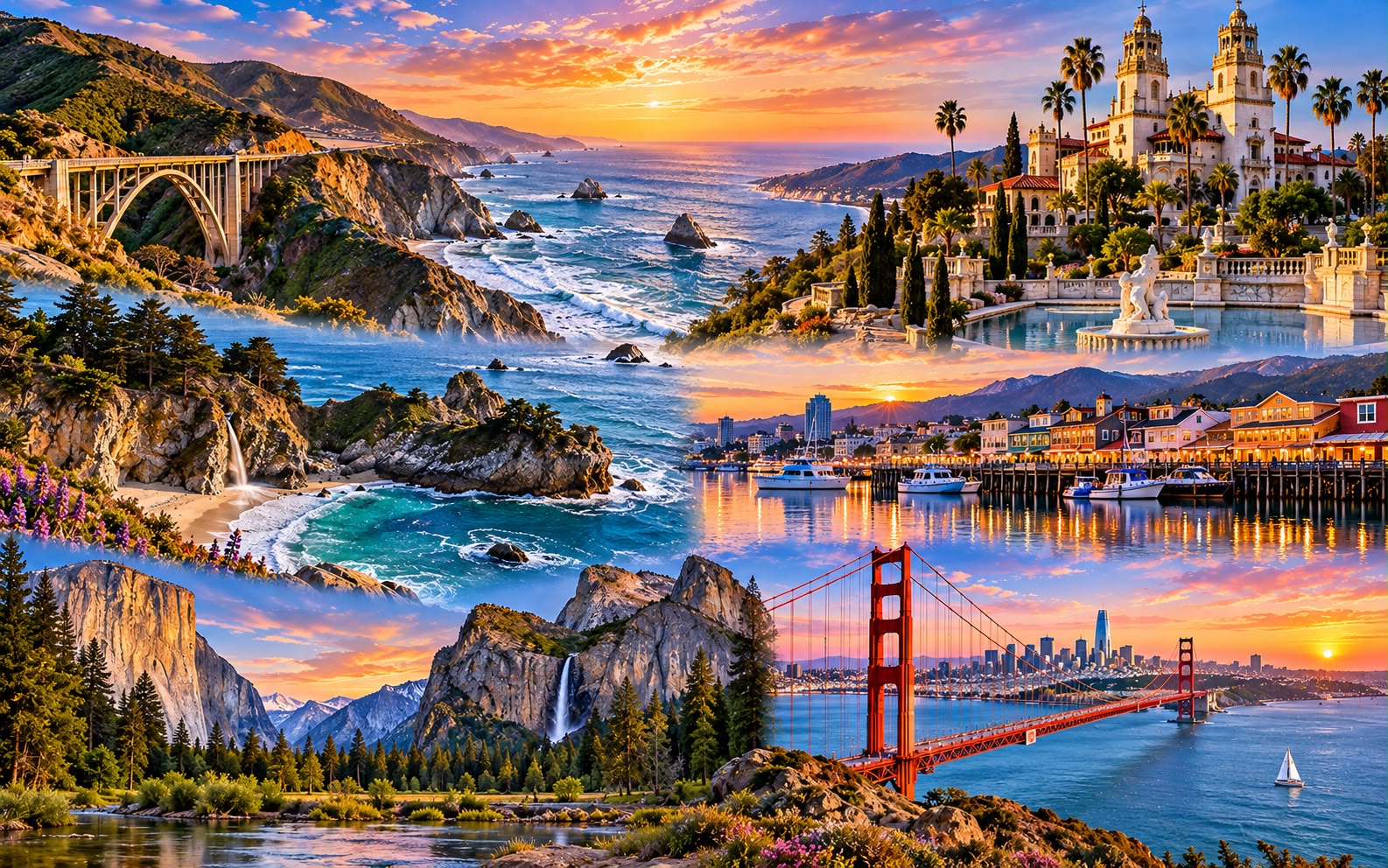
California road trip: Pacific Coast Highway and Yosemite in 10 days
The greatest drive in America, finally whole again: Highway 1 through Big Sur reopened end-to-end in January 2026 after three years of landslides. LA to San Francisco the long way — Malibu, Hearst Castle, McWay Falls, Bixby Bridge — then inland to Yosemite's granite cathedral. Ten days, one rental car, every cliché earned.
- United States
- 10 days
- ≈ AED 11,000 / person
- Road trippers
Before you go
Our first two USA guides (East Coast, West classic) were built to need no car. This one is the opposite: the car is the trip. The Pacific Coast Highway between Los Angeles and Monterey is the drive every rental ad has been imitating for fifty years — surf on one side, cliffs on the other, a bridge photo you’ve already seen a hundred times — and Yosemite is what happens when granite decides to show off.
And 2026 is the year it came back. After three years of landslide closures, Highway 1 through Big Sur fully reopened on 14 January 2026 — the first complete peak season since 2023. A February storm shut it briefly again (this road breathes); it has run clear since, but the lesson stands and is baked into this guide: check Caltrans QuickMap the morning you drive it.
Go May–June (waterfalls thundering, hills green, everything open) or September–October (warm, clear, crowd-light — but Yosemite’s falls run near-dry; more below). July–August brings coastal fog and peak crowds; winter brings storm-closure roulette on Highway 1 — forecasters give 63% odds of a strong El Niño winter 2026–27, so late-season travellers should book flexible. All costs are in US dollars (USD).
Before you go: the admin
Visa, in one line
The ~$435-per-person US visa reality ($185 + $250 Integrity Fee), the 6–12 month UAE appointment waits, ESTA for Visa Waiver passports — all covered in depth in our East Coast guide. Start it 8–12 months out; nothing below matters without it.
Driving in America — the honest briefing
- Licence: a valid foreign licence in English is accepted by California law and the major agencies; an International Driving Permit is cheap insurance for Indian-issued licences — get one, carry both.
- Traffic drives on the right, same as the UAE — Gulf residents adapt in minutes. Speed limits are enforced (65–70 mph freeways, less on Highway 1’s curves), phones are hands-free only, and you may turn right on red after a full stop unless signed otherwise.
- The rental maths, honestly: a compact runs ~$45–70/day, but full insurance (LDW + liability) adds ~$30–45/day — book a package with cover included (rentalcars.com-style aggregators) rather than fighting the counter upsell. Drivers under 25 pay a surcharge. LA-pickup → SF-drop one-way fees within California are usually $0–100 — confirm before booking.
- Fuel: California petrol is America’s priciest (~$4.50–5.50 /gallon; $7+ in Big Sur — fill up before). Foreign cards often fail at the pump’s ZIP-code prompt: pay inside.
- Car seats are law: under-2s rear-facing, under-8s in boosters — rentals charge ~$14/day each, so frequent-flyer families bring their own.
- The one rule that saves your trip: never leave anything visible in a parked car — not a jacket, not a charger. Smash -and-grab theft at viewpoints and city streets is California’s actual tourist crime. Boot everything, always.
Route logic (why this direction)
LA → coast → Monterey → Yosemite → San Francisco, dropping the car the hour you arrive in SF — you skip the city’s $50–70 /night hotel parking and finish car-free where a car is a liability. (Purists note: southbound gets the ocean-side pullouts. See the FAQ.)
Day by day
Day 1 — Land in LA, sleep by the pier
No car today — nobody should meet a US freeway on 3 hours of aeroplane sleep. Uber to Santa Monica (~$40–55 from LAX, 25 min).
- 17:00 — Santa Monica Pier: the Route 66 “End of the Trail” sign, the solar Ferris wheel, street performers.
- 18:30 — Barefoot hour on the beach; sunset at the pier’s end.
- 20:00 — Dinner on Third Street Promenade (~$20–35), early night — tomorrow the key turns.
Where to stay in Santa Monica (one night)
- Luxury: Shore Hotel — 4.6/5 on TripAdvisor (~7,200 reviews), solar-cool glass box directly opposite the pier. ~$350–450.
- Mid-range: Hilton Santa Monica — the area’s best-value full-service pick per TripAdvisor’s rankings, ~$220–290.
- Budget: honest answer — beach-adjacent Santa Monica has no cheap beds; inland motels along Lincoln Blvd from ~$140, or start the trip one Uber further at an LAX airport hotel.
Day 2 — Malibu’s coves to Santa Barbara
- 09:00 — Collect the car (Santa Monica branches beat LAX queues), point it north on Highway 1: the ocean arrives immediately.
- 10:00 — Malibu: walk Point Dume’s bluff (whales in season) or El Matador Beach’s sea-stack coves — the postcard 45 minutes.
- 12:30 — Lunch at Malibu Seafood or biker-famous Neptune’s Net (~$15–20) — fried fish, ocean across the road.
- 14:00 — Cruise to Santa Barbara (90 min): check in, then the Old Mission Santa Barbara (the “Queen of the Missions”, ~$15) and the white-stucco, red-roof old town.
- 17:30 — Stearns Wharf for sunset; dinner on lower State Street (~$25–40) — this town eats well.
Where to stay in Santa Barbara (one night)
- Luxury: Santa Barbara Inn — 4.7/5 (~850 reviews), beachfront with direct ocean views. ~$320–450.
- Mid-range: The Eagle Inn — 4.7/5 (~3,000 reviews), Spanish-revival charmer with fireplace rooms, two blocks from the sand. ~$200–280.
- Budget: Beachside Inn — TripAdvisor’s #1 value here, breakfast included, from ~$110–150.
Day 3 — Danish detour, then Cambria’s moonstone shore
- 09:30 — Twenty minutes inland to Solvang, California’s full-costume Danish town: windmills, æbleskiver pancake balls, gloriously unnecessary. One hour is exactly right.
- 11:30 — Rejoin the coast at Pismo Beach for a clam-chowder-in-sourdough lunch on the pier (~$15).
- 14:00 — Coffee stop in San Luis Obispo (Bubblegum Alley: exactly what it sounds like), then the quiet golden stretch to Cambria.
- 16:30 — Piedras Blancas elephant seal rookery (free, boardwalk viewing): hundreds of 2-tonne seals bellowing, moulting and body-slamming 10 metres away. Weirdly unmissable.
- 18:00 — Moonstone Beach boardwalk at sunset, then dinner in Cambria’s pine-village centre (~$25–35).
Where to stay in Cambria (one night)
- Splurge: Blue Dolphin Inn — 4.7/5, oceanfront on Moonstone Beach, fireplaces and breakfast hampers. ~$250–350.
- Mid-range: Cambria Pines Lodge — 4.4/5 (~10,000 reviews), lodge-and-gardens quirk with live music at the bar. ~$160–220.
- Budget: FogCatcher Inn — 4.3/5, across from the beach, ~$130–180.
Day 4 — Hearst Castle, then the Big Sur run
The day the trip is named for. Fill the tank in Cambria (Big Sur pumps charge $7+), download offline maps (cell service vanishes for an hour), and check Caltrans QuickMap once before rolling.
- 08:40 — First tour at Hearst Castle ($35 adult / $18 child, book on ReserveCalifornia up to 60 days out): the hilltop folly where Hollywood partied in the 1930s — Roman pool, private zoo remnants, Citizen Kane’s real-world source. Two hours with the bus ride up.
- 11:30 — North past Ragged Point and the highway narrows into Big Sur proper: 90 miles of cliff-hung road. Pull out often (pullouts only — never stop in the lane); expect a couple of one-lane signal waits, the price of the 2026 reopening.
- 13:30 — Julia Pfeiffer Burns State Park (~$10/car): the 10-minute walk to McWay Falls, the 25-metre waterfall that drops straight onto a turquoise-cove beach.
- 15:00 — Late lunch at Nepenthe (~$25–40) — the clifftop terrace 250 m above the Pacific; overpriced, over-beautiful, obligatory. (Big Sur Bakery is the cheaper local’s answer.)
- 16:30 — Pfeiffer Beach’s purple-tinged sand and keyhole arch (unsigned narrow road, ~$15/car) or push on to reach Bixby Creek Bridge for golden hour — the 1932 arch every car advert rents.
- 18:30 — Roll into Carmel-by-the-Sea for a storybook -village stroll and dinner on Ocean Avenue (~$30–45), then ten minutes to Monterey for the night.
Where to stay in Monterey (one night)
- Luxury: Monterey Plaza Hotel & Spa — 4.6/5 (~8,100 reviews), built over the water on Cannery Row. ~$320–450.
- Mid-range: Portola Hotel & Spa — 4.2/5 (~5,300 reviews), by Fisherman’s Wharf. ~$180–260.
- Budget: Lone Oak Lodge — 4.3/5 (~1,500 reviews), clean motor-lodge value, ~$110–160.
Day 5 — Aquarium morning, Sierra evening
- 08:00 — The 17-Mile Drive through Pebble Beach (~$12/car, credited back if you buy breakfast at the resort): the Lone Cypress, Spanish Bay’s crashing surf, golf’s most photographed coastline. 75 unhurried minutes.
- 10:00 — Monterey Bay Aquarium at opening ($65 adult / $50 child-youth — steep, and worth it once): the kelp-forest tank, sea otters at feeding time, the open-sea wall of tuna and turtles. 2.5 hours.
- 13:00 — Quick Cannery Row lunch (~$15–20), then inland: Salinas Valley farm country, Pacheco Pass, the Central Valley — four hours to the Yosemite gateway.
- 18:00 — Check in (El Portal/valley), early dinner, early night. Mountains keep farmer’s hours.
Where to stay for Yosemite (two nights)
- Historic splurge: The Ahwahnee — 3.9/5 (~3,500 reviews), the 1927 granite-and-timber icon on the valley floor; presidents and queens slept here. ~$500+.
- The location pick: Yosemite Valley Lodge — 3.7/5 (~4,900 reviews), motel-simple but a stroll from Yosemite Falls. ~$260–320. In-park rooms open ~a year ahead on travelyosemite.com and sell out — book the day your dates fix.
- Budget: Curry Village heated tent cabins — 3.8/5 (~4,300 reviews), shared bathhouses, unbeatable granite-at-dawn atmosphere. ~$140–180. (Missed all three? Gateway towns — El Portal, Mariposa, Oakhurst — sit 30–75 min out and cost half.)
Day 6 — Yosemite Valley, floor to rim
No entry reservation is needed in 2026 — the timed-entry system was dropped this year — but the park still recommends arriving before 8 a.m. in season; buy the $35/vehicle digital pass (7 days) on Recreation.gov to skip the gate queue.
- 07:30 — Tunnel View first: El Capitan, Half Dome and Bridalveil Fall in one windscreen — the Ansel Adams shot, still true.
- 08:30 — Valley floor loop by car and foot: Bridalveil Fall boardwalk, El Capitan meadow (binoculars find the climbers — dots on a 900-metre wall), Yosemite Falls base trail. Honesty: the falls are snowmelt-fed — thunder in May–June, reduced by August, near-dry by late September. Autumn trades waterfalls for golden light and empty trails.
- 12:30 — Picnic or grill lunch at the Lodge (~$12–18).
- 14:00 — The trip’s hike: Mist Trail to Vernal Fall footbridge (2.5 km return, doable with game kids) or further to the top (steep granite steps, spray-soaked in spring).
- 17:30 — Drive Glacier Point Road (open ~late May– Oct/Nov) an hour up to Glacier Point: Half Dome at eye level, the valley 1,000 m below, sunset turning the granite pink. The single best view in California.
- Bear rules are real: food and anything scented goes in bear boxes or with you — never overnight in the car. Rangers fine; bears break windows.
Day 7 — Sequoias, then the city by the bay
- 08:30 — South to the Mariposa Grove: 500 giant sequoias including the 3,000-year-old Grizzly Giant — trees older than most countries. Two hours on shuttle-and-boardwalk.
- 12:00 — Point the car west: ~4 hours to San Francisco.
- 16:00 — Drop the rental at a downtown SF branch — the smartest hour of the whole plan (SF hotel parking runs $50–70/night, and the city break-in problem isn’t worth it). From here you’re car-free.
- 17:30 — Check in, then the Powell–Hyde cable car over Russian Hill as the fog performs; dinner in Chinatown or North Beach (~$25–35).
Where to stay in San Francisco: our West Coast guide has the verified three tiers — Argonaut (4.5/5, Wharf luxury), Hotel Caza (4.3/5, family mid-range), Chancellor on Union Square (4.5/5, the value classic).
Day 8 — San Francisco: Alcatraz and the waterfront
Two days, fully detailed as Days 7–9 in the West Coast guide; the compressed plan:
- 08:00 — Alcatraz first ferry (~$48 — book 90 days out, it sells out weeks ahead).
- 12:00 — Pier 39 sea lions, and chowder in sourdough.
- 14:00 — Ghirardelli sundae, which is the other obligatory one.
- 17:00 — Golden Gate viewpoint at Crissy Field for fog-lift hour — the fog usually clears late afternoon in summer and not at all in July.
Day 9 — The bridge, the Mission, and a last crab
- 09:00 — Rent bikes, ride across the Golden Gate Bridge to Sausalito, ferry back with skyline views — book the ferry slot before you ride, because they fill.
- 14:00 — Painted Ladies + Mission murals and burritos.
- 19:00 — Farewell crab dinner at the Wharf.
- Already did our West Coast trip? Trade these for day trips it couldn’t reach without a car — Muir Woods’ redwoods (shuttle from Sausalito) or Napa/Sonoma tasting rooms — or end at Day 8 and bank a day.
Day 10 — Home from SFO
- Morning — BART to SFO (30 min, $11), then long-haul home. One thousand miles of California in the rear-view; the car went back days ago.
Costs and practicalities
Best time to visit
May–June and September–October, and California’s coastal fog is the thing most visitors do not plan for.
- May–June — the hills still green from the winter rain, the passes open, and the coast before the summer crowds. Yosemite’s waterfalls peak in May and early June with the snowmelt.
- July–August — busiest, and the coast at Monterey and San Francisco is often fogged in all day — “June Gloom” extends well past June. Inland is hot; Death Valley exceeds 45°C and is genuinely dangerous.
- September–October — the best of the year. The fog lifts, San Francisco’s warmest and clearest weather is in September and October, and the wine harvest is on.
- November–April — the rainy season, and Tioga Pass through Yosemite closes from roughly November to late May. Death Valley and Joshua Tree are at their best.
Travel tips
- Check Tioga Pass and Glacier Point road status before planning a Yosemite route — they are closed for half the year and the detour is hours.
- Yosemite requires a timed-entry reservation for peak periods. Check the current rules; they have changed each year.
- Book national park lodging a year ahead. Yosemite Valley and the Ahwahnee release at 366 days and go immediately.
- Big Sur’s Highway 1 closes for landslides regularly and sometimes for months. Check Caltrans before committing to the drive.
- San Francisco is cold in summer. Layers, always — the city rarely exceeds 20°C in July.
- Fuel up before the desert stretches and carry water. Death Valley and the eastern Sierra have long gaps between stations.
- Tipping is 18–20% in restaurants, and tax is added at the till, so the listed price is never the price.
What this trip actually costs
Two people, 9 nights (1+1+1+1+2+3), mid-range comfort, international flights excluded:
| Item | Cost |
|---|---|
| US visa fees for two (~$185 MRV + ~$250 Integrity Fee each) | USD 870 (≈ AED 3,195) |
| Hotels, 9 nights (coast inns, Yosemite Valley, SF) | USD 2,200 (≈ AED 8,080) |
| Rental car, ~6 driving days billed over the week, full cover + one-way drop | USD 900 (≈ AED 3,305) |
| Fuel (~1,600 km of California) | USD 170 (≈ AED 624) |
| Parking, tolls, state-park day fees | USD 80 (≈ AED 294) |
| Entries: Hearst Castle, Monterey Bay Aquarium, 17-Mile Drive, Yosemite pass | USD 260 (≈ AED 955) |
| Food and tips, 10 days | USD 1,100 (≈ AED 4,040) |
| SF transit + airport transfers | USD 120 (≈ AED 441) |
| Buffer: kayak hour, wine stop, souvenirs | USD 300 (≈ AED 1,102) |
| Total for two | USD 6,000 (≈ AED 22,035) |
- Roughly USD 3,000 (≈ AED 11,018) per person — the same wallet as our flight-based West guide; here the canyon-tour money becomes car, cover and coastal inns instead. Two levers matter: the insurance-included rental package (counter upsells add $400+ if you let them) and Yosemite lodging booked early (valley rooms at ~$280 vs $500 panic rates). Couples in B&B-tier rooms and picnic lunches can run it near USD 2,600 (≈ AED 9,549) per person.
- Book in this order: US visa (8–12 months out) → international flights (open-jaw: into LAX, home from SFO) → Yosemite lodging the day the ~1-year window opens → rental car with full cover → coast hotels (free-cancel) → Alcatraz at exactly 90 days → Hearst Castle (60-day window) → Aquarium tickets any time → everything else walks up.
- Hotel and restaurant picks here are unsponsored — no affiliate links in this article. Chosen on location and current ratings; always check prices and recent reviews before booking.
What to pack
- Layers over logic: one day can span 15°C coastal fog and 30°C Central Valley. A real jacket for Big Sur mornings and Glacier Point sunset, always.
- Offline maps downloaded (Big Sur and parts of Yosemite have no signal) and a car phone mount.
- Walking shoes with grip for Yosemite granite; sandals for beaches.
- Binoculars — El Capitan’s climbers, whales off Point Dume, condors over Big Sur.
- Picnic kit (cooler bag, board, knife): the best lunches on this route are pullouts, not restaurants.
- IDP + home licence + booking printouts in one folder; Type A/B adapter, power bank.
FAQ
Is Highway 1 actually open? As of publication, yes — fully reopened 14 January 2026 after three years of landslide closures, and clear since a brief February storm shutdown. But this road closes and reopens with the weather (a strong El Niño is forecast for winter 2026–27): check Caltrans QuickMap (quickmap.dot.ca.gov) the morning you drive, and know the inland US-101 bail-out exists if a segment shuts. If Big Sur is closed, the trip still works: 101 to Monterey, day-trip the open end of the coast.
Can I drive on my own country’s licence? Yes — California accepts valid foreign licences for visitors, and rental majors take English-language licences (UAE cards qualify directly). Carry an IDP with an Indian licence — agencies and police both relax at the sight of one. Driving is right-hand-side, same as the UAE; Indian drivers find the discipline (lane-keeping, stop signs, yielding to pedestrians) the bigger adjustment than the side.
Waterfalls or warm weather — when exactly? May–June is the answer if Yosemite’s falls matter: full snowmelt thunder, green hills, everything open (Glacier Point Road opens ~late May). September–October gives the coast its clearest skies and the valley its emptiest trails — but Yosemite Falls runs near-dry. There is no month that maxes both; pick your priority.
Doable with young kids? Yes — this route’s drives are short (the longest hop is 4 hours) and every day ends somewhere with a beach, seals, otters or sequoias. California’s car-seat law is strict (under-8s in boosters); reserve seats with the car or bring your own. Skip the Vernal Fall upper steps; the elephant seals, aquarium and Mariposa Grove are the kid-day anchors.
Why not drive it southbound? I read the ocean side is better. It is — southbound (SF→LA) puts the pullouts on the ocean side of the road. We run it northbound anyway for trip logic: Yosemite slots naturally before a car-free SF finish, and you never pay SF parking. Crossing the highway at viewpoints just takes patience. If pullout-side perfection matters, mirror the whole route: fly into SFO, out of LAX.
Halal and vegetarian on the road? The cities bookending the trip are easy (see the West guide); the coast between is the thin stretch — Santa Barbara and Monterey have halal options, Big Sur and Cambria effectively don’t, and this is where the picnic kit and seafood (grilled, unambiguous) carry the day. Vegetarians do fine everywhere — California cuisine half-worships vegetables.
What about the Southwest — Zion, Antelope, Monument Valley? A different, redder road trip out of Las Vegas — and the natural next guide in this series. This one is coast and granite; that one is desert and sandstone. Do this first; you’ll be back.
Prices and entry rules change, and what you need depends on your passport; last checked 29 October 2026, so confirm with the embassy or your airline before booking.


