 The Itinerary
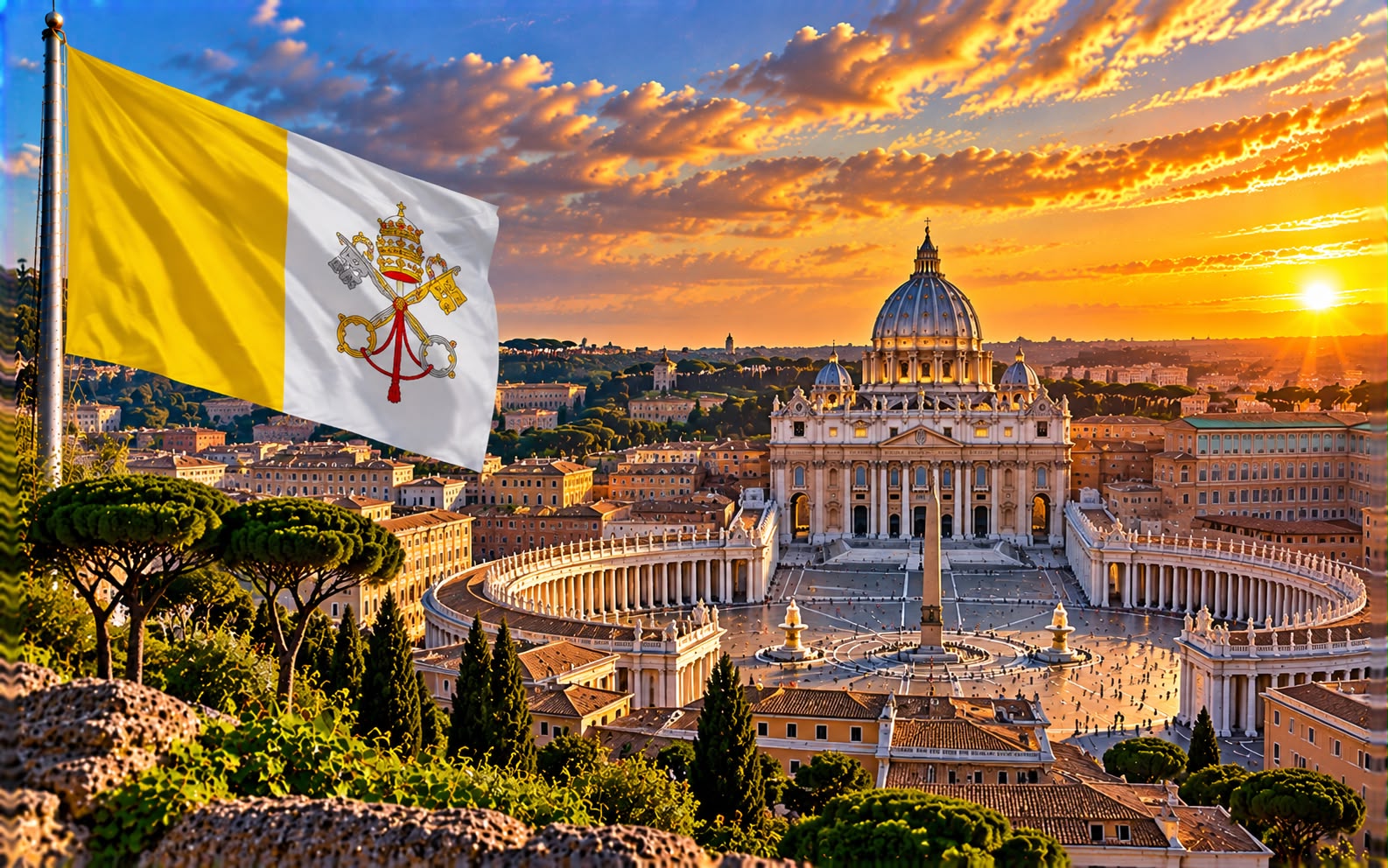
Vatican City in 2 days: St Peter's, the Sistine Chapel and the Scavi
Forty-nine hectares holding Michelangelo's ceiling, Bernini's colonnade and a necropolis under the high altar — reached from a Rome hotel, because there is nowhere to stay and no border to cross.
- Southern Europe
- 2 days
- ≈ AED 850 / person
- The smallest country on earth, and the one with the most art per square metre
Before you go
Vatican City is the smallest country in the world — about 49 hectares, roughly a fifth of a square kilometre, with a permanent population in the hundreds.
You do not stay here and you do not cross a border. You walk in from Rome, past a line on the pavement. This guide is two days from a Rome base, because that is what a visit actually is, and padding it into a week would be a lie.
What is inside those 49 hectares is another matter. St Peter’s Basilica is the largest church in the world by interior area, built over the tomb the Catholic Church identifies as the apostle Peter’s, with Michelangelo’s dome on top and his Pietà inside — carved when he was 24, and the only work he ever signed. Bernini’s colonnade wraps the square in two arms deliberately described as the Church embracing the world.
The Vatican Museums run to something like seven kilometres of galleries, and almost everyone walks them in one direction towards one room: the Sistine Chapel, where Michelangelo spent four years on the ceiling and, twenty-five years later, painted the Last Judgement on the altar wall.
And beneath the basilica is the Scavi — a Roman necropolis, a street of pagan and early Christian mausolea buried when Constantine levelled the hillside in the fourth century to build the first church here. It is the least-known and most extraordinary thing in the country, and it has to be booked months ahead.
Two days. Figure EUR 210 (≈ AED 860) per person excluding your Rome hotel being any fancier than modest. Go November–March for the smallest crowds; avoid Easter and Christmas entirely unless that is the point.
Before you go: the 15-minute admin
What has to be booked, and how far ahead
- The Vatican Museums: book a timed entry online. The walk-up queue routinely runs for hours and wraps the walls. Booking costs a few euros more and saves half a day.
- The Scavi (Vatican Necropolis): apply months ahead. It is run by the Excavations Office, takes about 250 people a day in small groups, is not bookable through any tour operator, and under-15s are not admitted. You email them with dates and wait for a reply.
- The Vatican Gardens are by guided tour only, booked in advance.
- A papal audience — Wednesdays when the Pope is in Rome — needs free tickets requested through the Prefecture of the Papal Household in advance. The Angelus at noon on Sundays needs no ticket at all; you simply stand in the square.
- St Peter’s Basilica itself is free and never needs booking. The dome is a separate paid ticket bought on the day.
The dress code, which is enforced
- Shoulders and knees covered, men and women, in the basilica, the museums and the Sistine Chapel.
- This is checked at the door and people are turned away every day. No vests, no shorts above the knee, no bare shoulders.
- A scarf in a bag solves it.
Security and bags
- Airport-style screening at both the basilica and the museums. Expect queues even with a booking.
- Large bags are not permitted; there is a cloakroom at the museums.
- No photography in the Sistine Chapel, which is enforced loudly and constantly, and is a condition of the restoration funding.
Money and practicalities
- The euro, by agreement — the Vatican is not in the EU but mints its own euro coins, which are collectable and almost never appear in change.
- The Vatican post office has a long-standing reputation for being faster and more reliable than Italy’s. Its stamps are valid only if posted in Vatican boxes.
- There is no accommodation beyond religious guest houses attached to orders, which are for pilgrims rather than tourists.
- No border control, no passport stamp. The only souvenir stamp is a novelty from the post office.
Getting there
- Ottaviano on Metro line A is a five-minute walk to the museums; Cipro is closer to the entrance queue.
- Walking from central Rome takes 30–40 minutes and is pleasant across the Ponte Sant’Angelo.
- Do not take a taxi to “the Vatican” without naming which entrance — the museums and the basilica are on opposite sides of a very large wall and it is a fifteen-minute walk between them.
Day by day
Day 1 — The square, the basilica and the dome
- 07:30 — St Peter’s Square early, before the tour groups. The colonnade is 284 columns in four rows, and two marble discs set in the pavement mark the spots where the four rows line up as one from the right angle.
- 08:00 — The basilica, which opens early and is at its best in the first hour. Michelangelo’s Pietà is immediately on the right, behind glass since it was attacked in 1972. Bernini’s baldachin stands over the papal altar, cast partly from bronze stripped from the Pantheon’s portico — which gave Rome the line quod non fecerunt barbari, fecerunt Barberini.
- 10:00 — The dome. The lift takes you to the roof; 320 steps remain from there, and the final stretch is a narrowing spiral that leans with the curve of the dome. It is not for the claustrophobic. Without the lift it is 551 steps from the ground.
- 12:00 — The Vatican Grottoes below the basilica floor — the papal tombs, free, and on the way out.
- Afternoon — Rome. You will have had enough marble.
Where to stay (one night — in Rome)
- Mid-range: Prati, the neighbourhood immediately north of the Vatican, which is quiet, residential and ten minutes’ walk from the museums.
Day 2 — The Museums, the Sistine Chapel and the Scavi
- 08:00 — The Vatican Museums on a timed entry. The route is effectively one-way and long. Prioritise rather than attempting everything: the Pio-Clementino for the Laocoön and the Apollo Belvedere, the Gallery of Maps — forty frescoed topographical maps of Italy, which is the most beautiful corridor in Europe — and the Raphael Rooms, including the School of Athens.
- 11:00 — The Sistine Chapel. It is crowded, it is noisy despite the guards asking for silence, and it is still worth it. Look at the ceiling’s structure, not just the famous panel: Michelangelo painted the architecture, the prophets and the sibyls as well, and the Last Judgement behind the altar is a different painter twenty-five years older and much angrier.
- 13:00 — Lunch in Prati rather than in the museum cafeteria.
- 15:00 — The Scavi, if you secured a place. A guide takes a small group below the grottoes into the Roman necropolis — a street of family tombs, some pagan with mosaics of Sol, buried under fill when Constantine built here. At the end is the Tomb of St Peter, and the bones the Vatican announced in 1968 as his. Ninety minutes, no photography, no bags, and no one under 15.
- If you did not get Scavi tickets, take the Vatican Gardens tour instead, or walk to Castel Sant’Angelo — Hadrian’s mausoleum turned papal fortress, linked to the Vatican by the Passetto, the covered escape corridor used in 1527.
Costs and practicalities
Best time to visit
November–March is the counterintuitive answer: the Vatican Museums are indoors, the queues collapse in winter, and St Peter’s Square is bearable.
- November–March — cold but dry-ish, far shorter queues, and the best time to actually see the Sistine Chapel rather than be carried through it. Christmas brings the crib and the tree in the square, and midnight mass requires free tickets booked well ahead.
- April–June — pleasant weather and heavy crowds. Easter is the single busiest period, with the Urbi et Orbi blessing filling the square.
- July–August — hot, over 35°C, and the queues are at their worst. The square has no shade.
- September–October — warm and still busy, easing through October.
The Papal Audience is on Wednesdays when the Pope is in Rome, which also makes Wednesday the worst day for the basilica.
Travel tips
- Book the Vatican Museums online with a timed slot, always. The walk-up queue runs for hours and the “skip the line” touts outside are selling you the same ticket at a markup.
- The dress code is enforced at both the Museums and the Basilica — shoulders and knees covered, for men as well as women. You will be turned away at the door.
- St Peter’s Basilica is free and has its own security queue, separate from the Museums. Go early — it opens at 7am — or late in the day.
- The Sistine Chapel has no photography and silence is requested, enforced by guards who will shout.
- The dome climb is 551 steps, or 320 after the lift, and the final spiral is narrow and leaning. Not for claustrophobia.
- Wednesday is the Papal Audience and the square is closed for it; free tickets come from the Prefecture.
- It is a sovereign state with its own post office, which is genuinely faster than Italy’s — send the postcard from here.
What this trip actually costs
Two people, 1 night, mid-range comfort, excluding travel to Rome:
| Item | Cost |
|---|---|
| Rome hotel, 1 night | EUR 150 (≈ AED 614) |
| Vatican Museums with timed entry, two | EUR 70 (≈ AED 287) |
| Dome, with lift, two | EUR 24 (≈ AED 98.27) |
| Scavi or Gardens tour, two | EUR 56 (≈ AED 229) |
| Food and drink, 2 days | EUR 120 (≈ AED 491) |
| Total for two | EUR 420 (≈ AED 1,720) |
- Roughly EUR 210 (≈ AED 860) per person, and almost all of it is Rome rather than the Vatican.
- The basilica and the square are free. So is the Angelus, and so is a papal audience ticket.
- Skip-the-line tours cost several times the official timed entry and give you the same door. Book direct.
- Early entry and after-hours tickets sold by the museums themselves are the one upgrade genuinely worth it in high season.
- Hotel picks here are chosen on location, not on commission — always check prices and recent reviews before booking.
What to pack
- Something that covers shoulders and knees, or a scarf that will.
- Shoes for 551 steps if you are climbing the dome without the lift.
- A small bag only — large ones are refused at security.
- Water, refilled at the fountains in the square, which are drinkable and free.
FAQ
Is two days enough? Yes, comfortably — and one long day covers the basilica and the museums if that is all you have. The second day exists for the Scavi and for doing the museums without sprinting.
How do I book the Scavi? Directly with the Excavations Office, by email, months in advance. No tour operator can sell it, groups are tiny, and nobody under 15 is admitted. If a company offers you Scavi tickets, be suspicious.
Can I get a passport stamp? Not an official one — there is no border control. The post office sells a novelty stamp.
When is the Pope actually there? General audiences are Wednesday mornings when he is in Rome, and the Angelus is Sunday at noon from the window. Both are free; the audience needs a ticket requested in advance.
Do I need a guide? For the museums, no — the route is fixed and a good app is cheaper. For the Scavi, a guide comes with the ticket and is the only way in.
Prices and entry rules change, and what you need depends on your passport; last checked 8 October 2026, so confirm with the embassy or your airline before booking.


