 The Itinerary
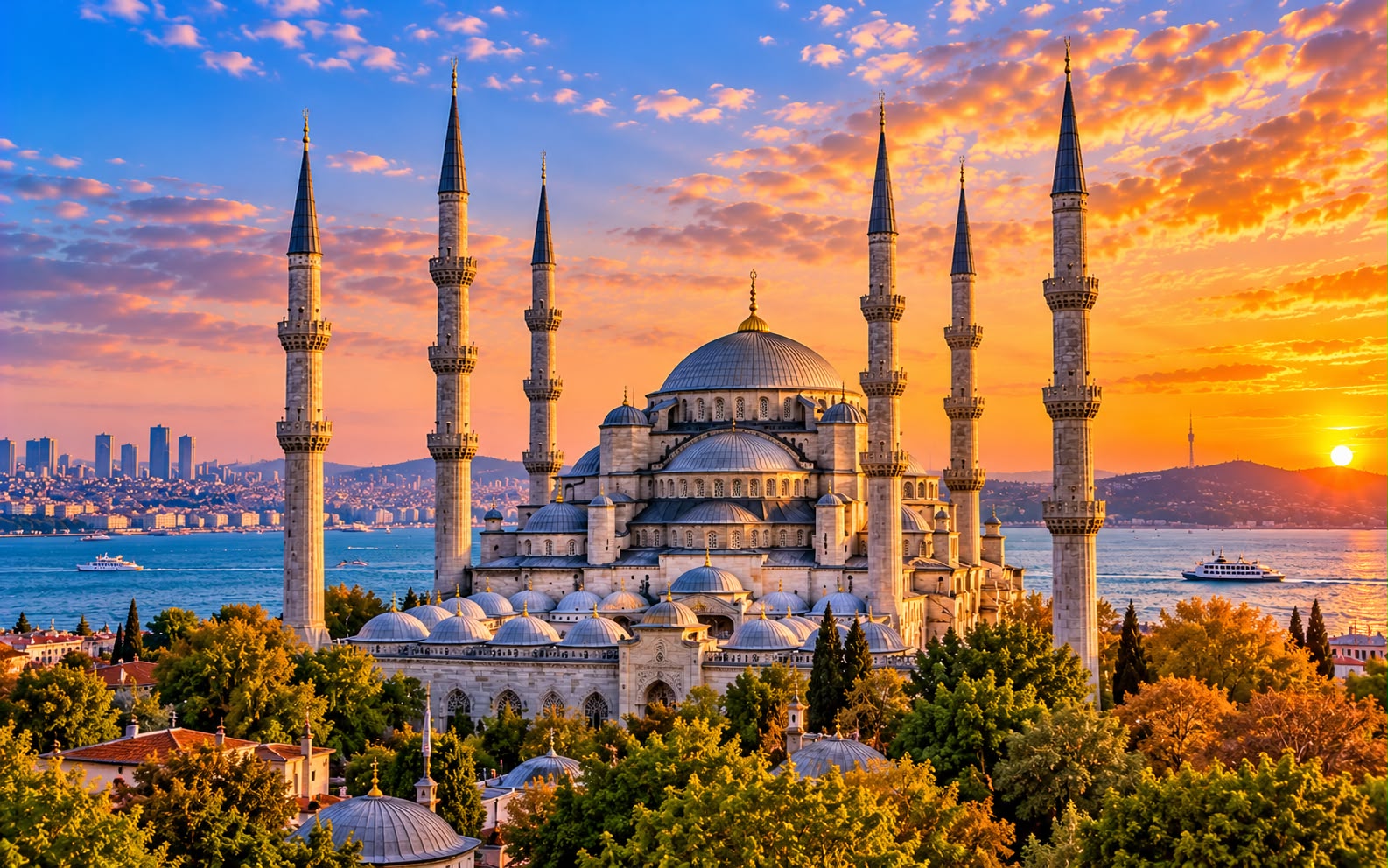
Istanbul in 3 days: the old city, the Bosphorus and the Asian side
One day in Sultanahmet, one on the water and in Galata, one on the Asian side — walked in the order the geography actually allows. Which ticket covers what, when each mosque closes to visitors, and why the public ferry beats every cruise sold on the quay.
- Middle East
- 3 days
- ≈ AED 1,600 / person
- Three days that cross two continents without rushing either
Before you go
Three days is enough for Istanbul if you stop trying to see all of it. The city is two continents and fifteen million people, and the mistake visitors make is criss-crossing it — an hour in traffic to see something that was twenty minutes from the last thing.
So this plan is one day per geography. Sultanahmet, where the Roman, Byzantine and Ottoman city stack on top of each other inside a walkable square kilometre. The Bosphorus and Galata, which is the water and the hill above it. The Asian side, which almost no three-day visitor crosses to and which is where the city eats.
Spending a week in Turkey? This is days one to three of Turkey in 7 days, and the 14-day route gives Istanbul the same three.
Figure EUR 390 (≈ AED 1,597) per person for three days. April–May and September–October.
Before you go: the short version
Entry
- Many nationalities enter visa-free; others use the official e-Visa at evisa.gov.tr and nowhere else. The copycat sites charge a markup for the same thing.
- Check your passport has 150 days’ validity beyond arrival, which is Turkey’s rule and catches people out.
From the airport
- Istanbul Airport (IST) is 40km out on the European side. The M11 metro runs to Gayrettepe in 30 minutes, then one change for Sultanahmet — about 75 minutes door to door for a few euros.
- Havaist buses go to Taksim and Sultanahmet for roughly €6 and take 60–90 minutes depending on traffic.
- A taxi is €30–45 and can take two hours at the wrong time of day.
- Sabiha Gökçen (SAW) is on the Asian side and is further from everything — allow two hours to Sultanahmet.
The card that runs the city
- Get an İstanbulkart from any station kiosk. It works on every tram, metro, bus, funicular and ferry, costs a few lira to buy, and every journey on it is cheaper than a single ticket.
- One card can pay for several people — tap it once per person.
Day by day
Day 1 — Sultanahmet, on foot
Walking order: Hagia Sophia → Blue Mosque (2 min) → Hippodrome (1 min) → Basilica Cistern (3 min) → Topkapı (8 min) → Grand Bazaar (12 min downhill). About 2.5km in total, all of it flat except the bazaar approach.
- 08:30 — Hagia Sophia at opening. Cathedral for 900 years, mosque for 500, museum for 80, and a mosque again since 2020. The upper gallery holds the Byzantine mosaics and is now a separate paid entry — take it, because the floor level is the part everyone sees.
- Shoulders and knees covered, heads covered for women. Scarves are sold at the door and lent at some entrances.
- 10:30 — The Blue Mosque, 200 metres across the square. Six minarets and 20,000 İznik tiles. It closes to visitors for 90 minutes around each of the five prayer times — the board at the gate shows the next one, and the midday closure is the one that catches people.
- 11:30 — The Hippodrome between them: the Egyptian obelisk, the Serpent Column from Delphi, and the chariot track still readable in the shape of the square.
- 12:30 — The Basilica Cistern — 336 columns in a Roman reservoir, two of them standing on Medusa heads, one sideways and one upside down. It is cool, dim and the right thing at midday.
- 14:00 — Lunch in the lanes behind the Arasta Bazaar, which are a street back from the square and half the price.
- 15:00 — Topkapı Palace, and the Harem is a separate ticket and the better half — 300 tiled rooms where the court actually lived, against a palace of courtyards where it performed.
- 17:30 — The Grand Bazaar, downhill, closed Sundays. The gold and carpet quarters are where the real trade still is; the lanes off Kalpakçılar are where the prices drop.
- 19:30 — Dinner in Kumkapı or back toward Eminönü.
Day 2 — The Bosphorus, Galata and the bazaars
Walking order: Spice Bazaar → Eminönü ferry pier (3 min) → ferry north and back → Galata Bridge (5 min) → Karaköy → Galata Tower (10 min uphill) → İstiklal (15 min). About 3km on foot, plus 90 minutes on the water. The Galata climb is steep — the Tünel funicular from Karaköy does it for one fare.
- 09:00 — The Spice Bazaar, and the streets around it are better than the bazaar itself — the coffee shops on Tahmis Sokak have been roasting since the 1870s.
- 10:30 — The Bosphorus by public ferry, not a cruise. The Şehir Hatları boat from Eminönü runs 90 minutes up to Anadolu Kavağı at the Black Sea mouth and costs a fraction of the tour boats tied up beside it. Sit on the right going up.
- You pass the whole city from the water — the palaces, the two bridges, the wooden yalı houses, and the fortress at Rumeli Hisarı.
- 13:30 — Lunch at Anadolu Kavağı, fish by the water, then the boat back.
- 16:00 — Galata Tower for the view back over the old city and the Golden Horn. Book a slot online; the queue on the door is the worst in the city.
- 17:30 — Karaköy’s side streets for coffee and the Ottoman-era banking quarter.
- 19:00 — İstiklal Caddesi and the passages off it — Çiçek Pasajı, Nevizade — which is where the evening is.
Day 3 — The Asian side
Walking order: ferry to Kadıköy → produce market (5 min) → Moda seafront (20 min) → ferry or bus to Üsküdar → Maiden’s Tower viewpoint → Çamlıca. About 4km on foot, and the Moda stretch is the flat seaside one.
- 09:30 — The ferry to Kadıköy from Eminönü or Karaköy, 20 minutes, on the same İstanbulkart. This crossing is the cheapest thing in Istanbul that feels like an event.
- 10:00 — Kadıköy’s produce market, which is a working one — fish, pickles, cheese, and the Çiya restaurants that made Anatolian home cooking respectable.
- 12:30 — Lunch at a Çiya or a lokanta on the market streets.
- 14:00 — Moda along the seafront, which is a long flat walk past tea gardens full of people doing nothing in particular.
- 16:00 — Üsküdar, twenty minutes north, for the Mihrimah Sultan and Şemsi Pasha mosques — both Sinan, both small, both empty.
- 17:30 — The Maiden’s Tower from the shore, and the sunset from Üsküdar faces back across at the old city skyline, which is the photograph.
- 19:00 — Çamlıca Hill if you have a car or a taxi, for the whole city at dusk.
Costs and practicalities
Getting around, and what it costs
| İstanbulkart (card itself) | about €2 |
| Tram, metro, bus, funicular | €0.50–0.80 a journey |
| Public ferry across the Bosphorus | €0.50–0.80 |
| Şehir Hatları full Bosphorus trip | about €5 return |
| Airport metro (M11 + change) | about €1.50 |
| Havaist airport bus | about €6 |
| Taxi, airport to Sultanahmet | €30–45 |
- Walk the old city and take the ferry everywhere else. Istanbul’s traffic is genuinely bad and the water is both faster and better.
- Trams fill at rush hour on the T1 line through Sultanahmet.
Best time to visit
- April–May and September–October — warm, long days, and the tulips are out in April. The best of the year.
- June–August — 30°C and humid, with the cruise crowds at their peak. Mosque queues are longest now.
- November–March — grey, often wet, and occasionally snowed on, which is extraordinary to see. Hotels are half price and the sites are empty.
- Ramadan changes the rhythm — mosques are busier, evenings are festive, and some restaurants close during daylight.
Travel tips
- Mosques close to visitors around prayer times. Check the board rather than the guidebook.
- Buy the Hagia Sophia gallery ticket, not just the floor.
- The Grand Bazaar is closed on Sundays; the Spice Bazaar is not.
- Ignore anyone who approaches you about a carpet, a shoeshine or a “closed today” sign. All three are the same opening move.
- Take the public ferry over any cruise sold on the quay.
- Tap the İstanbulkart once per person when travelling together.
- Eat on the Asian side at least once, which is the single best piece of advice on this page.
What this trip actually costs
Two people, 2 nights, mid-range comfort, international flights excluded:
| Item | Cost |
|---|---|
| Hotel, 2 nights in Sultanahmet or Karaköy | EUR 260 (≈ AED 1,065) |
| Food and drink, 3 days | EUR 240 (≈ AED 983) |
| Hagia Sophia, Topkapı with Harem, Cistern, Galata Tower | EUR 190 (≈ AED 778) |
| Transport, including airport both ways | EUR 70 (≈ AED 287) |
| Bosphorus ferry and incidentals | EUR 20 (≈ AED 81.89) |
| Total for two | EUR 780 (≈ AED 3,194) |
- Roughly EUR 390 (≈ AED 1,597) per person. The ticket line is the surprise — Istanbul’s headline sites have risen sharply and the four above are most of it.
- Staying in Karaköy or Beyoğlu costs the same as Sultanahmet and puts you where the city eats in the evening.
- Hotel picks here are chosen on location, not on commission — always check prices and recent reviews before booking.
What to pack
- Shoes you can walk 4km a day in, on cobbles and marble polished by centuries.
- A scarf, for mosque entries, whatever your gender.
- A layer for the ferry, which is cold on the water even in summer.
- A Type C/F adapter, 230V.
Part of a bigger trip?
- Turkey in 7 days gives Istanbul three days and adds Cappadocia and Ephesus.
- Turkey in 14 days adds the coast and Pamukkale.
- Turkey and Greece in 14 days crosses to Samos and the Cyclades.
- Twelve hours between flights instead? See Istanbul in a 12-hour layover.
FAQ
Is three days enough for Istanbul? For the old city, the Bosphorus and one crossing to Asia, yes. It is not enough to add the Princes’ Islands or a Byzantine walls walk, and it is not enough to feel unhurried.
Which side should I stay on? Sultanahmet for walking to the sites, Karaköy or Beyoğlu for the evenings. Both are fine; the Asian side is cheaper and means a ferry every morning.
Is the Museum Pass worth it? Only if you are doing more than the four sites above, or staying longer. For this three-day plan the individual tickets work out similar.
Can I see Hagia Sophia and the Blue Mosque on the same morning? Yes — they face each other. Work around the Blue Mosque’s prayer-time closures rather than the other way round.
Is Istanbul safe? Ordinary city care. The persistent issue for visitors is commercial rather than criminal: carpet touts, shoeshine setups and inflated taxi fares. Insist on the meter or use the app.
Prices and entry rules change, and what you need depends on your passport; last checked 29 October 2026, so confirm with the embassy or your airline before booking.


