 The Itinerary
Japan in 5 days: Tokyo, Kamakura and Hakone
Five days is a Tokyo trip with two day trips, not a Tokyo-and-Kyoto trip. Kamakura for the Great Buddha an hour south, Hakone for Fuji and an onsen, and no Shinkansen at all — which is exactly why it works.
- East Asia
- 5 days
- ≈ AED 2,300 / person
- A first trip, or a stopover, that does not waste two of its five days on trains
Before you go
Five days in Japan is a Tokyo trip. Attempting Kyoto as well means spending most of two days on trains, and arriving in the most beautiful city in the country with an afternoon.
So this one stays east. Three days in Tokyo, a day in Kamakura, a night in Hakone — and the whole thing runs on local lines, which means no rail pass and no reserved seats.
Kamakura was the capital for 150 years and has the Great Buddha sitting in the open air since a tsunami took his hall in 1498. Hakone gives you a volcanic valley, a lake, an onsen and Fuji on a clear morning, 90 minutes from Shinjuku.
If you have seven days, the week-long route adds Kyoto and Osaka properly.
Figure JPY 100,000 (≈ AED 2,320) per person. Late March to early April and late October to November.
Before you go: the admin
Entry
- Most nationalities enter visa-free for 90 days. Indian passport holders need a visa arranged before travel.
- Visit Japan Web for arrival registration — screenshot the QR codes.
- Six months’ validity.
Transport
- No rail pass. Nothing here uses the Shinkansen. A pass would be wasted money.
- Get a Suica or Pasmo at the airport and use it for everything — metro, JR local lines, buses, convenience stores.
- The Hakone Freepass covers the whole Hakone loop plus the Odakyu line from Shinjuku. Buy it at Shinjuku station.
- Haneda is 30 minutes from the centre; Narita is 60–90. If you have a choice of airport on a five-day trip, Haneda is worth paying for.
Money
- Carry ¥10,000–20,000. Shrines and smaller restaurants are cash.
- 7-Eleven and Japan Post ATMs take foreign cards.
- No tipping.
Day by day
Day 1 — Tokyo, arrival
- Do not plan much. Narita is 60–90 minutes from the centre, Haneda 30.
- 16:00 — Get a Suica or Pasmo card at the station, which works on every train, bus and convenience store in the country.
- 17:00 — Shibuya in the evening — the crossing, and the free view of it from the Starbucks above.
- 18:30 — The free observation deck at the Tokyo Metropolitan Government Building in Shinjuku for the night view, which is the view people pay for elsewhere.
- 20:00 — Eat in a standing bar under the Yurakucho tracks, or in the alleys of Omoide Yokocho.
Day 2 — Tokyo
- 08:00 — Asakusa and Senso-ji at eight, before the coaches, then the Nakamise approach once it opens.
- 10:00 — Ueno Park for the Tokyo National Museum, or Akihabara if that is your thing — they are two stops apart.
- 12:30 — Tsukiji Outer Market for an early lunch — the inner wholesale market moved to Toyosu; the outer market is where you eat.
- 15:00 — Meiji Jingu, Harajuku and Omotesando in one afternoon, which they are built for — the shrine forest, the teenage street, and the architecture avenue, all within a kilometre.
- 18:00 — teamLab or the Ghibli Museum if you have children — both sell out weeks ahead, so book before you fly.
Day 3 — Kamakura
- 08:30 — An hour south on the Yokosuka line from Tokyo station.
- 10:00 — Tsurugaoka Hachimangu, the shrine at the top of the main avenue, and the avenue itself, which runs straight from the sea.
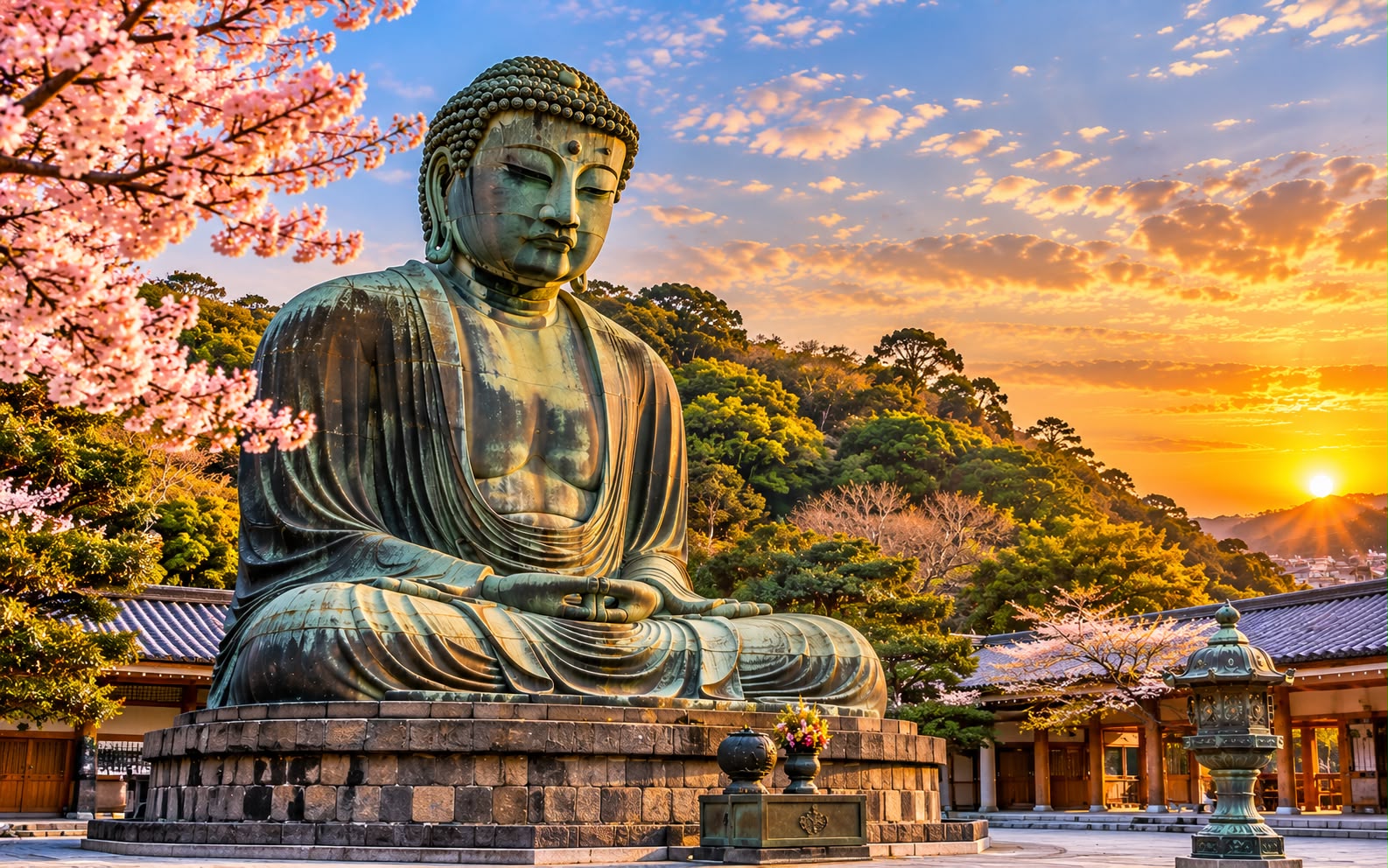
- 11:30 — The Great Buddha at Kotoku-in — 13.35m of bronze, cast in 1252, sitting outdoors since the tsunami of 1498 took the building. You can go inside him for ¥50.
- 13:00 — Hasedera just below, with its hydrangea path and a view over the bay — the hydrangeas are a June queue and a pleasant walk the rest of the year.
- 15:00 — The Enoden line along the coast to Enoshima, the local train everybody photographs, running between houses and then beside the sea.
- 18:00 — Back to Tokyo for the evening.
Day 4 — Hakone, overnight
- 09:00 — Ninety minutes from Shinjuku on the Odakyu Romancecar. The Hakone Freepass covers the whole loop and is worth buying at Shinjuku.
- Do the loop anticlockwise: train to Gora, funicular, ropeway over the Owakudani sulphur valley, pirate boat across Lake Ashi, bus back. Clockwise puts you against the crowds all day.
- 12:00 — Owakudani’s black eggs, boiled in the springs, are said to add seven years to your life.
- 14:00 — The Hakone Open-Air Museum, which is genuinely good and usually skipped — Henry Moore and Picasso in a valley.
- 16:30 — Stay in a ryokan with an onsen. This is the night that turns a city break into a trip. Check the tattoo policy when booking, or take a room with a private bath.
- 18:30 — Kaiseki dinner, which the ryokan rate usually includes and which is served early.
Day 5 — Fuji, and out
- 07:00 — Fuji is visible from Lake Ashi on a clear morning and gone by midday, which is the argument for the overnight.
- 10:00 — Back to Shinjuku in 90 minutes, then to the airport.
- If your flight is late, the morning is enough for Shimokitazawa — second-hand shops and small bars — or the Nezu Museum garden, which is ten minutes from Omotesando and almost nobody goes.
- Narita Express from Shinjuku is 80 minutes; from Haneda it is half that on the Keikyu line.
Costs and practicalities
Best time to visit
- Late March–early April — blossom, and the forecast moves by a week each year. Prices roughly double.
- Late October–November — autumn colour, which lasts longer and is almost as good. Hakone’s foliage in mid-November is the best of the trip.
- May and early June — green, mild, cheaper, the least compromised shoulder.
- December–February — cold, clear, cheap, and the best odds of seeing Fuji by a wide margin. Winter is seriously underrated for this specific route.
- June–August — rainy season then humidity, and Fuji hides behind cloud most days.
Avoid Golden Week, 29 April to 5 May.
Travel tips
- Do not buy a rail pass. Nothing on this route uses the Shinkansen.
- Fly into Haneda if you can. On five days, the hour each way to Narita is a real cost.
- Buy the Hakone Freepass at Shinjuku, not piecemeal.
- Book teamLab or Ghibli before you fly.
- Forward your main bag to the Hakone ryokan and travel with an overnight bag — ¥2,000 and it transforms the day.
- Carry your passport; it is a legal requirement and needed for tax-free shopping.
- Shoes off at the ryokan and temples; wear socks without holes.
What this trip actually costs
Two people, 4 nights, mid-range comfort, international flights excluded:
| Item | Cost |
|---|---|
| Hotels, 4 nights including one ryokan | JPY 100,000 (≈ AED 2,320) |
| Food and drink, 5 days | JPY 45,000 (≈ AED 1,044) |
| Hakone Freepass, Romancecar and Kamakura fares | JPY 25,000 (≈ AED 580) |
| Temples, museums and teamLab | JPY 18,000 (≈ AED 418) |
| Metro, Suica top-ups and airport transfers | JPY 12,000 (≈ AED 278) |
| Total for two | JPY 200,000 (≈ AED 4,639) |
- Roughly JPY 100,000 (≈ AED 2,320) per person. The ryokan night is the largest accommodation line and is the one to pay for.
- No rail pass is the saving that makes a five-day Japan trip reasonable.
- Hotel picks here are chosen on location, not on commission — always check prices and recent reviews before booking.
What to pack
- Shoes for long walking that come off easily, and socks without holes.
- A coin purse — notes stop at ¥1,000.
- A warm layer; Hakone is in the mountains and colder than Tokyo.
- A light waterproof.
- A Type A adapter, 100V.
FAQ
Can I do Kyoto in five days? Not well. Tokyo to Kyoto is two and a quarter hours each way, and fitting it in means two half-days lost and one rushed day there. Seven days is the minimum that holds both.
Is a rail pass worth it? No, not for this route. Everything here runs on local lines and the Hakone Freepass, neither of which a JR pass improves.
Kamakura or Nikko as the day trip? Kamakura on five days — it is an hour away rather than two, and the Great Buddha and the coastal train make a fuller day for less travelling.
Will I see Mount Fuji? From Hakone on a clear morning, often — and far more reliably in winter than in summer. Midday is worse than dawn in any season.
Is one night in a ryokan enough? Yes, and it is the most memorable night of the five. Two is lovely and not necessary on a trip this short.
Prices and entry rules change, and what you need depends on your passport; last checked 30 October 2026, so confirm with the embassy or your airline before booking.


