 The Itinerary
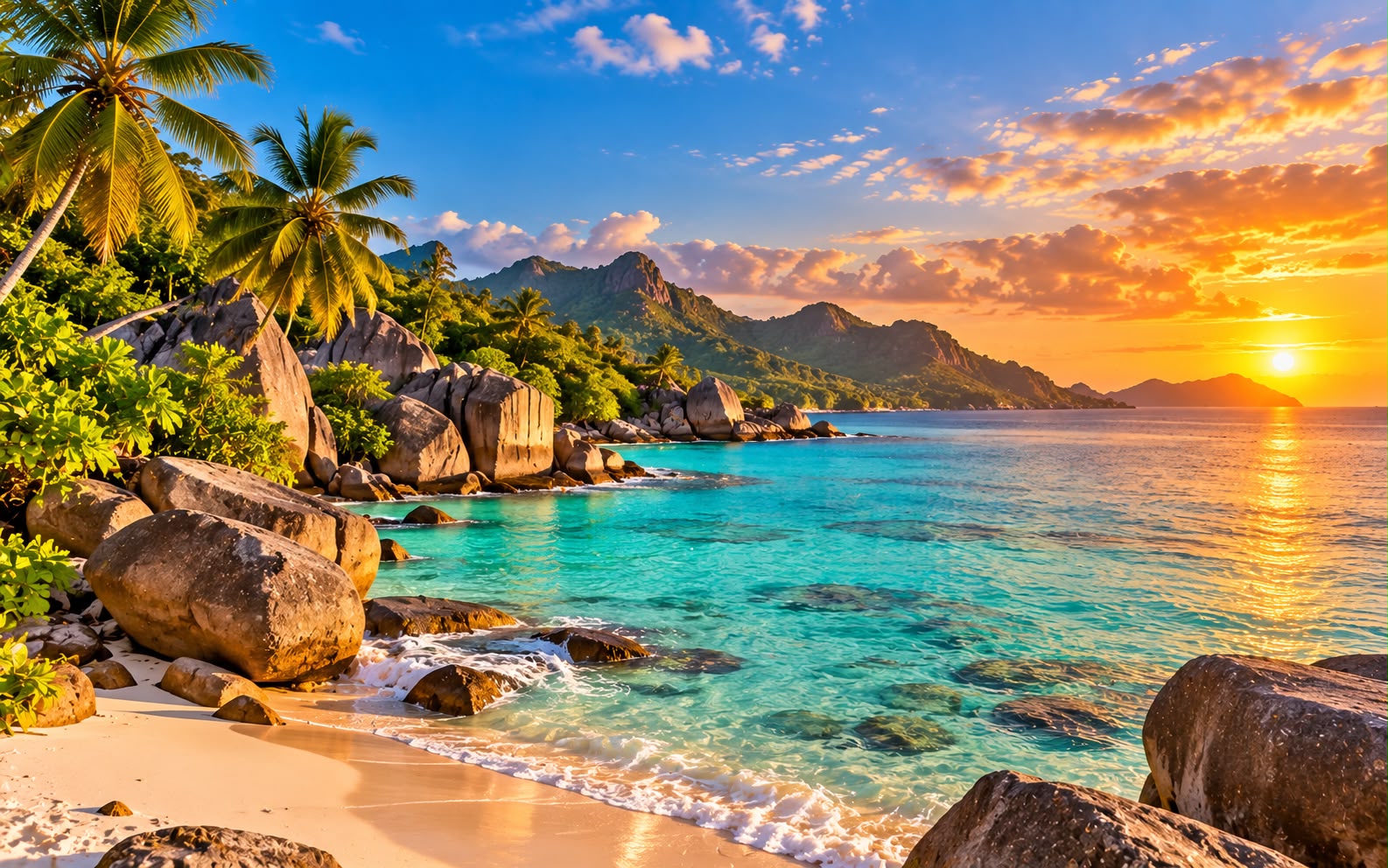
Seychelles in 8 days: Mahé, Praslin and La Digue
The one country that lets everyone in without a visa: three islands by ferry, the beach every screensaver stole, a prehistoric palm forest and giant tortoises who own the road — with the self-catering tricks that make the Indian Ocean's priciest postcard surprisingly affordable.
- Indian Ocean Islands
- 8 days
- ≈ AED 5,800 / person
- Beaches + island-hopping
Before you go
The Seychelles are what the Maldives’ marketing department wishes it had: not just water in seventeen blues, but granite — billion-and-a-half-year-old boulders sculpted into curves no camera has ever quite captured, forests full of a palm found nowhere else on Earth, and giant tortoises strolling public roads like retired landlords.
Whatever passport you hold, this is the easiest long-haul-feeling trip that exists: Seychelles lets in every nationality without a visa, a €10.90 online form is the entire paperwork, non-stops reach Mahé from the Gulf, East Africa and Europe, and the time zone is the same as home. The catch is the price tag — the Seychelles is honest-to-goodness expensive — so this guide is built around the local tricks (guesthouses, takeaway boxes, the SCR 12 bus) that cut the bill without cutting the postcard.
The route is the classic three-island ladder: Mahé (3 nights) → Praslin (2 nights) → La Digue (2 nights), hopping by fast ferry. Costs are in Seychellois rupees (SCR ~16 to the euro; hotels quote EUR, everything local runs in SCR). Figure SCR 23,000 (≈ AED 5,811) per person (≈ €1,480) excluding international flights.
Before you go: the admin (there barely is any)
Seychelles has no budget-airline, hostel-circuit economy — it’s a small island nation importing almost everything. The honest numbers: restaurant mains run SCR 250–450, a beer SCR 90–120, resort dinners €50+ a head. The system that keeps this trip at SCR 23,000 (≈ AED 5,811) pp instead of double:
No visa — for anyone
- No visa — for anyone. Seychelles is visa-free for all nationalities: you receive a free Visitor’s Permit on arrival (30 days). What you must do is submit the digital Travel Authorisation at seychelles.govtas.com (or the mobile app) before boarding: €10.90 standard, apply up to 10 days before your flight — most approvals land within a day. That’s it. That’s the whole section.
- Have printouts/PDFs ready at immigration: return ticket, accommodation bookings for every night, and proof of funds (the official guideline is ~US$150/day — a card statement suffices; families are rarely asked).
- Passport valid 6 months. No mandatory vaccinations, no malaria anywhere in Seychelles — a genuine tropical rarity.
Getting there, and when to go
- Getting there: Emirates flies Dubai–Mahé non-stop daily (~4h15); returns commonly US$650–1,100 — book 2–3 months out. Air Seychelles also connects Mumbai for India-side family joining the trip.
- When to go: the magic windows are the trade-wind changeovers — April–May and October–November — when the sea goes glassy. November–March is hotter and stiller with brief downpours; May–September is breezier with seaweed washing onto east-facing beaches (it moves around; west coasts stay clean). An October trip hits the sweet spot.
The money truth (read before booking anything)
- Sleep in guesthouses and self-catering apartments — Seychelles’ family-run guesthouses are licensed, spotless, and half the price of hotels. We list real ones below.
- Lunch is a takeaway box: every island has Creole takeaways selling fish curry, chicken curry or octopus with rice for SCR 75–125. Locals eat this daily; so should you.
- The SCR 12 bus: Mahé and Praslin’s SPTC buses cost twelve rupees flat, go almost everywhere, and are an attraction in themselves (sit left on coastal routes). Taxis, by contrast, are SCR 500+ per hop — the single fastest way to blow the budget.
- Cards work everywhere that matters; keep ~SCR 1,000 cash for takeaways, buses and beach vendors. Prices quoted in EUR at hotels are payable by card without drama.
Day by day
Day 1 — Land on Mahé, find your feet
- Morning — The Emirates red-eye lands you at Mahé by early morning. Pick up the eSIM/local SIM at the airport (Cable & Wireless / Airtel ~SCR 400), grab the hire car if self-driving (from ~€45/day, right-hand drive like home) or a taxi to Beau Vallon (~SCR 500).
- 11:00 — Victoria, one of the world’s smallest capitals, walkable in an hour: the silver clock tower (a mini Big Ben, 1903), the riotous Sir Selwyn Selwyn-Clarke Market (fruit bats and red snapper on ice), and the technicolour Arul Mihu Navasakthi Vinayagar Temple — Seychelles’ Hindu temple, a little piece of Tamil Nadu in the Indian Ocean.
- 14:00 — Check in at Beau Vallon; swim at the big, safe, lifeguard-adjacent crescent — the best easy swimming on Mahé.
- 18:15 — Sunset walk the full arc of the bay; dinner at a beach shack (grilled catch, ~SCR 350) — or, if it’s Wednesday, the Bazar Labrin night market: grills, gato pima, music, the whole island out.
Where to stay on Mahé (three nights, Beau Vallon side)
- Luxury: Constance Ephelia, Port Glaud — 4.6/5 on TripAdvisor (~9,000 reviews — the country’s most reviewed resort), two beaches and a zipline. €550+. (STORY Seychelles, 4.6/~2,800, is the Beau Vallon glamour pick.)
- Mid-range: Savoy Resort & Spa, Beau Vallon — 4.3/5 (~2,500 reviews), big pool, two minutes from the sand. ~€250–330.
- Value: Blue Lagoon Chalets — 4.6/5 (~140 reviews), self-catering chalets by the water for ~€110–150 — the guesthouse economy at its best.
Day 2 — Mahé’s wild south
- 08:30 — Over the spine of the island via the Sans Soucis road: pull over at the Mission Lodge viewpoint (Queen Elizabeth had tea here; the view explains why) and the small tea factory (~SCR 100) on the misty flank of Morne Blanc.
- 11:00 — Down to the south coast’s heavyweights: Anse Intendance — thundering, board-short surf, turtle nests in season — then Anse Takamaka and lunch at a south-coast Creole spot (~SCR 300 pp). Swim rule for the wild south: these beaches have real currents and no lifeguards — waist-deep is the game, and if locals aren’t swimming, you don’t.
- 15:00 — Anse Royale for the calm, reef-guarded swimming the south does allow, coconut ice cream in hand.
- 18:00 — Back via the east coast in time for a Victoria supermarket run if self-catering; dinner at the guesthouse.
Day 3 — The Anse Major trail and a lazy afternoon
- 07:30 — Beat the heat on the Anse Major coastal trail (from Bel Ombre, ~1 hr each way): a carved granite path above the sea ending at a beach with nobody on it. Carry water and reef shoes; swim in the marked cove.
- 12:30 — Takeaway-box lunch (~SCR 100), then earn your afternoon nap.
- 15:00 — Snorkel hire at Beau Vallon (or a glass-bottom trip to Baie Ternay marine park, ~SCR 900 pp) — turtles are a coin-flip, sergeant majors guaranteed.
- 19:30 — Dinner splurge night: La Plage or a beachfront table on the bay (~SCR 600–800 pp). Pack for the morning ferry.
Day 4 — Ferry to Praslin, then the world’s best beach
- 09:00 — Cat Cocos fast ferry Mahé → Praslin (€56 economy, 1 hour; the upper open deck is €6 more and worth it — flying-fish escort included). Book online days ahead; take the sea-sickness tablet if swells are up.
- 11:00 — Check in on the Côte d’Or (Anse Volbert) side: the long, shallow, family-perfect lagoon.
- 13:00 — Bus or taxi across to Anse Lazio — the granite-framed sweep that tops “world’s best beach” lists with monotonous regularity. Go afternoon-into-golden-hour when the tour groups thin; snorkel the left-hand boulders; keep valuables zipped and with you (beach bags are the islands’ one crime scene).
- 19:00 — Dinner on Côte d’Or (~SCR 400 pp); takeaway boxes here run SCR 100 and eat just as well at a picnic table on the sand.
Where to stay on Praslin (two nights)
- Luxury: Constance Lémuria — 4.8/5 (~4,700 reviews), its paths ending at near-private Anse Georgette. €700+.
- Mid-range: Le Duc de Praslin, Côte d’Or — 4.6/5 (~2,200 reviews), gardens and a serious kitchen. ~€220–300.
- Value: Les Lauriers Eco Hotel — 4.5/5 (~600 reviews), steps from Anse Volbert with a famous Creole dinner buffet. ~€130–170.
Day 5 — The prehistoric forest and a pirate island
- 08:30 — Vallée de Mai at opening (entry SCR 450, under-12s free-ish — confirm at gate; open 8:30–16:30, last entry 15:30): a UNESCO forest of coco de mer palms — six-metre fronds, the famous double coconut, and the endemic black parrot whistling overhead. The 1.5–2 h middle loop with a guide (~SCR 300 extra, shared) turns botany into storytelling. This is the “other Eden” — General Gordon genuinely believed it.
- 12:00 — Takeaway lunch at Baie Ste Anne (~SCR 100).
- 13:30 — Half-day boat to Curieuse & St Pierre (~€75–90 pp incl. BBQ or snacks): giant Aldabra tortoises wandering free on Curieuse — hundreds of them, ancient and opinionated — then snorkelling the boulder islet of St Pierre, the postcard with fish in it. (Swap: walk into Anse Georgette instead — register free at the Lémuria gate — if boats and budgets don’t align.)
- 19:00 — Grilled jobfish on Côte d’Or; early-ish night. Tomorrow, the island where time gave up.
Day 6 — La Digue: bicycles and THAT beach
- 09:30 — Ferry Praslin → La Digue (€15, 15 minutes). No real cars to speak of — hire bikes at the jetty (SCR 150–200/day); your guesthouse is five pedalled minutes away. Ox-carts retired; the vibe didn’t.
- 11:00 — Pedal south into L’Union Estate (entry ~SCR 150–200, covers the whole estate): the old coconut mill, vanilla vines, the colonial planter’s house, a corral of giant tortoises — and then, at the end of the track:
- 12:30 — Anse Source d’Argent. The most photographed beach on Earth, and the cameras aren’t lying: pink-tinged sand, sculpted granite, water so shallow and warm it feels poured. Low tide = wading pools; high tide = swimming between boulders. Stay for hours; the crowds fade after 15:30 and the late light on the granite is the trip’s screensaver.
- 18:30 — Dinner in the village (Creole buffet night at many guesthouses, ~SCR 350) — then star-count on the beach; there’s nothing to do on La Digue at night, which is the entire point.
Where to stay on La Digue (two nights): Le Domaine de L’Orangeraie (4.4/5, ~3,300 reviews, the island’s one resort-resort, ~€350+), Le Repaire Boutique Hotel (4.6/5, ~1,100 reviews, seafront Italian-run charm, ~€200–260), or Pension Hibiscus / Cabanes des Anges (4.8/~320 and 4.7/~280 reviews, the guesthouse sweet spot at ~€100–140).
Day 7 — The wild east and a sunrise you’ll keep
- 06:15 — Sunrise mission: back into L’Union (ticket from yesterday if same-day stamped — buy the two-day pass if offered) for Anse Source d’Argent empty. An hour alone with the granite before breakfast is worth the alarm.
- 09:30 — Cycle cross-island to Grand Anse → Petite Anse → Anse Cocos (20 min ride + 30 min coastal walk): three wild, roaring, gorgeous bays. Hard rule: these are looking-and-paddling beaches — the rip currents are the islands’ most dangerous thing. Anse Cocos’ far-corner natural pools are the safe splash.
- 13:00 — Creole takeaway under a takamaka tree (~SCR 100), lazy afternoon: snorkel trip to Coco Island (~€50–60 pp, an hour of turtle-rich reef) or nothing whatsoever, executed perfectly.
- 18:00 — Farewell dinner; settle the guesthouse bill in EUR-by-card or SCR; pre-book the morning ferry seats.
Day 8 — Ferry home
- Morning — Direct ferry La Digue → Mahé (€68, ~1h45) across open water (breakfast light, tablet taken), landing in Victoria by late morning — comfortable for afternoon/evening departures. On an early flight? Spend night 7 on Mahé instead and give Day 7’s beaches to Praslin.
- Airport rule of thumb: be there 2½ h early — it’s small, but so are its queues’ patience.
Costs and practicalities
Best time to visit
April–May and October–November are the two changeover months between the trade winds, and they are the calmest and clearest of the year.
- April–May and October–November — the best. Light winds, calm seas, excellent visibility for diving and snorkelling, and warm water.
- May–September — the southeast trades. Cooler, drier, breezier, with seaweed accumulating on some southeast-facing beaches and better conditions for sailing and surfing.
- November–March — the northwest monsoon. Hotter, more humid, with heavier rain in December and January, and calmer seas on the southeast coasts.
- Whale sharks pass from August to October. Turtle nesting on Cousine, Bird and Aldabra runs roughly October to February.
The Seychelles sit outside the cyclone belt — a genuine advantage over Mauritius and Madagascar.
Travel tips
- Inter-island travel is the planning problem. The Cat Cocos ferry links Mahé, Praslin and La Digue; book ahead, and note the Praslin–La Digue crossing can be rough.
- La Digue is largely car-free — bicycles are the transport and are hired everywhere.
- Anse Source d’Argent charges entry through L’Union Estate and is best early, before the tour groups and at low tide.
- The Vallée de Mai is UNESCO-listed and the only place the coco de mer grows wild. Buying a nut requires an official export permit — buy from a licensed vendor who provides it.
- It is expensive. Self-catering guesthouses and the takeaway Creole places are how to do it without resort money.
- Cards work widely; the rupee is the currency and euros are accepted at a poor rate.
- The sun is equatorial and the granite reflects it. Reef-safe sunscreen, and a rash vest for snorkelling.
What this trip actually costs
Two people, 7 nights (3 Mahé + 2 Praslin + 2 La Digue), guesthouse-smart with two splurges, excluding international flights (Dubai–Mahé ~US$650–1,100 return on Emirates):
| Item | Cost |
|---|---|
| Hotels/guesthouses: Mahé 3N + Praslin 2N + La Digue 2N | SCR 20,100 (≈ AED 5,078) |
| Ferries: Mahé→Praslin (€56pp) + →La Digue (€15pp) + →Mahé (€68pp) | SCR 4,300 (≈ AED 1,086) |
| Buses + taxis on Mahé & Praslin, bike hire on La Digue | SCR 3,500 (≈ AED 884) |
| Entries: Vallée de Mai, L’Union Estate, viewpoints | SCR 1,600 (≈ AED 404) |
| Curieuse + St Pierre boat trip for two | SCR 2,800 (≈ AED 707) |
| Food: takeaway lunches + Creole dinners, 8 days | SCR 12,000 (≈ AED 3,032) |
| Local SIM | SCR 400 (≈ AED 101) |
| Buffer: sunset drinks, coconut ice cream, souvenirs | SCR 1,300 (≈ AED 328) |
| Total for two | SCR 46,000 (≈ AED 11,622) |
- SCR 23,000 (≈ AED 5,811) per person ≈ €1,480 — for the world’s most expensive-looking trip, that’s the guesthouse economy doing its work. The same 8 days in beach resorts with restaurant dinners runs 2.5–4× this; the honeymoon-splurge version is a future guide.
- Book in this order: Emirates flights → Travel Authorisation online (10 days out, €10.90 — don’t pay lookalike sites more) → guesthouses (the good cheap ones fill 2–3 months out in season) → Cat Cocos ferries online → hire car for Mahé days → boat trips on the ground once you’ve seen the sea state.
- Hotel and restaurant picks are unsponsored — no affiliate links in this article. Chosen on location and current TripAdvisor ratings; check recent reviews and prices before booking.
What to pack
- Reef-safe sunscreen (the equatorial sun is a different instrument — SPF 50, reapply) and a rash vest for snorkelling.
- Reef shoes: granite + coral shallows eat bare feet.
- Snorkel set from home if you have one — hire runs SCR 150+/day and adds up.
- Mosquito repellent (no malaria, but dusk ankles are a buffet), light rain shell for two-minute downpours.
- A dry bag for ferry decks and bike baskets; padlock for beach-bag peace of mind.
- UK-style Type G plugs — the UAE traveller’s rare luxury: your chargers just work.
- Modest wear only for Victoria’s temple and church visits; everywhere else, the dress code is salt.
FAQ
Seychelles or Maldives — which one? Different animals. Maldives is one resort on one ring of coral: the water is (slightly) more surreal, everything happens at your hotel, and it’s the better pure-luxury cocoon — our Maldives guide covers it. Seychelles is a real country you explore: three islands, mountains, markets, buses, hikes, guesthouses — twice the trip for travellers who get bored on day three of a sunlounger. Honeymoon: Maldives by a nose. Everything else: Seychelles.
Is it safe? One of Africa’s safest countries — solo women cycle La Digue at night. The two real risks are unattended beach bags (take turns swimming, or bring nothing) and rip currents on the wild south/east beaches — respect the swim rules above and the trip’s biggest danger is sunburn.
Halal and vegetarian food? Seafood makes halal-conscious eating natural — grilled fish, octopus curry and veg creole dishes dominate menus — but formal halal certification is rare outside a few Victoria eateries and resorts on request; observant travellers default to seafood/veg, which here is no hardship. Vegetarians do well: lentil dal, breadfruit, pumpkin chatini and veg curries are Creole staples (the Indian-origin community runs deep), and self-catering guesthouses make it trivial.
Can we do it without a hire car? Yes — that’s the SCR 12 bus’s whole job on Mahé and Praslin (last buses ~19:00–20:30; Sundays sparse), plus taxis for the awkward hops. La Digue needs nothing but a bicycle. A car earns its €45 only on the Mahé south-loop day.
Is the sea calm year-round? No — and it matters. October–November and April–May are the glass months. May–September’s southeast trades bring chop on the crossings (tablets!) and seaweed to east-facing beaches like Grand Anse; Anse Lazio and the west coasts stay lovely. December–March is calm, hot, and briefly torrential.
What’s Seychelles guide #2? The honeymoon edition — one week, two resorts (a Praslin hideaway + a Mahé finale, or the private-island splurge), zero ferries at dawn — plus the Bird Island day-trip nobody talks about. On the list.
Prices and entry rules change, and what you need depends on your passport; last checked 8 October 2026, so confirm with the embassy or your airline before booking.


