 The Itinerary
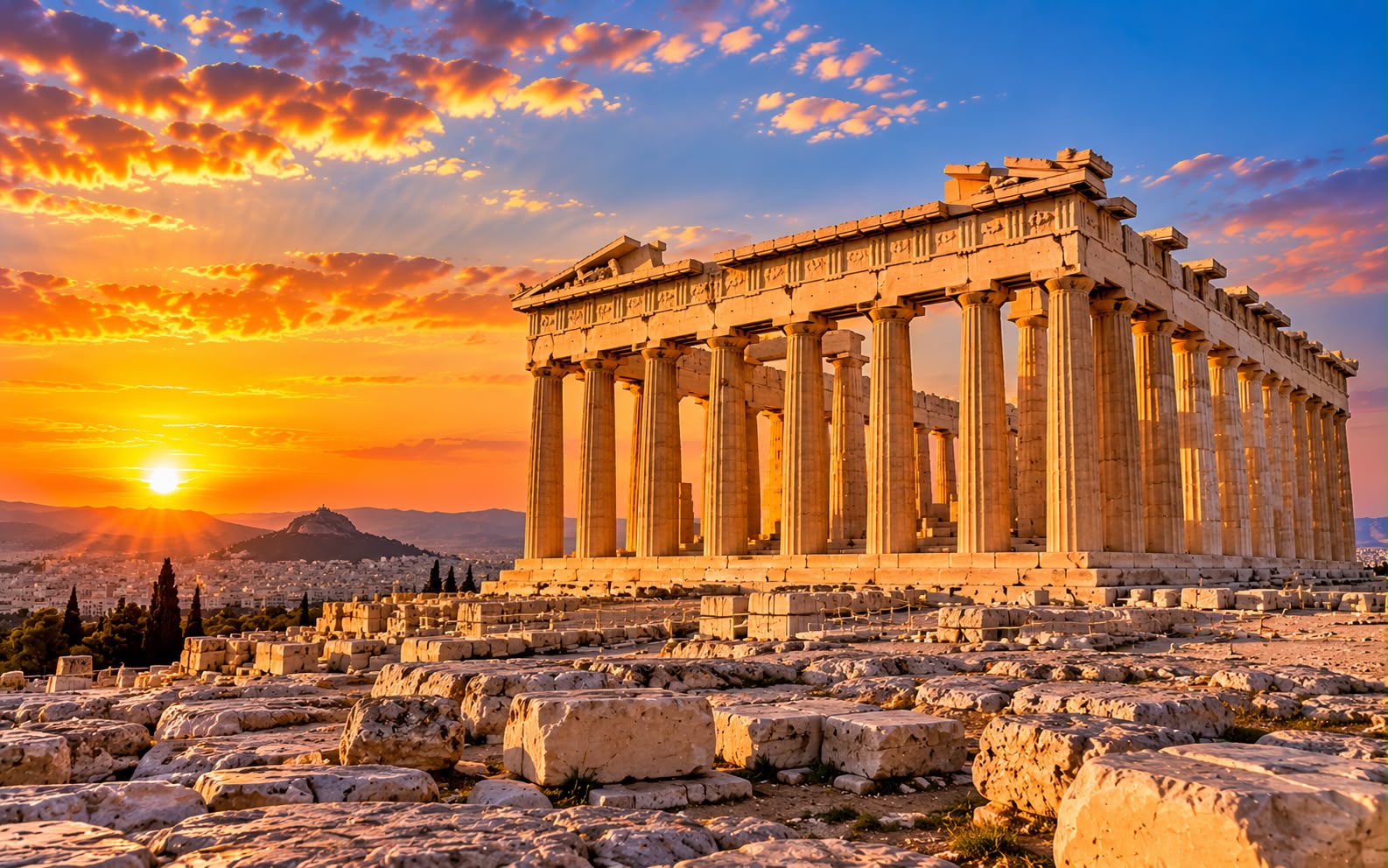
Greece in 7 days: Athens and Santorini
A week is three nights in Athens and four on Santorini — and the case for stopping at one island. The Acropolis ticket that saves money, why the ferry beats the flight only sometimes, and where on Santorini you can actually swim.
- Southern Europe
- 7 days
- ≈ AED 5,750 / person
- One city, one island, and no day lost to a second ferry
Before you go
Seven days in Greece is one city and one island. Adding a second island costs a travel day in each direction, and on a week that is most of a third of the trip.
Athens gets three nights, which is one more than most itineraries give it and roughly right once you include the museums. Santorini gets four, which is enough to stop photographing it and start being there.
Ten days adds Mykonos; fourteen adds Meteora and Crete.
One thing to know before booking: Santorini is a volcanic caldera, not a beach island. The famous villages sit on a cliff 300m above the sea and the swimming is on the far side, on black and red sand. If you want a beach from your room, this is the wrong island.
Figure EUR 1,400 (≈ AED 5,732) per person. May, June, September and early October.
Before you go: the admin
Entry
- Schengen. Visa-free for many nationalities; Indian passport holders need a Schengen visa, applied for through the Greek consulate or its visa centre, typically six to eight weeks ahead.
- 90 days in any 180 across the whole Schengen area.
- ETIAS is being phased in for visa-exempt travellers — check whether it applies by your dates.
Athens to Santorini
- Fly or ferry, and it depends on the season. The flight is 45 minutes; the high-speed ferry is 5 hours and the conventional one 8.
- In July and August the ferry is often cheaper and the flight sells out. In May and October the reverse is usually true.
- Book ferries on the official operator sites rather than aggregators, and book cars and transfers on Santorini well ahead — the island runs out.
- Ferries are cancelled in high winds, particularly the meltemi in July and August. Do not take a ferry on the day of your international flight.
Money and practicalities
- Euro. Cards work almost everywhere; carry some cash for small tavernas and island buses.
- Greek lunch is late — 2pm — and dinner later, from 9pm. Restaurants that are full at 7pm are full of tourists.
Day by day
Day 1 — Athens, and the old quarters
- 14:00 — Drop bags in Plaka, Koukaki or Monastiraki. All three put the Acropolis within a fifteen-minute walk, which is the only thing that matters in Athens.
- 16:00 — Plaka and Anafiotika on foot. Anafiotika is the surprise: a Cycladic village of whitewashed cottages built into the Acropolis slope by island masons brought over in the 1840s to build the king’s palace. They built themselves homes in the style they knew, and it is still there.
- 18:30 — Lycabettus Hill at sunset, by funicular or 25 minutes of steps. The whole city, the Acropolis below you, and the sea beyond it.
- 20:30 — Dinner in Psyrri or Koukaki. Athens eats late and the tavernas fill after nine.
Day 2 — The Acropolis, and the Agora
- 08:00 — The Acropolis at opening. By ten it is a queue in full sun with no shade, and that is the whole argument for the early start.
- Buy the combined ticket, which covers the Acropolis, the Ancient Agora, Hadrian’s Library, the Roman Agora, Kerameikos and the Temple of Olympian Zeus. It pays for itself twice over and it lets you walk into the smaller sites without queuing again.
- 10:30 — The Acropolis Museum, the best modern museum in Greece, whose top floor is aligned with the Parthenon itself so the frieze sits in the orientation it was carved for.
- 13:00 — Lunch, and sit out the worst of the heat.
- 16:30 — The Ancient Agora, where Socrates taught, with the Temple of Hephaestus above it — the best-preserved Doric temple in Greece, and far better preserved than the Parthenon.
- 18:30 — Monastiraki for the flea market and the rooftop bars that look straight at the Acropolis lit up.
Day 3 — The museum, and Cape Sounion
- 09:00 — The National Archaeological Museum, which holds the Mask of Agamemnon and the Antikythera mechanism — a geared bronze computer from the second century BC that nothing matched for another fourteen hundred years. Consistently skipped by people who should not skip it. Its opening hours differ from the Acropolis sites, so check the day before.
- 13:00 — Lunch in Exarchia or Kolonaki.
- 16:00 — Drive or bus to Cape Sounion, about 90 minutes down the coast.
- 18:30 — The Temple of Poseidon at sunset, on a headland with the Aegean on three sides. Byron carved his name into a column here, which you can still find.
- Back in Athens by 21:00.
Day 4 — Over to Santorini
- 09:00 — Fly or sail. The flight is 45 minutes; the ferry is five to eight hours depending on whether it is the fast boat or the slow one. The ferry is the better journey and the flight is the better use of a seven-day trip.
- Where you sleep decides your week. Oia, Imerovigli or Firostefani for the caldera; Kamari or Perissa for the beach and about a third of the price. The caldera villages are a long way from the sea, down 300m of cliff.
- 15:00 — Settle, and walk the rim wherever you are.
- 19:00 — Sunset from Imerovigli, not Oia. Oia at sunset is the famous one and genuinely crowded — thousands of people, every evening, pressed along one lane. Imerovigli and the Skaros Rock path give you the same light with a fraction of the crowd.
Day 5 — The caldera walk
- 06:00 — Start the Fira to Oia walk, 10km along the rim, three to four hours. The best thing on the island, and there is no shade anywhere on it — which is why you start at six rather than nine.
- 09:30 — Into Oia, ahead of the coaches, when the lanes are still empty and the light is still soft.
- 11:00 — Breakfast in Oia, then the bus or a taxi back.
- 14:00 — The afternoon off. You have walked 10km in the sun; this is not the day to add anything.
- 19:30 — Dinner in Firostefani, which has the caldera view without Oia’s prices.
Day 6 — Akrotiri, the beaches, and the wine
- 09:00 — Ancient Akrotiri, a Minoan town buried by the eruption around 1600 BC and preserved under ash: three-storey buildings, drainage, and frescoes. The island’s real history and most visitors miss it. It is roofed, which makes it the right thing to do in heat.
- 11:30 — Red Beach, just below Akrotiri, then Perissa or Kamari for a proper swim. Black and red volcanic sand, and the water shelves steeply — it is deep within a few strides.
- 16:00 — A caldera boat trip to the volcano and the hot springs. Cheaper and better in the late afternoon, when the light is low and the day boats have gone.
- 19:00 — Wine tasting. Santorini’s vines are trained into baskets on the ground against the wind, a method found almost nowhere else, and Assyrtiko is unlike any other white wine. The old estates do tastings on terraces over the vineyards.
Day 7 — A last swim, then home
- 08:00 — The beach closest to you, early, before the sand gets hot.
- 11:00 — Fly back to Athens rather than taking a ferry on departure day. A delayed ferry costs you the connection, and they are delayed by wind more often than the airline is.
Costs and practicalities
Best time to visit
- May, June, September and early October — warm, swimmable, and without July’s crush. September is the best single month: the sea is at its warmest and the crowds have gone.
- July–August — 35°C, the islands at capacity, and prices at their highest. The meltemi wind blows hard and cancels ferries.
- April and late October — pleasant for Athens, quiet on Santorini, and many island restaurants and hotels are shut.
- November–March — Athens is fine and cheap; Santorini largely closes, with limited flights and most businesses shuttered.
Travel tips
- Acropolis at 8am, and buy the combined ticket.
- Do not plan a ferry on the day you fly home. Wind cancellations are routine in summer.
- Book Santorini accommodation and transfers months ahead for June to September.
- Caldera village or beach town is the real accommodation decision, and the price difference is large.
- Walk Fira to Oia at dawn, not midday.
- Oia’s sunset is crowded; Imerovigli’s is not.
- Eat late. A taverna busy at seven is a tourist taverna.
- A car on Santorini is useful for two days, not four — the island is small and parking in Oia is hopeless.
What this trip actually costs
Two people, 6 nights, mid-range comfort, international flights excluded:
| Item | Cost |
|---|---|
| Hotels, 6 nights | EUR 1,100 (≈ AED 4,504) |
| Food and drink, 7 days | EUR 700 (≈ AED 2,866) |
| Athens–Santorini flights or ferries, two people | EUR 500 (≈ AED 2,047) |
| Acropolis combined ticket, Akrotiri, boat trip and wine | EUR 350 (≈ AED 1,433) |
| Local transport, transfers and a car for two days | EUR 150 (≈ AED 614) |
| Total for two | EUR 2,800 (≈ AED 11,465) |
- Roughly EUR 1,400 (≈ AED 5,732) per person. Accommodation is the whole story on Santorini — a caldera-view room in August can cost more for one night than four nights in Kamari.
- The combined Athens ticket is the easiest saving on the trip.
- July and August run 50–80% above this.
- Hotel picks here are chosen on location, not on commission — always check prices and recent reviews before booking.
What to pack
- Shoes with grip for marble that has been polished by two thousand years of feet, and for the caldera path.
- A hat and high-factor sun cream — no shade at the Acropolis or on the rim walk.
- A light layer for ferry decks and Santorini evenings, which are windy.
- Swimwear and reef shoes; the volcanic beaches are stony.
- A Type C/F adapter, 230V.
FAQ
Is seven days enough for Greece? For Athens and one island, comfortably. Two islands means two travel days, which on a week is too much of it.
Santorini or Mykonos? Santorini for scenery, archaeology and wine; Mykonos for beaches and nightlife. On a week, Santorini gives you more to do when you are not on a beach.
Can I swim on Santorini? Yes, but not below the caldera villages — the swimming is on the far side at Kamari, Perissa and Red Beach, which are black and red volcanic sand, 20–30 minutes away by road.
Ferry or flight? Depends on season and price. The flight is 45 minutes, the fast ferry five hours. Never book a ferry for the day you fly home — summer wind cancellations are routine.
Is Athens worth three nights? Yes. Most itineraries give it one and then complain there is nothing to do. The Acropolis, its museum and the National Archaeological Museum are each worth half a day on their own.
Prices and entry rules change, and what you need depends on your passport; last checked 26 October 2026, so confirm with the embassy or your airline before booking.


