 The Itinerary
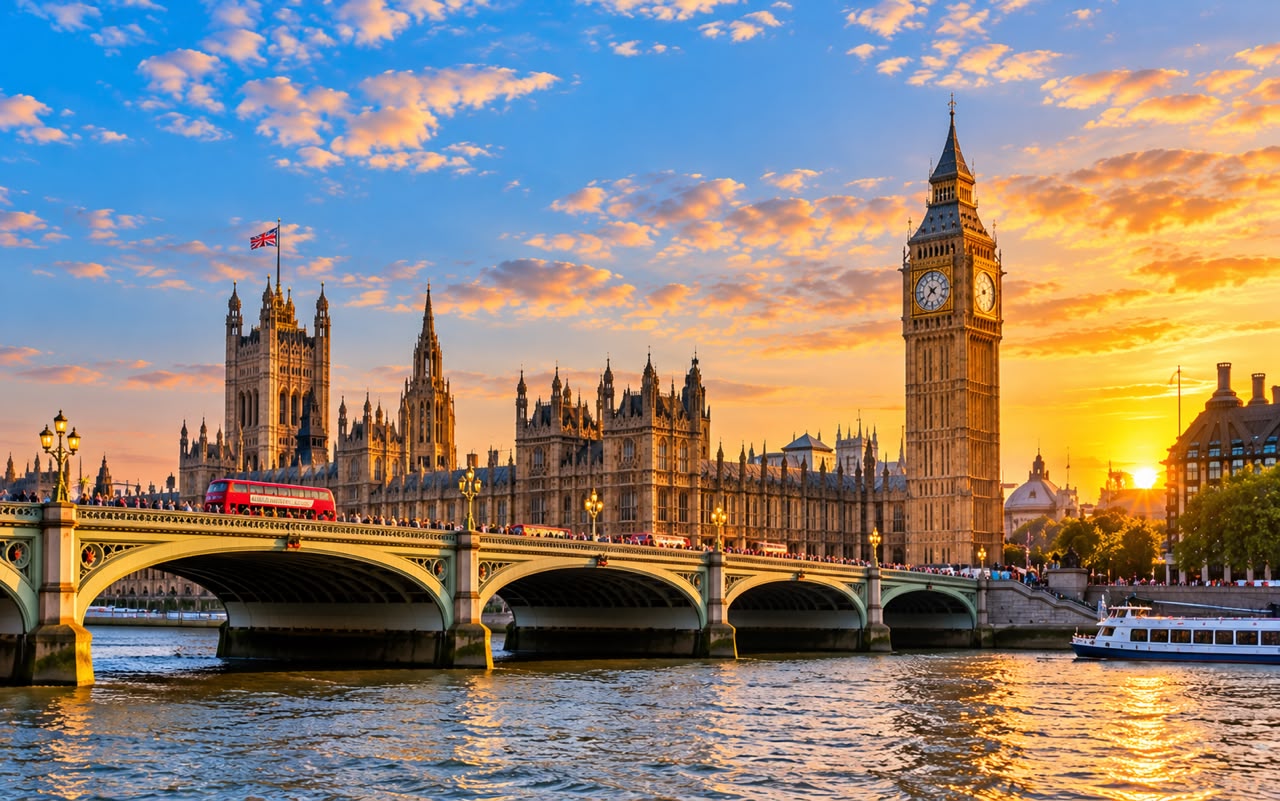
London in 3 days: Westminster, the Tower and the museums
The ETA that now applies to almost everyone, the Tower at opening, and the national museums that cost nothing. Plus the Oyster cap that makes a travelcard pointless and which markets run on which days.
- Northern Europe
- 3 days
- ≈ AED 2,100 / person
- Three days where the best museums in the world are free
Before you go
London’s great advantage over every other city on this list is that the national museums are free — the British Museum, the National Gallery, the V&A, the Tates, the Natural History Museum, all of them, permanently.
That changes how three days should be spent. Pay for the two things worth paying for — the Tower and Westminster Abbey — and let the rest cost nothing.
Day one is Westminster and the river. Day two is the Tower and the east. Day three is museums and the West End.
Figure the budget below. May–June and September.
Before you go: the short version
Entry and the ETA
- The UK is not in the Schengen area and never was. A Schengen visa does not admit you here, and a UK visa does not admit you there.
- The Electronic Travel Authorisation (ETA) now applies to most visa-exempt visitors, including EU, US, Gulf, Australian and Canadian nationals. It is applied for online, costs a small fee, and lasts two years.
- Apply before you travel. It is not a visa, it is quick, and airlines check it at boarding.
- Other nationalities need a Standard Visitor visa, applied for in advance.
Getting in and around
- Heathrow (LHR) — the Piccadilly line is the cheap way in at about £5.60 and takes an hour; the Elizabeth line is faster for about £12.
- Gatwick (LGW) — the Gatwick Express or a Southern train to Victoria. Stansted and Luton are further out and the coach is often the sensible option.
- Tap a contactless bank card on every Tube, bus, DLR and Overground gate. You do not need an Oyster card and you do not need a travelcard — the daily and weekly caps apply automatically and you cannot overpay.
- Buses are £1.75 flat with unlimited changes within an hour, and the top deck of a bus is the cheapest sightseeing in London.
Day by day
Day 1 — Westminster and the South Bank
Walking order: Westminster Abbey → Parliament and Big Ben (opposite) → Westminster Bridge (5 min) → South Bank east to Tate Modern (2.5km along the river) → Millennium Bridge to St Paul’s. About 5km, flat, entirely along the Thames.
- 09:00 — Westminster Abbey, booked. Coronations since 1066, and the floor is a thousand years of burials — Newton, Darwin, Dickens, and the Unknown Warrior, which is the only stone nobody walks on.
- 11:00 — Parliament and Big Ben from Parliament Square. Tours of Parliament run on Saturdays and during recess and must be booked.
- 12:00 — Over Westminster Bridge to the South Bank and east along the river.
- 13:00 — Lunch at Borough Market, which is closed Sundays and quietest on a weekday morning.
- 15:00 — Tate Modern, free, in the old Bankside power station. The view from the Blavatnik viewing level is free and is one of the best in the city.
- 17:00 — The Millennium Bridge to St Paul’s, which is the approach the bridge was designed for.
- 19:00 — A pub. The Thames-side ones in Southwark — the George Inn is the last galleried coaching inn in London and is owned by the National Trust.
Day 2 — The Tower, the City and the east
Walking order: Tower of London → Tower Bridge (5 min) → St Katharine Docks (5 min) → Tube or walk → Spitalfields and Brick Lane (2km). About 5km.
- 09:00 — The Tower of London at opening, booked. The Crown Jewels queue is the entire difference between arriving at nine and at eleven.
- Take a Yeoman Warder tour — free with entry, an hour, and they are all former senior NCOs with thirty-odd years’ service. It is the best guided hour in London.
- 12:00 — Tower Bridge, and the glass floor in the upper walkway if you want it — otherwise walk across for free.
- 13:00 — Lunch at St Katharine Docks or in the City.
- 15:00 — Spitalfields Market, then Brick Lane — the street art, the vintage shops, and a curry house or a salt beef bagel at the 24-hour bakery, which is the better choice.
- 17:00 — The Sky Garden, which is free but must be booked weeks ahead — a glasshouse on top of the Walkie Talkie with a 360-degree view.
- 19:30 — Shoreditch for the evening.
Day 3 — Museums and the West End
Walking order: British Museum → Covent Garden (15 min) → Trafalgar Square and the National Gallery (10 min) → St James’s Park (10 min) → Buckingham Palace. About 4km.
- 09:30 — The British Museum, free. Two hours with a plan: the Rosetta Stone, the Parthenon sculptures, the Sutton Hoo helmet, the Egyptian galleries. It is too big to wander.
- Or the V&A and the Natural History Museum in South Kensington, which are opposite each other and both free — the V&A is the better museum and the Natural History is the better building.
- 12:30 — Covent Garden and the street performers, and Neal’s Yard two minutes away, which most visitors miss.
- 14:00 — The National Gallery on Trafalgar Square, free — the Van Eyck Arnolfini Portrait, the Turners, the Caravaggio. An hour is enough.
- 16:00 — St James’s Park and the walk to Buckingham Palace. The State Rooms open to visitors in summer only, usually July to September. The Changing of the Guard runs most mornings in summer and alternate days in winter — check the schedule rather than turning up.
- 18:00 — A West End show. Same-day tickets from the official TKTS booth in Leicester Square are the honest discount; the touts around it are not.
Costs and practicalities
Getting around, and what it costs
| Tube, central zones, contactless | £2.80–3.60 |
| Daily cap, zones 1–2 | about £8.90 |
| Bus, flat fare | £1.75 |
| Piccadilly line from Heathrow | about £5.60 |
| Elizabeth line from Heathrow | about £12 |
| Tower of London | £35 |
| Westminster Abbey | £30 |
| British Museum, National Gallery, V&A, Tates | free |
| Sky Garden | free, booked ahead |
- Tap a bank card and forget about it. The cap means you cannot overpay, and a travelcard is almost never worth buying.
- The free museums are world-class. That is the single biggest saving available in any city on this list.
Best time to visit
- May–June and September — mild, long days, and the parks at their best.
- July–August — busiest and most expensive, though the weather is no better.
- November–February — short days, grey, and the cheapest. The Christmas lights and markets run from mid-November.
- It rains year-round and rarely heavily. An umbrella is more useful than a raincoat.
Travel tips
- Apply for the ETA before you fly. Airlines check it.
- Contactless card on the Tube, no Oyster needed.
- Tower of London at opening, for the Crown Jewels.
- The Yeoman Warder tour is free and the best thing there.
- Book the Sky Garden weeks ahead — it is free and it goes quickly.
- Borough Market is closed Sundays.
- Stand on the right on escalators, which is enforced socially and vigorously.
What this trip actually costs
Two people, 2 nights, mid-range comfort, international flights excluded:
| Item | Cost |
|---|---|
| Hotel, 2 nights | GBP 320 (≈ AED 1,570) |
| Food and drink, 3 days | GBP 240 (≈ AED 1,178) |
| Tower and Abbey, two people | GBP 130 (≈ AED 638) |
| Transport, including Heathrow both ways | GBP 70 (≈ AED 344) |
| A West End show, two people | GBP 100 (≈ AED 491) |
| Total for two | GBP 860 (≈ AED 4,220) |
- The museums cost nothing, which keeps this well below Paris despite London being the more expensive city.
- Dropping the show takes £100 off and the free museums could fill three days on their own.
- Hotel picks here are chosen on location, not on commission — always check prices and recent reviews before booking.
What to pack
- An umbrella, and shoes that cope with wet pavements.
- Layers. London weather changes within a day in every season.
- Something smarter for a show or a good restaurant.
- A Type G adapter, 230V.
Part of a bigger trip?
- Britain and Ireland in 14 days runs from here to Scotland and Dublin.
- Paris in 3 days is 2h20 by Eurostar, city centre to city centre.
- Amsterdam in 2 days is four hours by train.
FAQ
Do I need a visa for the UK? Most visa-exempt nationalities now need an ETA — an online authorisation, small fee, valid two years. Others need a Standard Visitor visa. A Schengen visa does not cover the UK.
Is three days enough for London? For Westminster, the Tower and two or three museums, yes. London rewards far longer, but three days covers the set pieces without rushing.
Do I need an Oyster card? No. Tap a contactless bank card on the gates — the daily and weekly caps apply automatically and you cannot be charged more than a travelcard would cost.
Are the museums really free? The national ones are, permanently — British Museum, National Gallery, V&A, Tates, Natural History, Science Museum. Special exhibitions within them are ticketed.
Is the Tower of London worth £35? Yes, once, and go at opening. The Crown Jewels and the free Yeoman Warder tour are what you are paying for.
Prices and entry rules change, and what you need depends on your passport; last checked 29 October 2026, so confirm with the embassy or your airline before booking.


