 The Itinerary
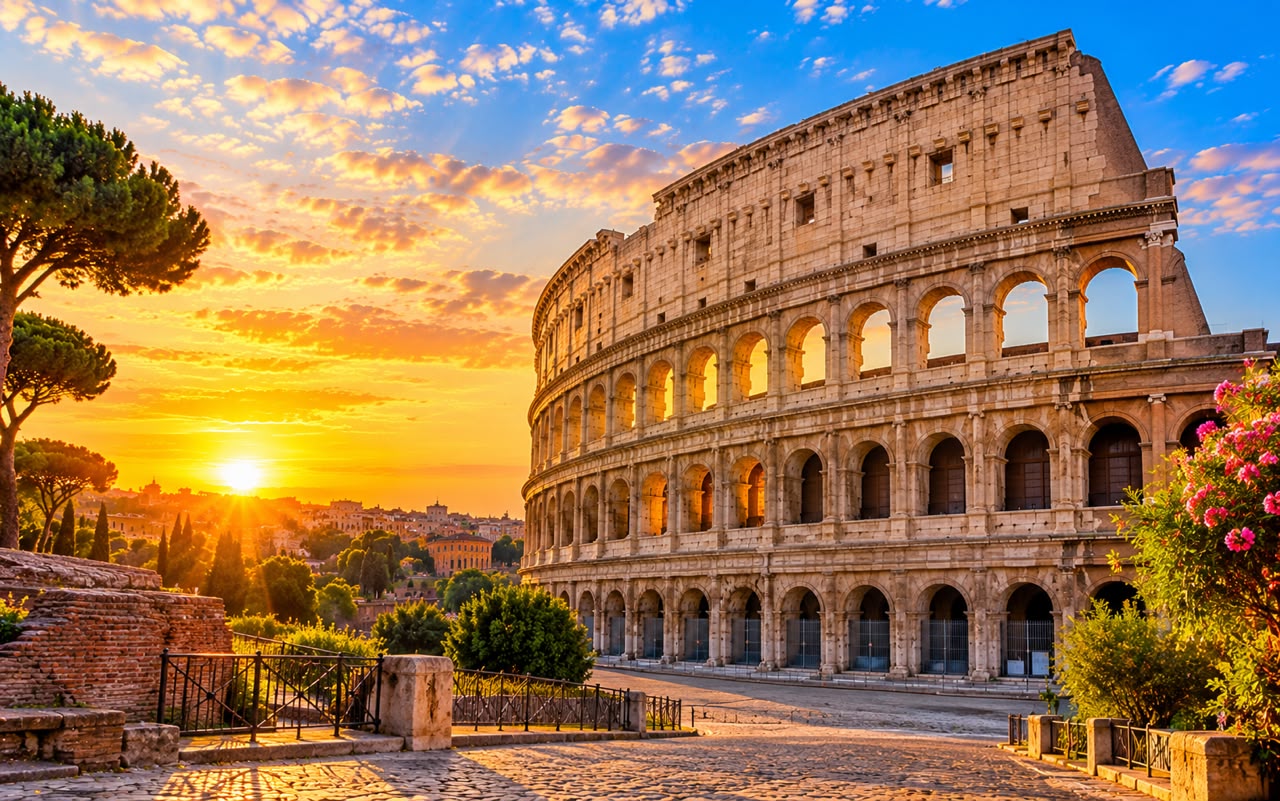
Rome in 3 days: the Colosseum, the Vatican and Trastevere
Ancient Rome on day one, the Vatican on day two, Baroque Rome on day three — with the three tickets that must be booked and the four Roman pastas, none of which contains cream.
- Southern Europe
- 3 days
- ≈ AED 1,650 / person
- Three days, three bookings, and the rest done on foot
Before you go
Rome divides into three days almost by itself: ancient, papal and Baroque. Each is a geography as much as a period, and keeping them separate is what stops you crossing the city four times.
Three things must be booked before you fly: the Colosseum combined ticket, the Vatican Museums, and the Borghese Gallery — which sells two-hour slots that genuinely run out weeks ahead.
Everything else is on foot. The centre is about 3km across and walking it is the point.
Figure the budget below. April–May and September–October.
Before you go: the short version
Entry and visas
- Italy is in the Schengen area. Around 60 nationalities enter visa-free for 90 days in any 180; everyone else needs a short-stay (Type C) Schengen visa in advance.
- ETIAS is being phased in for visa-exempt visitors — check whether it applies by your dates.
- Our full guide: how Schengen visas actually work.
Getting in and around
- Fiumicino (FCO) — the Leonardo Express to Termini is €14 and takes 32 minutes. Ciampino (CIA) is the budget airport, served by coach.
- The Metro is three lines and does less than you expect, because you cannot dig in Rome without hitting something archaeological. €1.50 a journey.
- Walk. Almost everything on this page is within 3km of everything else.
- The drinking fountains — nasoni — run continuously all over the city and the water is excellent. Carry a bottle and refill.
The dress code that will stop you
- St Peter’s and the Vatican Museums enforce covered shoulders and knees, on everyone. People are turned away daily, including men in shorts. There is no robe loan.
Day by day
Day 1 — Ancient Rome
Walking order: Colosseum → Forum (same ticket, adjacent) → Palatine (on the same site) → Capitoline Hill (10 min) → Pantheon (15 min). About 4km, with real climbing on the Palatine.
- 08:30 — The Colosseum, Forum and Palatine on one combined ticket, booked, at opening. The arena floor and the underground are separate add-ons and worth it if you can get them.
- 10:30 — Straight into the Forum and up the Palatine, which the same ticket covers and which most people are too tired to use by then. The Palatine is where the emperors actually lived, it has shade and umbrella pines, and it looks down over the whole Forum.
- 13:00 — Lunch in Monti, the quarter behind the Colosseum, which is where Romans eat rather than where the coaches stop.
- 15:00 — The Capitoline Museums, or the hill itself for Michelangelo’s piazza and the view over the Forum from the back terrace, which is free.
- 17:00 — The Pantheon — the largest unreinforced concrete dome in the world, standing since 126 AD, and now ticketed after centuries of free entry. The oculus is open to the sky and the floor is drained for the rain.
- 19:00 — Dinner in Trastevere or Testaccio. Eat the four Roman pastas — carbonara, cacio e pepe, amatriciana, gricia — and none of them contains cream.
Day 2 — The Vatican
Walking order: Vatican Museums (2km of corridor, one-way) → Sistine Chapel → St Peter’s (shortcut or round the walls, 15 min) → dome climb → Castel Sant’Angelo (10 min). About 5km.
- 08:00 — The Vatican Museums and the Sistine Chapel, booked, always. The queue without a booking runs for hours and the touts outside sell the same ticket at a markup.
- It is two kilometres of one-way corridor before you reach the chapel, and the Raphael Rooms on the way are the thing people rush past and should not.
- 11:30 — The Sistine Chapel. No photography, and the guards enforce silence, with varying success.
- 12:30 — St Peter’s Basilica, which is free. If your guide has access, there is a shortcut from the Sistine Chapel that saves the whole security queue; otherwise it is fifteen minutes round the walls.
- 14:00 — The dome climb, 551 steps. The last stretch leans with the curve of the dome and is genuinely narrow — not for anyone claustrophobic. The view is the whole city.
- 16:30 — Castel Sant’Angelo, Hadrian’s tomb turned papal fortress, with the covered escape corridor to the Vatican running along the top of the wall.
- 19:00 — Dinner in Prati, which is the neighbourhood behind the Vatican and eats properly.
Day 3 — Baroque Rome and the Borghese
Walking order: Borghese → Villa Borghese gardens (on site) → Spanish Steps (15 min downhill) → Trevi (10 min) → Piazza Navona (10 min) → Campo de’ Fiori (5 min). About 5km, downhill most of the way.
- 09:00 — The Borghese Gallery, booked weeks ahead. Entry is in two-hour slots and they genuinely sell out.
- Bernini’s Apollo and Daphne alone justifies it — marble worked until the fingertips turn into leaves, carved when he was twenty-four.
- 11:30 — The Villa Borghese gardens, and the Pincio terrace over Piazza del Popolo.
- 13:00 — Lunch, then down into the centre.
- 15:00 — The Spanish Steps, where sitting on them is now prohibited and fined.
- 16:00 — The Trevi Fountain, which at midday is impassable and in the late afternoon is merely crowded.
- 17:30 — Piazza Navona, built on the shape of Domitian’s stadium — which is why it is that elongated oval — and Bernini’s Four Rivers fountain in the middle.
- 19:00 — Campo de’ Fiori for the evening, and the market that runs there each morning.
If you have a fourth day
- Ostia Antica, 40 minutes by train — Rome’s port, as complete as Pompeii and with a fraction of the visitors.
Costs and practicalities
Getting around, and what it costs
| Metro or bus, single | €1.50 |
| Leonardo Express from FCO | €14 |
| Colosseum combined ticket | €18 |
| Vatican Museums | €20 |
| St Peter’s Basilica | free |
| St Peter’s dome climb | €10 |
| Borghese Gallery | €15 |
| Pantheon | €5 |
| Castel Sant’Angelo | €16 |
- The drinking fountains are free and everywhere, which in a Roman summer is worth knowing.
- Beware “skip the line” resellers. The official sites sell the same tickets for less.
Best time to visit
- April–May and September–October — warm, long days, and the best of the year.
- June–August — 32–36°C, and the Forum and the Palatine have almost no shade. Rome also empties in mid-August, when many restaurants close.
- November–March — cool, wet at times, and far quieter. The museums are at their most pleasant.
- Easter and the Jubilee years bring very large crowds to the Vatican.
Travel tips
- Book the Colosseum, the Vatican and the Borghese before you fly. Those three, in that order of difficulty.
- Cover shoulders and knees for the Vatican, men included.
- Use the Palatine — it is on your ticket and it has the shade.
- Refill at the nasoni.
- Sitting on the Spanish Steps is fined.
- Restaurants with photographs on the menu, or a tout outside, are not the ones.
What this trip actually costs
Two people, 2 nights, mid-range comfort, international flights excluded:
| Item | Cost |
|---|---|
| Hotel, 2 nights | EUR 300 (≈ AED 1,228) |
| Food and drink, 3 days | EUR 260 (≈ AED 1,065) |
| Colosseum, Vatican, Borghese, dome, Pantheon, two people | EUR 170 (≈ AED 696) |
| Transport, including Fiumicino both ways | EUR 60 (≈ AED 246) |
| Incidentals | EUR 10 (≈ AED 40.95) |
| Total for two | EUR 800 (≈ AED 3,276) |
- St Peter’s is free and is the single most impressive interior on the list, which keeps the ticket line lower than Paris’s.
- Hotel picks here are chosen on location, not on commission — always check prices and recent reviews before booking.
What to pack
- Shoes for cobbles — Rome’s sampietrini are uneven and punishing in anything thin-soled.
- Shoulders and knees covered for the Vatican, in your bag at minimum.
- A refillable bottle for the nasoni.
- A Type C/F/L adapter, 230V.
Part of a bigger trip?
- Italy in 7 days runs Rome, Florence and Venice.
- Italy in 14 days adds the south and the lakes.
- Italy and Greece in 14 days crosses from Bari to Meteora.
- Venice in 2 days is 3h45 by fast train.
FAQ
Is three days enough for Rome? For ancient Rome, the Vatican and the Baroque centre, yes. It is not enough to add Ostia Antica or the catacombs, which is what a fourth day is for.
What must I book in advance? The Colosseum combined ticket, the Vatican Museums, and the Borghese Gallery. The Borghese is the hardest — two-hour slots that sell out weeks ahead.
Is St Peter’s free? Yes. The basilica is free with its own security queue; the dome climb and the treasury are ticketed. The Vatican Museums are a separate paid entrance on the other side of the walls.
What is the Vatican dress code? Shoulders and knees covered, for everyone, enforced at the door. Men in shorts are turned away daily and nothing is lent.
Which Roman pasta should I order? All four, across three days — carbonara, cacio e pepe, amatriciana and gricia. None of them contains cream, and a restaurant offering “carbonara with cream” is telling you something.
Prices and entry rules change, and what you need depends on your passport; last checked 29 October 2026, so confirm with the embassy or your airline before booking.


