 The Itinerary
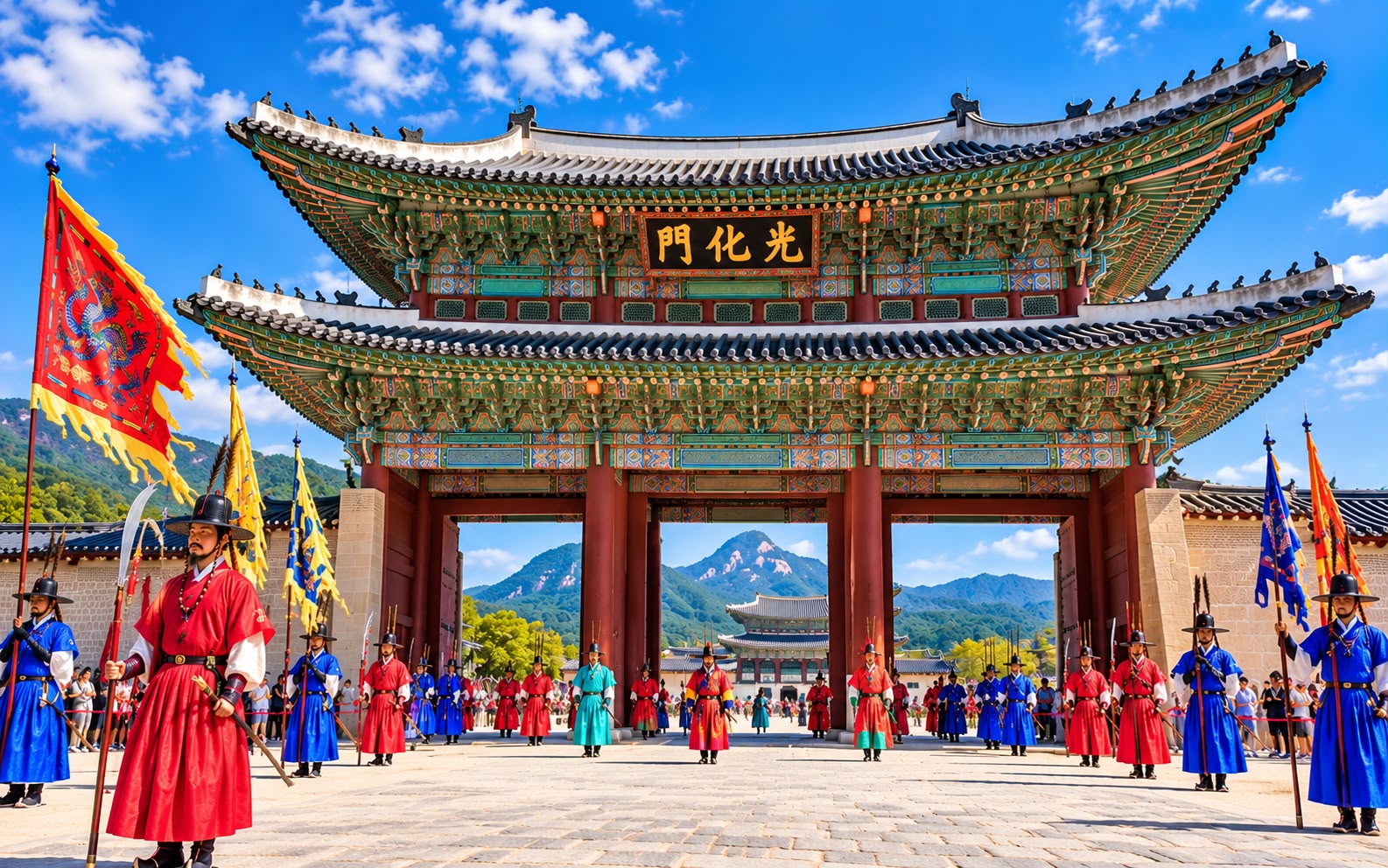
Seoul in 4 days: palaces, Bukchon, Gangnam and the DMZ
The palace at opening in hanbok, Bukchon's residents who have had enough, the DMZ tour that must be booked weeks ahead — and a jjimjilbang, which is the most Korean thing you can do.
- East Asia
- 4 days
- ≈ AED 1,600 / person
- Four days with room for the DMZ, which needs a whole one
Before you go
Seoul is a city of ten million that rebuilt itself twice in a century — once after the Japanese occupation and once after the war — and almost everything on this page is either six hundred years old or forty.
Four days is the right length because the DMZ takes a whole one and must be booked ahead. The rest divides into the old city (palaces, Bukchon, Insadong), the central city (Myeongdong, Namsan, the markets), and the new city (Gangnam, Seongsu, Hongdae).
Part of a Korea trip? See South Korea in 10 days, which adds Gyeongju and Busan.
Figure the budget below. April–May and September–November.
Before you go: the short version
Entry
- Many nationalities enter visa-free. Several also need K-ETA — an online travel authorisation — though a rolling exemption has applied to a number of countries, so check whether yours currently needs it rather than assuming either way.
- Everyone fills in an arrival card unless using the automated gates.
Getting in and around
- Incheon (ICN) is 60 minutes out — consistently rated among the best airports in the world. The AREX train is KRW 4,750 to Seoul Station; the limousine bus is KRW 17,000 and drops at hotels.
- Gimpo (GMP) is the domestic airport and is 30 minutes in.
- Get a T-money card at any convenience store. It works on the metro, buses and taxis.
- The metro is superb — cheap, bilingual, and it reaches everything. A journey is KRW 1,400–1,800.
- Kakao T is the taxi app. Uber barely operates.
What to book before you fly
- The DMZ tour, which sells out weeks ahead and requires your passport number at booking.
Day by day
Day 1 — The palaces and Bukchon
Walking order: Gyeongbokgung → Bukchon (10 min) → Changdeokgung (10 min) → Insadong (10 min). About 4km, with a gentle climb through Bukchon.
- 09:00 — Gyeongbokgung at opening, the main palace, with the changing of the guard at the gate.
- Entry is free if you wear hanbok, which about half the visitors do. It is a genuine discount rather than a gimmick — rental shops around the palace charge KRW 15,000–30,000 for a few hours and the entry saving covers part of it.
- 11:00 — The National Folk Museum inside the grounds, which is included.
- 12:30 — Bukchon Hanok Village, between the two palaces — residents live there and the signs asking for quiet are serious. There are now time restrictions and fines, after years of tour groups arriving at seven in the morning. Visit between ten and five, and keep your voice down.
- 14:30 — Changdeokgung and its Secret Garden, which needs a timed guided tour, booked, and is the better palace — it was built to follow the terrain rather than impose on it.
- 17:00 — Insadong for tea houses, paper and brushes.
- 19:00 — Gwangjang Market for bindaetteok (mung bean pancake) and mayak gimbap, eaten at a plastic counter.
Day 2 — The centre, Namsan and the markets
Walking order: Deoksugung → Myeongdong (10 min) → cable car → N Seoul Tower → Namsan trail down (40 min) → Dongdaemun by metro. About 5km.
- 09:30 — Deoksugung, the smallest palace, with its own changing of the guard and a Western-style stone hall that sits oddly and deliberately among the wooden halls.
- 11:00 — Myeongdong for the cosmetics streets, which is what Seoul is known for — the street-food stalls here set up in the afternoon.
- 14:00 — N Seoul Tower on Namsan, by cable car or a 40-minute walk up. The walk down through the park is the better direction.
- 17:00 — Dongdaemun Design Plaza, Zaha Hadid’s building, and the night markets around it which run until the small hours.
- 20:00 — Korean barbecue, with someone older pouring for you and you pouring for them — you never pour your own.
Day 3 — The DMZ
- 07:00 — Booked weeks ahead, passport required. Tours run from Seoul and take most of the day.
- The JSA portion — the blue huts at Panmunjom — is frequently suspended and has been closed to tourists for long stretches. Check what your tour actually includes rather than assuming the photograph you have seen is on offer.
- The standard elements are the Third Infiltration Tunnel, the Dora Observatory and Imjingak. The tunnel is a steep walk down and back, with hard hats, and it is genuinely narrow.
- There is a dress code and a behaviour code, and both are real. No jeans with holes, no sandals, no pointing or gesturing toward the north.
- 16:00 — Back in Seoul.
- 17:30 — The War Memorial of Korea, which is the context the DMZ needs and is free. Allow two hours.
Day 4 — The new city
- 10:00 — Leeum Museum in Hannam, or the National Museum of Korea, which is one of the largest in Asia and is free.
- 13:00 — Seongsu, the former shoe-factory district now full of coffee roasters and concept stores — it is where Seoul actually spends its weekends, and is more interesting than Gangnam.
- 15:30 — Gangnam if you want it — the Starfield COEX library, the Bongeunsa temple opposite, and the department stores.
- 17:00 — A jjimjilbang. The bathing areas are naked and segregated; the common rooms are clothed and mixed, and that is where Koreans actually spend the evening — sleeping, eating boiled eggs, watching television. It is the single most Korean thing you can do and it costs about KRW 12,000.
- 20:00 — Hongdae for the student nightlife, or Ikseondong for restored hanok alleys full of small restaurants.
Costs and practicalities
Getting around, and what it costs
| Metro, typical journey | KRW 1,400–1,800 |
| AREX from Incheon | KRW 4,750 |
| Airport limousine bus | KRW 17,000 |
| Gyeongbokgung | KRW 3,000, free in hanbok |
| Hanbok rental, a few hours | KRW 15,000–30,000 |
| Changdeokgung with Secret Garden | KRW 8,000 |
| DMZ tour | KRW 60,000–130,000 |
| N Seoul Tower observatory | KRW 21,000 |
| Jjimjilbang | KRW 10,000–15,000 |
- Palaces cost almost nothing and the big museums are free. The DMZ is the one real expense.
Best time to visit
- April–May — cherry blossom in early April, mild and clear.
- September–November — autumn colour, dry, and the best weather of the year.
- June–August — hot, humid, and the monsoon in July brings genuinely heavy rain.
- December–February — cold, often below freezing, dry and clear. Seoul does winter properly.
- Fine dust from the west, worst in spring, can affect air quality. Check the index.
Travel tips
- Book the DMZ weeks ahead and check whether the JSA is included.
- Wear hanbok for free palace entry — it genuinely pays.
- Bukchon is residential. Quiet, and inside the posted hours.
- Never pour your own drink at a Korean table.
- T-money card on arrival, used for everything.
- Try a jjimjilbang. It is the thing visitors skip and then regret skipping.
What this trip actually costs
Two people, 3 nights, mid-range comfort, international flights excluded:
| Item | Cost |
|---|---|
| Hotel, 3 nights | KRW 450,000 (≈ AED 1,214) |
| Food and drink, 4 days | KRW 320,000 (≈ AED 863) |
| DMZ tour, two people | KRW 200,000 (≈ AED 540) |
| Palaces, hanbok, museums, tower, jjimjilbang | KRW 150,000 (≈ AED 405) |
| Metro, AREX and taxis | KRW 80,000 (≈ AED 216) |
| Total for two | KRW 1,200,000 (≈ AED 3,237) |
- Seoul is good value — the metro is cheap, the museums are free, and the palaces are a couple of dollars.
- The DMZ is a sixth of the total and is the one unavoidable cost if you want it.
- Hotel picks here are chosen on location, not on commission — always check prices and recent reviews before booking.
What to pack
- Shoes that come off easily — you remove them in hanok houses, some restaurants and every jjimjilbang.
- Something smart enough for the DMZ dress code.
- A warm layer; Seoul’s winters are properly cold and its summers are humid.
- A Type C/F adapter, 220V.
Part of a bigger trip?
- South Korea in 10 days adds Gyeongju, Busan and the countryside.
- Japan and South Korea in 14 days pairs Seoul with Tokyo and Kyoto.
- Tokyo in 3 days is two hours by air.
FAQ
Is four days enough for Seoul? Yes, and the fourth is what makes the DMZ possible without losing the city. Three days without the DMZ also works.
Can I visit the JSA at Panmunjom? Sometimes. It has been suspended for long stretches and tours frequently run without it. Confirm what is included before you pay.
Is the hanbok free-entry thing real? Yes. Wearing hanbok gets you into the four main palaces free, and rental shops cluster around Gyeongbokgung. About half the visitors do it.
What is a jjimjilbang like? Segregated naked bathing pools, then mixed clothed common rooms with heated floors, snacks and televisions. People sleep there. It costs about ten dollars and it is the most Korean experience available.
Do I need K-ETA? It depends on your passport and on current exemptions, which have rolled over several times. Check the official site close to your travel date rather than relying on older advice.
Prices and entry rules change, and what you need depends on your passport; last checked 29 October 2026, so confirm with the embassy or your airline before booking.


