 The Itinerary
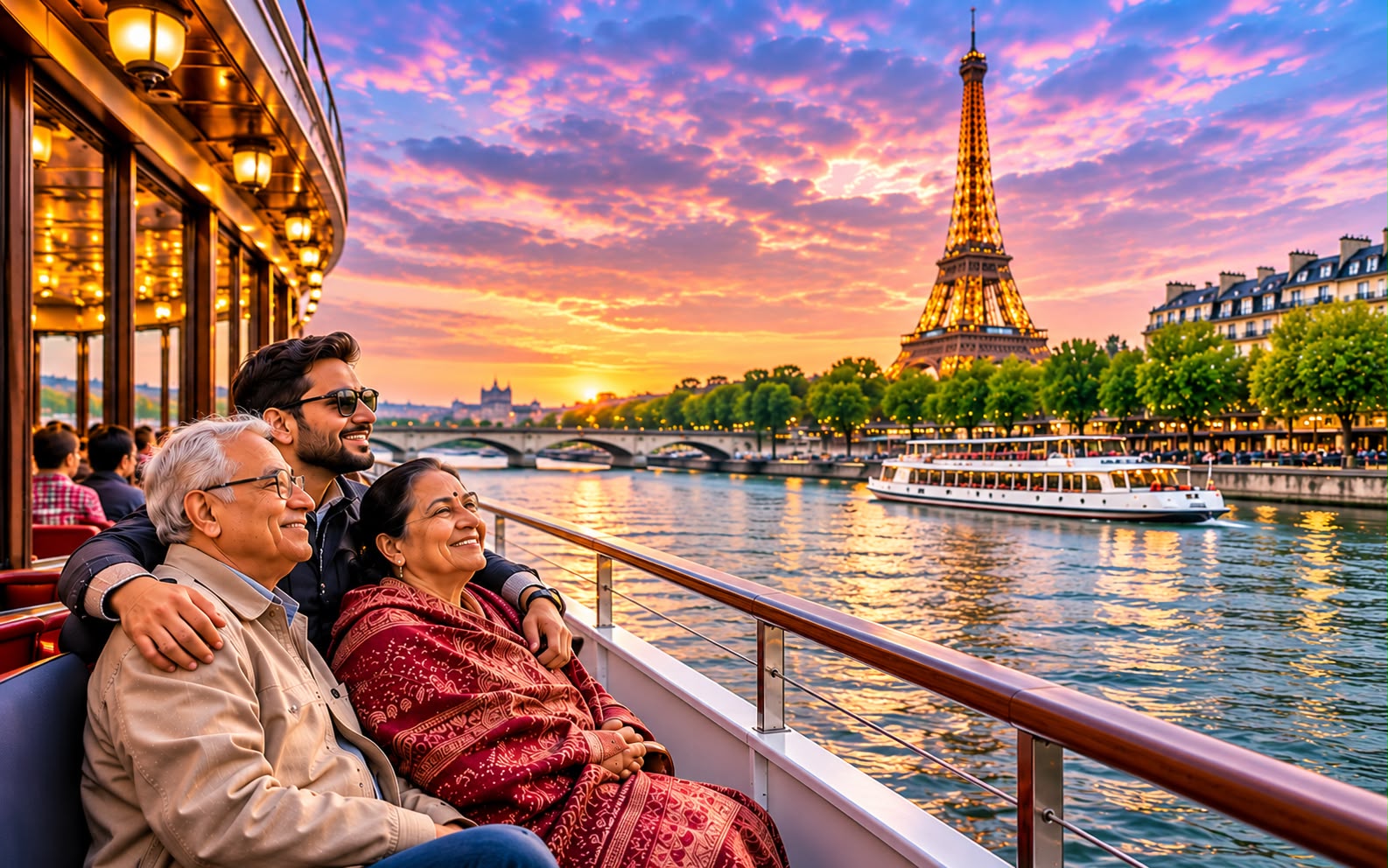
Europe with parents in 10 days: Paris and Switzerland, slowly
Built for walking that is measured in hundreds of metres rather than miles: central step-free hotels, a seated boat or cogwheel train most days, taxis where the metro means stairs, and the vegetarian question answered in both countries.
- Western Europe
- 10 days
- ≈ AED 9,000 / person
- Two bases, trains instead of flights, and sightseeing you can do sitting down
Before you go
The classic trip taken with parents goes wrong in the same way every time: too many cities, too many stairs, and a day that assumes everyone can walk fifteen thousand steps in the heat.
This is Paris and Switzerland in ten days with three bases, not six — four nights in Paris, three in Lucerne, two under the Jungfrau — and the sightseeing chosen so that most of it happens sitting down. A river boat, a lake steamer, a cogwheel railway and a cable car cover more ground than any amount of walking, and everyone arrives in the same condition.
The eleven-day France and Switzerland route moves six times and walks a great deal more. This one does not.
Figure EUR 2,200 (≈ AED 9,008) per person. May, June and September.
Before you go: the admin
Entry
- France and Switzerland are both in the Schengen area. One visa covers both.
- Many nationalities enter visa-free for 90 days in any 180; others need a Schengen visa. See how the Schengen visa works for the rules and which country to apply to.
- Apply early for older applicants — appointment slots and document checks take longer than people expect, and a refusal leaves no time to appeal.
- Last checked: 30 October 2026.
Insurance, which matters more here than anywhere
- Schengen visas require travel insurance with a minimum medical cover. Standard policies routinely exclude pre-existing conditions.
- Declare everything. An undeclared condition voids the policy at the moment you need it.
- Buy a policy that covers pre-existing conditions explicitly. It costs more and it is the single most important purchase on this page.
- Carry a list of medications with generic names, not brand names, and a doctor’s letter for anything injectable.
- Switzerland is extremely expensive for medical care and is not in the EU’s reciprocal arrangements.
Mobility, honestly
- The Paris Métro is largely not step-free. Most stations have stairs and no lift, and the interchanges are long. Line 14 is the exception.
- Buses in Paris are step-free, cheap and run everywhere. Use the bus, not the Métro.
- Taxis for anything awkward. Budgeted below, and worth it.
- Swiss trains are step-free, stations have lifts, and the staff will help with luggage if asked.
- Cobbles in both countries. Montmartre and Lucerne’s old town are charming and uneven.
Food
- Paris has excellent Indian and Sri Lankan restaurants around La Chapelle and Gare du Nord, and vegetarian is understood in central restaurants now.
- Switzerland is harder. Rösti, cheese dishes and salads carry most vegetarian meals; ask about meat stock in soups.
- Both countries: book dinner early. Swiss kitchens close earlier than visitors expect.
- Self-catering one meal a day in Switzerland is both cheaper and easier — Coop and Migros are in every station.
Day by day
Days 1–4 — Paris, from one hotel
- Stay in the 1st, 6th or 7th — central, flat, and walkable to a lot. Confirm there is a lift, which many older Paris buildings do not have.
- Day 1 — arrive, and do nothing but a short walk and dinner.
- Day 2 — a Seine cruise in the morning, which shows you Notre-Dame, the Louvre, the Musée d’Orsay and the Eiffel Tower from a seat. Then the Louvre in the afternoon — enter by the Carrousel entrance, use the lifts, and pick two wings, not nine.
- Day 3 — the Eiffel Tower by lift (book the timed slot weeks ahead) or the Trocadéro view, which is free and the better photograph. Afternoon: Musée d’Orsay, which is smaller, seated-friendly and many people’s favourite.
- Day 4 — Versailles, or a slow day. Versailles involves a great deal of walking; the garden train and wheelchairs are available, and a half-day is plenty. If energy is short, swap it for Sainte-Chapelle and a long lunch.
- Montmartre has a funicular — use it rather than the steps.
Day 5 — To Switzerland by train
- The TGV Lyria from Gare de Lyon to Basel or Zurich, then on to Lucerne. About four to five hours in total, seated, with your luggage beside you.
- Book first class for this leg if the budget allows — wider seats, quieter carriage, and at this age it is the right spend.
- Reserve seats together at booking.
- Arrive Lucerne in the afternoon. Check in and stop.
Days 6–8 — Lucerne, and the lake
- Day 6 — the old town on foot, which is small and flat along the water. The Chapel Bridge and the Lion Monument are ten minutes apart.
- Day 7 — a lake steamer. Lake Lucerne is the most dramatic of the Swiss lakes and the whole day can be done from a deck chair. Some are restored paddle steamers.
- Pilatus or Rigi from the boat. Rigi is the gentler one — a cogwheel railway from Vitznau, a flat ridge at the top, and a restaurant. Pilatus is more dramatic and steeper.
- Day 8 — a free day. This is deliberate — a ten-day trip with parents needs one.
Days 9–10 — The Jungfrau, and out
- Day 9 — train to Interlaken, about two hours. Then up.
- The choice: Jungfraujoch at 3,454m is the famous one and the most expensive ticket in Switzerland — and the altitude affects older travellers more. Headaches and breathlessness are common.
- Harder Kulm, above Interlaken, is a funicular and a terrace with both lakes below — a fraction of the price, no altitude problem, and a very good afternoon.
- Or Schynige Platte — a historic cogwheel train, an alpine garden, and a flat ridge walk.
- Day 10 — Zurich airport is about two hours by direct train from Interlaken, and the station is under the terminal.
Costs and practicalities
Best time to visit
May, June and September.
- May and June — mild in Paris, green in Switzerland, waterfalls at full volume, and before the heat and the crowds. The best window.
- July and August — Paris regularly exceeds 35°C and much of it is not air-conditioned. This is the single worst time to bring older travellers. Switzerland is pleasant and busy.
- September — warm, quiet, clear, and the other best month.
- October — lovely, and the high mountain lifts begin closing.
- November to March — cold, dark early, and several Swiss mountain services shut. Paris at Christmas is beautiful.
Travel tips
- Three bases, not six. This is the whole design.
- Buses in Paris, not the Métro. Step-free, cheap, and they go everywhere.
- Confirm the Paris hotel has a lift. Many do not, and the booking page often does not say.
- Buy insurance that covers pre-existing conditions, declared.
- Book the Eiffel Tower lift slot weeks ahead. Stair tickets are not the plan.
- Harder Kulm or Rigi over Jungfraujoch if altitude is a concern — far cheaper and no headaches.
- First class on the long train leg is a reasonable indulgence.
- Eat the main meal at lunch, which is cheaper and better timed.
- Build one empty day. Day 8 is there for a reason.
- Carry medication in hand luggage with generic names listed.
What this trip actually costs
Two people, 9 nights, central step-free hotels, international flights excluded:
| Item | Cost |
|---|---|
| Hotels, 9 nights, central and with lifts | EUR 2,160 (≈ AED 8,844) |
| Rail, two people, including the TGV and reservations | EUR 900 (≈ AED 3,685) |
| One mountain excursion and the Seine cruise | EUR 420 (≈ AED 1,720) |
| Museum entries including the Louvre and Orsay | EUR 180 (≈ AED 737) |
| Taxis and transfers rather than Métro stairs | EUR 240 (≈ AED 983) |
| Food and drink, 10 days | EUR 500 (≈ AED 2,047) |
| Total for two | EUR 4,400 (≈ AED 18,016) |
- Roughly EUR 2,200 (≈ AED 9,008) per person, which is slightly above the standard route per day — fewer moves, better-placed hotels and taxis instead of stairs.
- The taxi line is small and does the most work. Do not cut it.
- Jungfraujoch would add roughly 400 euros for two over Harder Kulm or Rigi, and brings altitude with it.
- Supermarket lunches in Switzerland take a real amount off the food line.
- Travel insurance covering pre-existing conditions is not in this figure and is the most important thing you will buy.
- Hotel picks here are chosen on location, not on commission — always check prices and recent reviews before booking.
What to pack
- Comfortable shoes with support, and ones already broken in.
- A walking stick if it is ever used at home. Cobbles and gradients make it useful here even when it is not there.
- All medication in hand luggage, with a printed list of generic names and a doctor’s letter for anything injectable.
- A warm layer and a rain jacket, whatever the month — a mountain top is cold in August.
- A refillable bottle. Swiss fountains are drinkable.
- A Type C/E/F adapter for France, and a Type J for Switzerland — Swiss sockets are their own standard.
Part of a bigger trip?
- France and Switzerland in 11 days is the faster version with more stops.
- Switzerland in 7 days is Switzerland alone.
- Paris in 3 days if the city is the trip.
- Switzerland honeymoon is the other slow-paced Swiss route.
- Europe’s Christmas markets is the winter alternative.
FAQ
How much walking does this involve? Each day is built around something seated — a river cruise, a lake steamer, a cogwheel train, a cable car — with walking measured in hundreds of metres between them. The two optional heavy days, Versailles and Jungfraujoch, both have gentler substitutes.
Is the Paris Métro accessible? Largely not. Most stations have stairs and no lift, and interchanges are long; line 14 is the exception. Use the buses, which are step-free and go everywhere, and taxis for anything awkward. That is why there is a taxi line in the budget.
Should we do Jungfraujoch? Only if altitude is not a concern. It is 3,454m, the most expensive ticket in Switzerland, and headaches and breathlessness are common at that height. Harder Kulm or Rigi give you an alpine day with a view and a terrace for a fraction of the price and none of the altitude.
What about insurance with pre-existing conditions? Buy a policy that covers them explicitly and declare everything. A standard policy will usually exclude them, and an undeclared condition voids cover at the moment you need it. Swiss medical care is very expensive and outside EU reciprocal arrangements.
Is vegetarian food easy to find? In Paris, yes — central restaurants understand it and there are excellent Indian and Sri Lankan places around La Chapelle and Gare du Nord. Switzerland is harder: rösti, cheese dishes and salads carry most meals, and it is worth asking about meat stock in soups.
Prices and entry rules change, and what you need depends on your passport; last checked 2 November 2026, so confirm with the embassy or your airline before booking.


