 The Itinerary
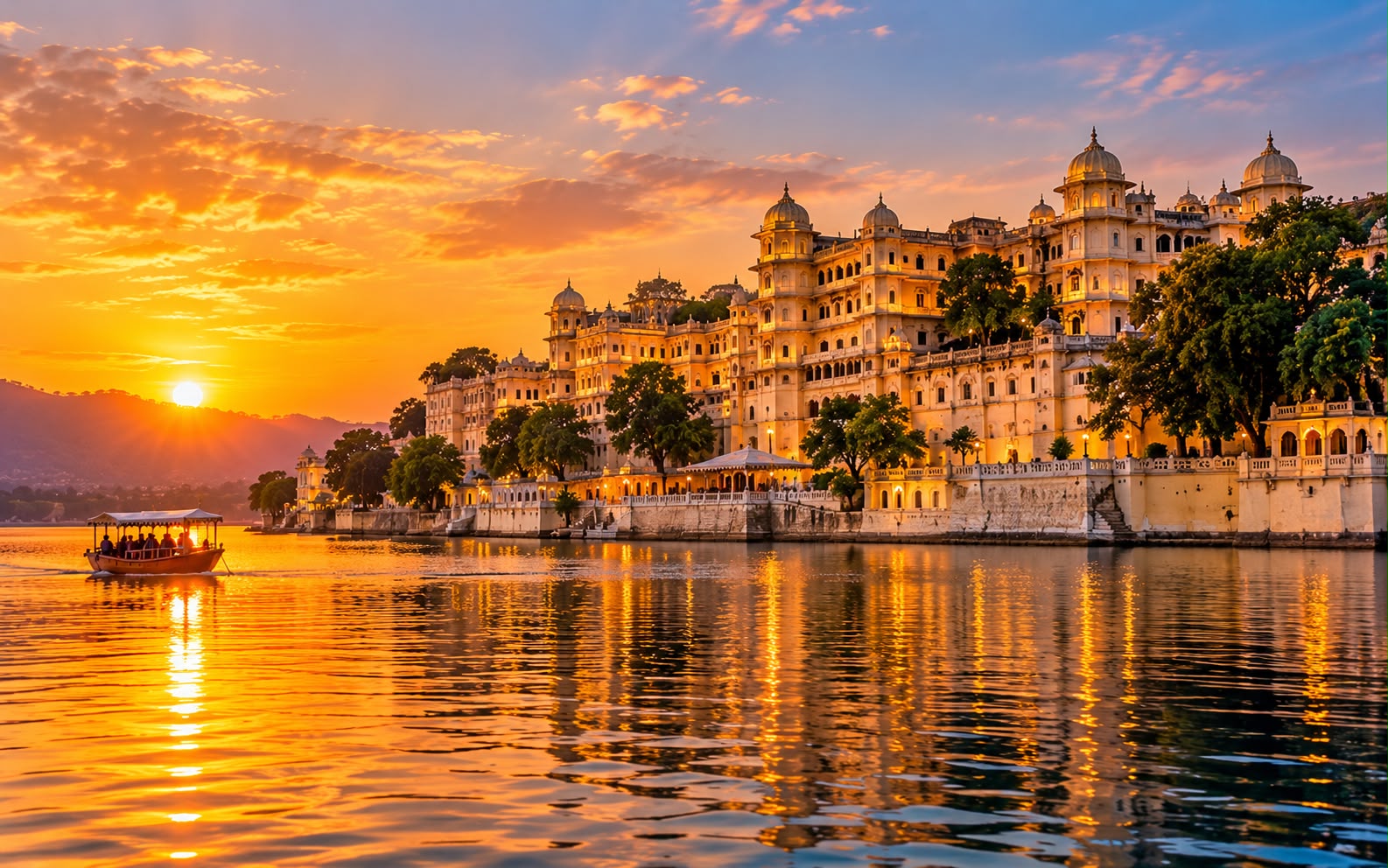
Rajasthan in 7 days: Jaipur, Jodhpur and Udaipur
Seven days is Rajasthan's three headline cities at two nights apiece — Jaipur's forts, Jodhpur's blue old town under Mehrangarh, and Udaipur's lakes. Pushkar and Jaisalmer are left out on purpose; the overnight train between Jodhpur and Udaipur is the decision that makes it fit.
- South Asia
- 7 days
- ≈ AED 1,700 / person
- The three great cities, two nights each, no desert detour
Before you go
Seven days is three cities, two nights each: Jaipur, Jodhpur, Udaipur. It is the shape most people actually want from a first Rajasthan trip, and it fits without rushing.
What it leaves out is the desert. Jaisalmer is five hours west of Jodhpur and needs two nights of its own; Pushkar is a half-day detour that only earns its place on a longer loop. Ten days adds Pushkar; fourteen adds Ranthambore, Bundi and Jaisalmer and is the complete circuit. Jaisalmer alone is its own six days if the desert is the bit you came for.
Two nights per city is the whole design. One night in any of these three means you see the fort and leave, and the fort is not the best part of any of them.
Figure INR 44,000 (≈ AED 1,718) per person. October to March — this is a desert state and April to June genuinely reaches 45°C.
All costs are in rupees. Foreigner ticket prices are quoted; Indian passport and OCI holders pay domestic rates, cutting the monument line by roughly 80%.
Before you go: the short version of the admin
Visas
- e-Visa at the official indianvisaonline.gov.in/evisa and nowhere else. 171 nationalities, about five working days, apply a fortnight out, print it.
- GCC-based readers: eligibility follows your passport, not your residence.
- Six months’ validity, two blank pages.
Flying in from the Gulf
- Jaipur (JAI) in, Udaipur (UDR) out is the routing that makes this trip work. Jaipur takes directs from Dubai, Sharjah and Muscat; Udaipur connects domestically through Delhi or Mumbai.
- If you can only fly Delhi, take the morning train or the four-hour drive down to Jaipur and start there. Do not try to add Delhi to seven days — that is the Golden Triangle, a different trip.
- Never backtrack. The single most common mistake here is flying in and out of Jaipur, which costs a full day driving back across the state.
Getting between the cities
- Jaipur → Jodhpur: five to six hours by road, or the train. The road is good and lets you stop at Ajmer or a stepwell.
- Jodhpur → Udaipur: five hours by road via Ranakpur, and this is the one transfer you should not shortcut. The Jain temple at Ranakpur has 1,444 marble pillars, no two carved alike, and it is as good as anything in the three cities.
- A car and driver for all seven days costs less than point-to-point taxis and removes every negotiation. Budget ₹3,000–3,800 a day including fuel.
- In the cities, use Uber and Ola where they run, and agree auto fares before you get in where they do not.
Money
- UPI QR payments everywhere; UPI One World wallets at the airports for G20 passport holders.
- ₹3,000–5,000 in small notes — shoe minders at every temple and fort, tips, autos.
- Cards at hotels and larger restaurants; bazaars are cash or QR.
Day by day
Day 1 — Jaipur: arrive and the old city
- 15:00 — Into the walled city, when the pink sandstone does what it is famous for.
- 15:30 — The City Palace, still partly lived in by the royal family, and Jantar Mantar next to it: an eighteenth-century observatory of giant stone instruments that still tell the time to the minute. Buy the composite ticket here — it covers Amber, Jantar Mantar, Hawa Mahal, Nahargarh and more across two days.
- 17:00 — Hawa Mahal from the street opposite. The facade is the point and it faces east, so late afternoon or tomorrow morning.
- 17:45 — The bazaars at dusk: Johari for gems, Bapu for textiles and juttis.
- 18:15 — Sunset at Nahargarh, over the whole city.
Day 2 — Amber, and the stepwell
- 08:00 — Amber Fort at opening, before the coaches. The Sheesh Mahal mirror hall, the Ganesh Pol, and ramparts running up the ridge. Walk up or take a jeep — decline the elephant rides, which are a welfare problem rather than a tradition.
- 10:00 — Panna Meena ka Kund below the fort: a sixteenth-century stepwell with criss-crossing stairs, five minutes away and almost always empty.
- 10:45 — Jal Mahal from the causeway, floating in the lake. Ten minutes, on the way back.
- 11:30 — The Anokhi Museum at Amber for hand-block printing — better than it sounds, and air-conditioned. Closed Mondays.
- 15:00 — Albert Hall Museum, or the block-printing workshops at Sanganer and Bagru if you want something to do with your hands.
Day 3 — West to Jodhpur
- 07:30 — Leave early. Five to six hours across the Aravallis.
- 09:30 — Abhaneri’s Chand Baori if you take the southern road: 3,500 steps down thirteen storeys, and the most photographed stepwell in India. Or Ajmer for the Dargah of Moinuddin Chishti, one of the most important Sufi shrines in South Asia — head covered, and it is busy every day of the week.
- 16:00 — Into Jodhpur.
- 17:45 — Sunset over the blue city from a rooftop in the old town, with Mehrangarh lit above you. Do this on arrival — it is the single best half hour in Jodhpur.
Day 4 — Mehrangarh, and the blue lanes
- 09:00 — Mehrangarh at opening. The finest fort in India and it is not close: built on a 120-metre cliff and never taken. Take the audio guide — it is genuinely excellent and better than a human guide here.
- Give it three hours: the palace rooms, the cannonball scars on the gate, the handprints of royal widows at the Loha Pol, and the rampart view straight down into the blue.
- 12:30 — Jaswant Thada below it, white marble beside a lake. Fifteen minutes and almost deserted.
- 15:30 — The blue lanes around Navchokiya — the actual blue city, away from the clock tower.
- 17:00 — Sardar Market and the clock tower for spices, and the famous makhaniya lassi.
- 18:30 — Toorji ka Jhalra, the restored stepwell, for a drink beside it.
Day 5 — Ranakpur, and down to the lakes
- 09:00 — Leave for Udaipur, five hours with the stop.
- 12:00 — Ranakpur Jain temple at the midpoint: 1,444 marble pillars, no two carved alike, built in the fifteenth century, and one of the most extraordinary interiors in India. Open to non-Jains from noon — which is exactly why you left at nine. Leather stays outside, belts and wallets included.
- 14:00 — Kumbhalgarh instead, or as well, if you have the time: the second-longest continuous wall in the world after China’s, running 36km across the hills.
- 18:00 — Into Udaipur, and straight to a rooftop for the lake at sunset.
Day 6 — Udaipur: the City Palace and the water
- 09:30 — The City Palace at opening: the largest in Rajasthan, a warren of courtyards, mirror rooms and mosaic peacocks built up over four centuries by one family.
- 11:00 — The Crystal Gallery, if you like an absurd story. A Maharana ordered an entire crystal furniture set from England in 1877, died before it arrived, and it stayed boxed for 110 years.
- 12:30 — Jagdish Temple on the way out: steep steps and brass bells.
- 16:30 — A boat on Lake Pichola, the only way to see the city as it was designed to be seen, with the Lake Palace in the middle and the ghats along the shore.
- 18:15 — Sunset from Ambrai ghat, on the opposite bank, which is the postcard.
- 19:00 — Bagore ki Haveli for the evening folk dance, which is touristy and good.
Day 7 — A last morning, then fly
- 06:30 — The Monsoon Palace above the city, best at sunrise with nobody there.
- 09:00 — Saheliyon ki Bari, the garden built for a princess’s attendants, with fountains that run on gravity alone.
- 10:30 — Shilpgram for crafts if you are buying.
- Udaipur airport is 40 minutes out. Fly to Delhi or Mumbai and connect.
Costs and practicalities
Best time to visit
- October to March — the season, and the only sensible window. Days 24–30°C, nights cool, skies clear.
- December and January are the coldest and the busiest; Udaipur and Jodhpur drop to 8–10°C at night and you will want a jacket.
- February and March are the sweet spot — warm, clear, and the crowds thinning.
- April to June — 40–45°C. The forts are the same and you will not enjoy them.
- July to September — the monsoon reaches Rajasthan lightly. The Aravallis green up and Udaipur’s lakes fill, which is genuinely lovely, but Jodhpur and Jaipur are humid.
This is a desert state. The season is the single most important decision in the trip, more than the route or the hotels.
Travel tips
- Two nights per city. One night means you see the fort and leave.
- Fly out of Udaipur, not back from Jaipur.
- Take the Mehrangarh audio guide. It is the rare one that is better than a human guide.
- Ranakpur is not optional on the Jodhpur–Udaipur leg.
- Forts open at 8 or 9 and fill by 10. Every good morning here starts early.
- Carry socks. Temple and fort floors are stone and often blisteringly hot or freezing, and shoes come off.
- Agree the gem shop answer before you get in the car. Your driver earns commission on the stop; a cheerful no costs nothing and is expected.
- Udaipur is the one to add a night to if you find a spare day.
What this trip actually costs
Two people, 6 nights, mid-range comfort, international flights excluded:
| Item | Cost |
|---|---|
| Hotels, 6 nights (2 Jaipur + 2 Jodhpur + 2 Udaipur) | INR 36,000 (≈ AED 1,406) |
| Car and driver, 7 days, including both airport runs | INR 24,000 (≈ AED 937) |
| Monument entries at foreigner rates, composite ticket, guides | INR 12,000 (≈ AED 469) |
| Food and drink, 7 days | INR 12,000 (≈ AED 469) |
| SIM, tips, extras | INR 4,000 (≈ AED 156) |
| Total for two | INR 88,000 (≈ AED 3,436) |
- Roughly INR 44,000 (≈ AED 1,718) per person, which is mid-range and not frugal. The same week in guesthouses with buses between cities runs at under half.
- Indian and OCI passports cut the entries line by about 80%.
- The hotel line has no ceiling in Rajasthan. This is the state of converted palaces — Umaid Bhawan in Jodhpur and the Lake Palace in Udaipur will each cost more per night than this entire budget, and a heritage haveli at ₹8,000–12,000 is the enjoyable middle.
- Hotel picks here are chosen on location, not on commission — always check prices and recent reviews before booking.
What to pack
- A warm layer. December and January nights are genuinely cold in the desert, and every rooftop restaurant is open-air.
- Socks, for stone floors with shoes off.
- Modest cover for the Ajmer dargah and the Jain temples — shoulders and knees, and a head covering at the dargah.
- Sunglasses and a hat. There is very little shade in a fort.
- A scarf for dust, especially on the road days.
- Leather stays outside Jain temples — belts and wallets included.
FAQ
Is seven days enough for Rajasthan? For the three great cities, yes, at two nights each. It is not enough to add Jaisalmer or the desert, and attempting it turns the week into a driving holiday.
Jaipur, Jodhpur or Udaipur if I could only pick one? Jodhpur, for Mehrangarh and the blue city. Udaipur is the prettiest and Jaipur the most impressive, but Jodhpur is the one people come home talking about.
Train or car between the cities? Car. The distances are short enough, the roads are good, and the stops — Ranakpur, Chand Baori, Kumbhalgarh — are half the pleasure and unreachable by train.
Is Rajasthan good for a first trip to India? It is the best first trip to India. The sights are extraordinary, the tourist infrastructure is the most developed in the country, and the distances are manageable.
Do I need a guide at the forts? At Amber, yes — hire a licensed one at the official counter. At Mehrangarh the audio guide is better. At the City Palaces, optional.
Prices and entry rules change, and what you need depends on your passport; last checked 26 October 2026, so confirm with the embassy or your airline before booking.


