 The Itinerary
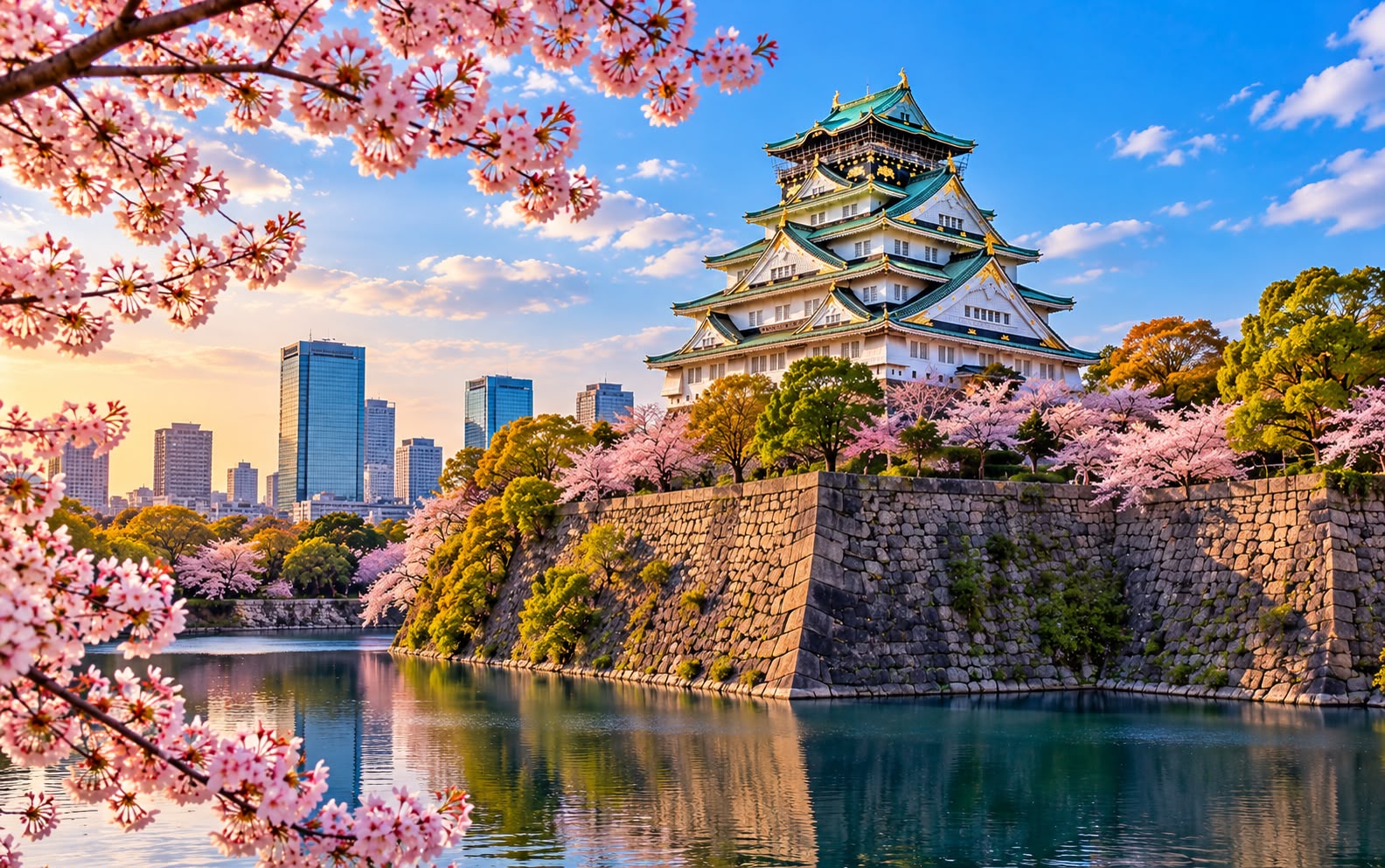
Osaka in 2 days: Dotonbori, the castle and Nara
Two days in the city Japan comes to eat in — Dotonbori after dark, the castle in the morning, and a second day that is either Nara's Great Buddha or Universal Studios. Plus the kushikatsu rule that is taken seriously.
- East Asia
- 2 days
- ≈ AED 650 / person
- Japan's best eating city, and the day trip to the deer
Before you go
Osaka is the eating city, and it is cheerfully unbothered about being less refined than Kyoto. The local phrase is kuidaore — roughly, to ruin yourself by eating — and the city treats it as a civic ambition rather than a warning.
Two days: one for the city, which is Dotonbori, Namba and the castle, and one that goes out — either Nara, 45 minutes away with the largest bronze Buddha in Japan, or Universal Studios, which is a full day and books out.
Osaka works best as a base. Kyoto is fifteen minutes by rapid train, Nara is forty-five, and Kobe is twenty — the rooms are cheaper here than any of them.
Part of a Japan trip? See Japan in 7 days.
Figure the budget below. March–May and October–November.
Before you go: the short version
Getting there and around
- Kansai International (KIX) is 50 minutes from Namba on the Nankai line. Itami (ITM) is the domestic airport, 30 minutes out.
- Osaka is 15 minutes from Kyoto by rapid train and 2h30 from Tokyo by Shinkansen.
- The subway covers the city well — far better than Kyoto’s. Use an IC card.
- The Osaka Amazing Pass covers the subway plus about 40 attractions for a day. It pays off only if you are doing the castle, the Umeda Sky Building and a cruise — otherwise skip it.
One thing that is taken seriously
- Do not double-dip the kushikatsu sauce. The communal pot at every kushikatsu counter is shared, there is a sign saying so, and the cabbage on the counter is provided as your scoop if you want more.
Day by day
Day 1 — The castle, Umeda and Dotonbori
Walking order: Osaka Castle park → subway → Umeda Sky Building → subway → Dotonbori and Namba (all walkable, about 2km in the grid). About 5km on foot overall.
- 09:00 — Osaka Castle. The exterior is a 1931 concrete reconstruction with a lift in it, and that is worth knowing before you pay to go up — the park, the moats and the enormous Sengoku-era stone blocks in the walls are the better half, and they are free.
- The largest stone in the wall weighs about 130 tonnes and was moved by sea from an island 100km away.
- 11:30 — The Osaka Museum of History beside it, which has the castle framed in a window on the top floor.
- 13:00 — Lunch, and okonomiyaki is the thing — a cabbage pancake cooked on the griddle in front of you.
- 15:00 — The Umeda Sky Building, whose Floating Garden Observatory is an open-air ring 170m up between two towers, reached by an escalator through open space. Better at dusk.
- 18:00 — Dotonbori. The Glico running man sign has been there since 1935 and is on its sixth version; the street is neon, loud, and exactly what it advertises.
- 19:00 — Eat along it: takoyaki (octopus balls, and they are molten inside — wait), kushikatsu (see the rule above), okonomiyaki, and kani at the crab restaurant with the moving legs.
- 21:00 — Hozenji Yokocho, a stone lane one street back from the noise, with a moss-covered statue that visitors pour water over.
Day 2 — Nara, or Universal
Nara, if you want temples and deer
Walking order: Nara station → Kofuku-ji (10 min) → Nara Park and the deer → Todai-ji (15 min) → Kasuga Taisha (20 min through the forest). About 5km, gently uphill.
- 08:30 — 45 minutes from Namba on the Kintetsu line.
- 09:30 — Todai-ji’s Great Buddha — 15m of bronze in the largest wooden building in the world, and the current hall is two-thirds the size of the original, which gives some sense of the first one.
- The pillar with a hole in its base is the size of the Buddha’s nostril; squeezing through is said to bring enlightenment and is mostly attempted by children.
- 11:00 — The deer, which are everywhere and are considered sacred messengers. They bow for crackers — sold by licensed vendors — and they will also headbutt, nip and chase you for them. Do not tease them with food you are not handing over.
- 12:30 — Kasuga Taisha, through the cedar forest — 3,000 stone and bronze lanterns, lit twice a year in February and August.
- 14:30 — Naramachi, the old merchant quarter, which almost nobody walks.
- 17:00 — Back to Osaka.
Or Universal Studios Japan
- 08:00 — A full day, and book ahead. The Wizarding World and Super Nintendo World both use timed entry on top of the park ticket — Nintendo World needs an Area Timed Entry Ticket from the app, and it runs out early on busy days.
- Express Passes cost as much again as the ticket and on a peak day are the difference between four rides and twelve.
- 20:00 — Back to Dotonbori for a late dinner, which the city does well.
Costs and practicalities
Getting around, and what it costs
| Subway, single | ¥190–280 |
| Nankai from KIX to Namba | ¥970 |
| Rapid train to Kyoto | ¥580 |
| Kintetsu to Nara | ¥570 |
| Osaka Castle keep | ¥600 |
| Umeda Sky Building | ¥2,000 |
| Todai-ji | ¥800 |
| Universal Studios, one day | ¥8,600–10,900 |
- The Osaka Amazing Pass only pays off on a heavy sightseeing day. For this plan, an IC card is simpler and cheaper.
Best time to visit
- March–May and October–November — the comfortable months, with blossom in early April and colour in late November.
- June–July — the rainy season, then humidity.
- August — 35°C and heavy. Tenjin Matsuri in late July is one of Japan’s three great festivals, with boats and fireworks on the river.
- December–February — cold and clear, and the city is at its cheapest.
Travel tips
- The castle’s park is better than its interior.
- Do not double-dip the kushikatsu sauce.
- Wait before biting a takoyaki. They are genuinely molten.
- Nara’s deer are wild animals, not a petting zoo.
- Book Universal and its timed-entry areas well ahead.
- Stay in Osaka and day-trip to Kyoto, not the other way round — the rooms are cheaper and the trains are frequent.
What this trip actually costs
Two people, 1 night, mid-range comfort, excluding travel to Osaka:
| Item | Cost |
|---|---|
| Hotel, 1 night | JPY 18,000 (≈ AED 418) |
| Food and drink, 2 days | JPY 22,000 (≈ AED 510) |
| Castle, Umeda, Todai-ji, two people | JPY 6,800 (≈ AED 158) |
| Trains, including Nara and the airport | JPY 7,200 (≈ AED 167) |
| Total for two | JPY 54,000 (≈ AED 1,253) |
- Osaka is the cheapest of Japan’s big three to sleep in, which is the main argument for basing here.
- Swapping Nara for Universal adds about ¥20,000 for two and takes the whole day.
- Hotel picks here are chosen on location, not on commission — always check prices and recent reviews before booking.
What to pack
- Shoes that come off easily for Todai-ji and temples.
- An appetite, which is not a joke in this city.
- A layer for the open-air observatory, which is windy.
- A Type A adapter, 100V.
Part of a bigger trip?
- Japan in 7 days runs Tokyo, Hakone, Kyoto and Osaka.
- Japan in 14 days adds Hiroshima and the Alps.
- Kyoto in 2 days is fifteen minutes away and the obvious pairing.
- Tokyo in 3 days is 2h30 by Shinkansen.
FAQ
Osaka or Kyoto as a base? Osaka, for most people. Rooms are cheaper, the food is better, the subway is better, and Kyoto is fifteen minutes away. Stay in Kyoto only if early-morning temples matter more than anything else.
Is Osaka Castle worth it? The park, moats and walls are, and they are free. The keep is a 1931 concrete reconstruction with a lift, and plenty of visitors are content photographing it from outside.
Nara or Universal? Nara if you want Japan; Universal if you are travelling with teenagers. They are opposite kinds of day and neither half-fits.
Are the Nara deer safe? They are wild and habituated, which is a different thing from tame. They bow, and they also nip and butt. Hand crackers over promptly and do not hold food above your head.
Is two days enough? For the city and one day out, yes. Osaka’s own sights are a day; its real value is the food and the position.
Prices and entry rules change, and what you need depends on your passport; last checked 29 October 2026, so confirm with the embassy or your airline before booking.


