 The Itinerary
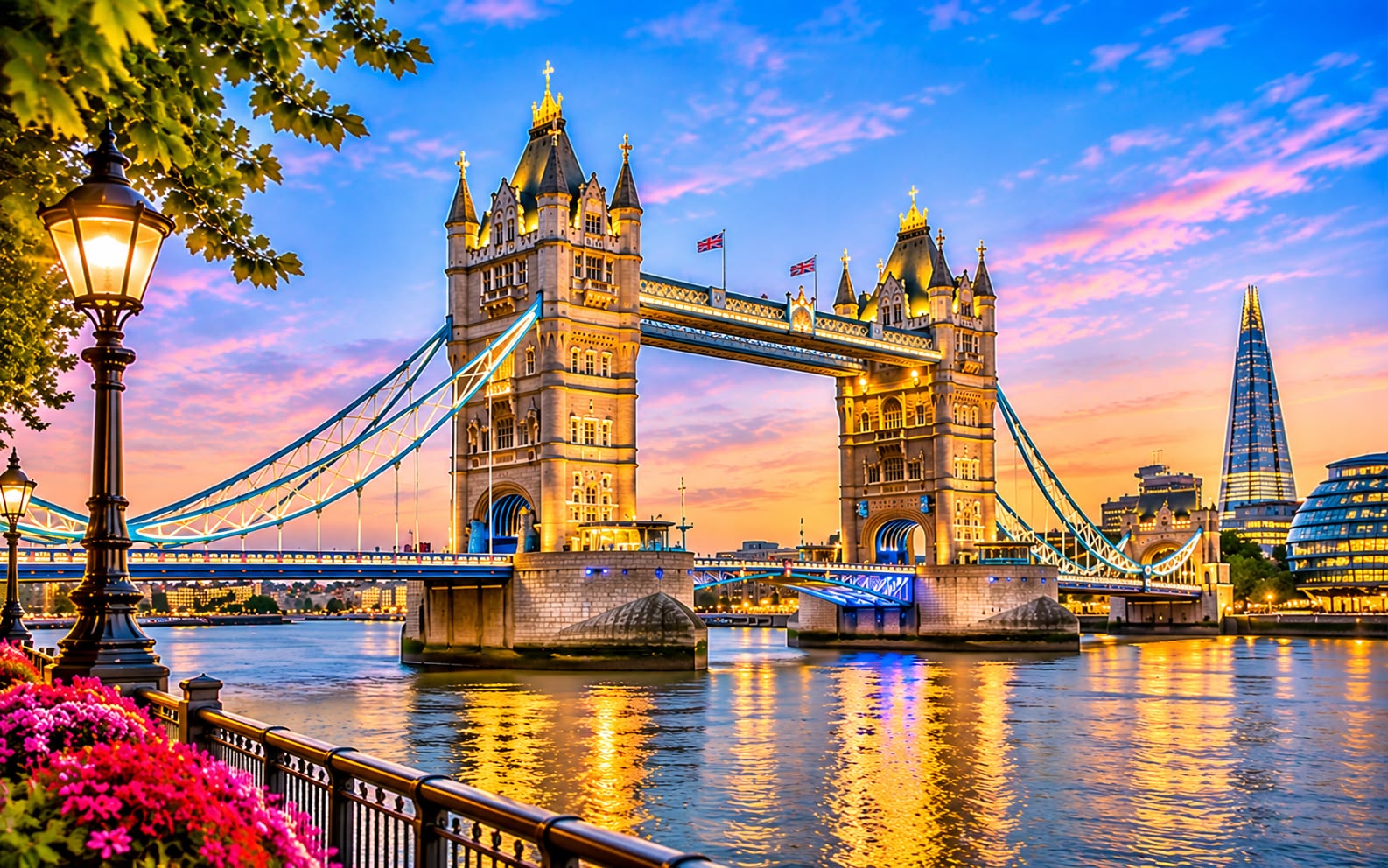
London and Paris in 7 days: two capitals, one train
Three days in London, three in Paris, and a two-hour train between them. The border checks that make Eurostar feel like a flight, the two separate permissions nobody realises are separate, and why the second city should be Paris rather than the other way round.
- Western Europe
- 7 days
- ≈ AED 6,250 / person
- The shortest two-country trip in Europe, and the one most people get slightly wrong
Before you go
London and Paris are two hours and sixteen minutes apart by train and about as different as two rich European capitals get. This is the most-travelled two-country week in Europe, and the thing people get wrong is the admin, not the sightseeing.
Three days in each, with the Eurostar in the middle. Go London first. The train arrives at Gare du Nord in the middle of Paris, which is a better way to arrive than any airport, and it puts the more relaxed city at the end of the week.
London in 3 days and Paris in 3 days are each city on its own.
Figure USD 1,700 (≈ AED 6,243) per person. April to June, or September.
Before you go: the admin
The Eurostar, which behaves like a flight
- St Pancras International to Gare du Nord in about 2 hours 16. City centre to city centre, which is the entire argument.
- Arrive 75 to 90 minutes early. There are two sets of border controls at St Pancras — British exit and French entry, done before you board — and they close the gate 30 minutes before departure. People miss this train far more often than they miss flights.
- Book as early as you can. The price roughly triples in the last fortnight, and this is the single most volatile line in the budget.
- Two bags plus hand luggage, no weight limit worth worrying about — which is the other quiet advantage over flying.
Two currencies, and one of them surprises people
- Britain uses pounds, France uses euros. They are not interchangeable and the exchange desks at St Pancras are the worst rate you will see all week.
- Both countries are effectively cashless. Contactless works on the London Underground and the Paris Métro directly from a phone or card — no ticket needed in either city.
- Decline the card machine’s offer to charge you in your home currency. It is the one avoidable fee on this trip, in both countries.
Day by day
Day 1 — Land in London
- Arrive and stay central. London is enormous and the commuting is what ruins a three-day stay. Zone 1, near a Tube station, is worth paying for.
- Afternoon — walk from Westminster to Trafalgar Square. Big Ben, the Abbey from outside, Whitehall, the lions. It is free and it orients you.
- Evening — a pub. Not a theme pub; an actual one.
- Tap in and out with the same card on the Tube. The daily cap works automatically and you will never overpay.
Day 2 — Westminster, and the museums
- 09:00 — Westminster Abbey, where every English coronation since 1066 has happened. Book the slot online; the door queue is long and slow.
- 11:30 — the Churchill War Rooms, the underground bunker left almost exactly as it was in 1945.
- 14:00 — the British Museum or the National Gallery. Both are free. Pick one — doing both in an afternoon is how you remember neither.
- 18:00 — Soho and the West End. Day seats and lotteries put good theatre within reach if you are willing to queue in the morning.
Day 3 — The Tower, and the river
- 09:00 — the Tower of London at opening, for the Crown Jewels before the queue forms on the moving walkway.
- 11:30 — Tower Bridge and the South Bank, walking west along the river.
- 13:00 — Borough Market for lunch, which is the best eating in central London and knows it.
- 15:00 — Windsor, if you would rather have the castle than the museums: 35 minutes by train from Paddington, the oldest occupied castle in the world, and back by evening.
- Evening — pack. The train goes early.
Day 4 — Eurostar to Paris
- Morning — St Pancras, 90 minutes before departure. Both border checks happen here, so the Paris end is simply walking off the train.
- 13:00 — arrive Gare du Nord. It is a working station in a busy quarter — know which Métro line you want before you step off.
- 15:00 — drop bags, then the Seine. Île de la Cité, Notre-Dame from the outside, the booksellers along the quays.
- Evening — the Latin Quarter, which is the right first night in Paris and the wrong place to eat on the main street. Walk one block back.
Day 5 — The Louvre, and the Tower
- 09:00 — the Louvre, booked in advance for a timed slot. Go in through the Carrousel entrance, not the pyramid. Three hours is the honest maximum.
- 13:00 — the Tuileries, then Place de la Concorde and the Champs-Élysées.
- 16:00 — the Arc de Triomphe, and climb it rather than the Eiffel Tower if you only climb one: the view from the Arc has the Eiffel Tower in it.
- 19:00 — the Eiffel Tower at dusk. It sparkles for five minutes on the hour after dark. Book the lift weeks ahead or take the stairs to the second floor.
Day 6 — Versailles, or Montmartre and the Orsay
- Versailles — 45 minutes on the RER C. Book a timed entry, go at opening, and spend the afternoon in the gardens, which are the better half. The musical fountain days cost extra and are worth it.
- Or stay in Paris — the Musée d’Orsay for the Impressionists in a converted railway station, then Montmartre and Sacré-Cœur in the late afternoon.
- Do not attempt both. This is the day people try to and enjoy neither.
- Evening — a proper long dinner. French service is not slow; it is simply not rushing you, and asking for the bill is on you.
Day 7 — Out
- Charles de Gaulle is 45 minutes out on the RER B, and the airport is large and confusing. Allow three hours.
- Or take the Eurostar back if you are flying from London — the border checks are on the Paris side this time, and the same 90 minutes applies.
- Morning — a last bakery. It is the cheapest good thing in the city.
Costs and practicalities
Best time to visit
April to June, or September — the same window for both cities.
- April to June — long days, blossom then gardens, and everything open. Versailles and the London parks are at their best. The best of the year.
- July and August — hot, crowded and expensive. Paris empties of Parisians in August and a lot of the good small restaurants simply close. London is fine but full.
- September — warm, quieter, and the cheapest of the good months.
- October to March — short, grey days in both. December has the Christmas markets and the lights on Oxford Street and the Champs-Élysées, which is a genuine reason to come; January and February are the cheapest and the bleakest.
Travel tips
- Book the Eurostar the moment your dates are fixed. It is the most volatile price on this trip.
- Be at St Pancras 90 minutes early. Two border controls, and the gate shuts 30 minutes out.
- Check the UK ETA and whatever the EU’s entry system is doing before you fly — they are separate from each other and from any visa.
- If you need visas, start eight weeks out. Two embassies, two appointment queues.
- Book the Louvre, Versailles, the Abbey and the Eiffel Tower online. All four are timed-entry and all four sell out.
- Tap in and out with the same card on the Tube and the Métro; the caps handle the rest.
- Pick one big London museum a day, not two.
- Climb the Arc de Triomphe rather than the Eiffel Tower if you only climb one.
- Watch your bag at Gare du Nord and on the Métro, which is where the pickpocketing on this route actually happens.
- Nothing on this itinerary needs a car. Do not hire one.
What this trip actually costs
Two people, 6 nights, mid-range throughout, international flights excluded:
| Item | Cost |
|---|---|
| Hotels, 6 nights across both cities | USD 1,450 (≈ AED 5,325) |
| Food and drink, 7 days | USD 760 (≈ AED 2,791) |
| Museums, galleries and the two towers | USD 420 (≈ AED 1,542) |
| A day at Windsor and a day at Versailles | USD 330 (≈ AED 1,212) |
| Eurostar, two people | USD 240 (≈ AED 881) |
| City transport in both capitals | USD 200 (≈ AED 735) |
| Total for two | USD 3,400 (≈ AED 12,487) |
- Roughly USD 1,700 (≈ AED 6,243) per person for seven days.
- This is one of the most expensive weeks on this site, and almost all of it is beds. London and Paris are both capital-city expensive and there is no version of this trip where that is not true.
- The Eurostar line assumes an early booking. Left to the last fortnight it can cost three times this, which is the single biggest thing you control.
- London’s great museums are free — the British Museum, the National Gallery, the Tate, the V&A, the Natural History Museum. That is what keeps the entries line as low as it is.
- Hotel picks here are chosen on location, not on commission — always check prices and recent reviews before booking.
What to pack
- A waterproof jacket, in every month. Both cities rain without warning and neither is dramatic about it.
- Shoes you can do 15,000 steps a day in. This trip is walked.
- A layer. London and Paris are both colder in the evening than the forecast suggests, including in July.
- One smart outfit if you want theatre, or a good dinner in Paris.
- A Type G adapter for Britain and Type C/E for France — they are different and this catches people out on day four.
- A small bag that closes properly, worn in front on the Métro.
- A refillable bottle. Tap water is drinkable in both, and Paris has public fountains.
Part of a bigger trip?
- London in 3 days and Paris in 3 days are the two halves on their own.
- The UK in 10 days goes beyond London.
- France in 9 days goes beyond Paris.
- Britain and Ireland in 14 days is the northern extension.
- France and Switzerland in 11 days heads for the Alps instead.
FAQ
Do I need two visas for London and Paris? If you need visas at all, then yes — two, applied for separately. The UK is not in the Schengen area, so a Schengen visa gives you France but not Britain, and a UK visa gives you Britain but not France. Visa-exempt travellers need a UK Electronic Travel Authorisation instead, and should check the current state of the EU’s own entry system before flying.
How early do I need to be at St Pancras? Seventy-five to ninety minutes. Eurostar runs both border controls at the departure station — British exit and French entry — and the gate closes thirty minutes before departure. It is the one part of this trip that behaves like an airport, and it is where people come unstuck.
Should I do London first or Paris first? London first. The Eurostar deposits you at Gare du Nord in central Paris, which is a far better arrival than Charles de Gaulle, and it leaves the more unhurried of the two cities for the end of the week. It also means the long-haul jet lag lands on London, where the free museums forgive a slow day.
Is three days enough for each city? For a first visit, yes. Three days covers Westminster, one great museum, the Tower and a river walk in London, and the Louvre, the Eiffel Tower and either Versailles or Montmartre in Paris. It is not enough to see both the Orsay and Versailles properly, which is the choice day six forces.
Is the Eurostar better than flying? Yes, for this route. It is two hours sixteen between city centres against roughly the same door to door by air once you have added two airport transfers, and the luggage rules are far kinder. The only case for flying is a fare you have found that the Eurostar cannot match, which happens when the train is booked late.
Prices and entry rules change, and what you need depends on your passport; last checked 2 November 2026, so confirm with the embassy or your airline before booking.


